GUEST: Well, we were living in China for 18 months with my husband's employment, and uh… we purchased these in Nantong, which is a city on the Yangtze River…um, in Jiangsu Province. We bought them at a... we called it a Sunday antique market since we didn't know the correct name in Chinese. Of course, we did not speak any Chinese and very... the gentleman we bought them from did not speak any English. But, ah…
APPRAISER: It's a matter of dueling calculators and...
GUEST: Ah… yes, and a lot of sign language and writing it down on pieces of paper of what he wanted and what we were willing to pay. He did tell us that they had just recently been excavated or dug up.
APPRAISER: Well, in actuality, they weren't. They were brand-new.
GUEST: Oh, goodness. I was afraid of that.
APPRAISER: And, um, one of the things about them that you want to know-- you know, you had this piece of material here and you were wondering what the material was.
GUEST: Yes.
APPRAISER: Well, if you take the material here and you take a steel tool, you leave a mark. See that mark right there, the impression that's there?
GUEST: Uh-huh.
APPRAISER: You can see a mark where the steel has engraved the piece. If it were jade, jade is harder than steel, and it wouldn't have left any mark at all. So this material is some kind of soapstone or steatite material.
GUEST: Okay.
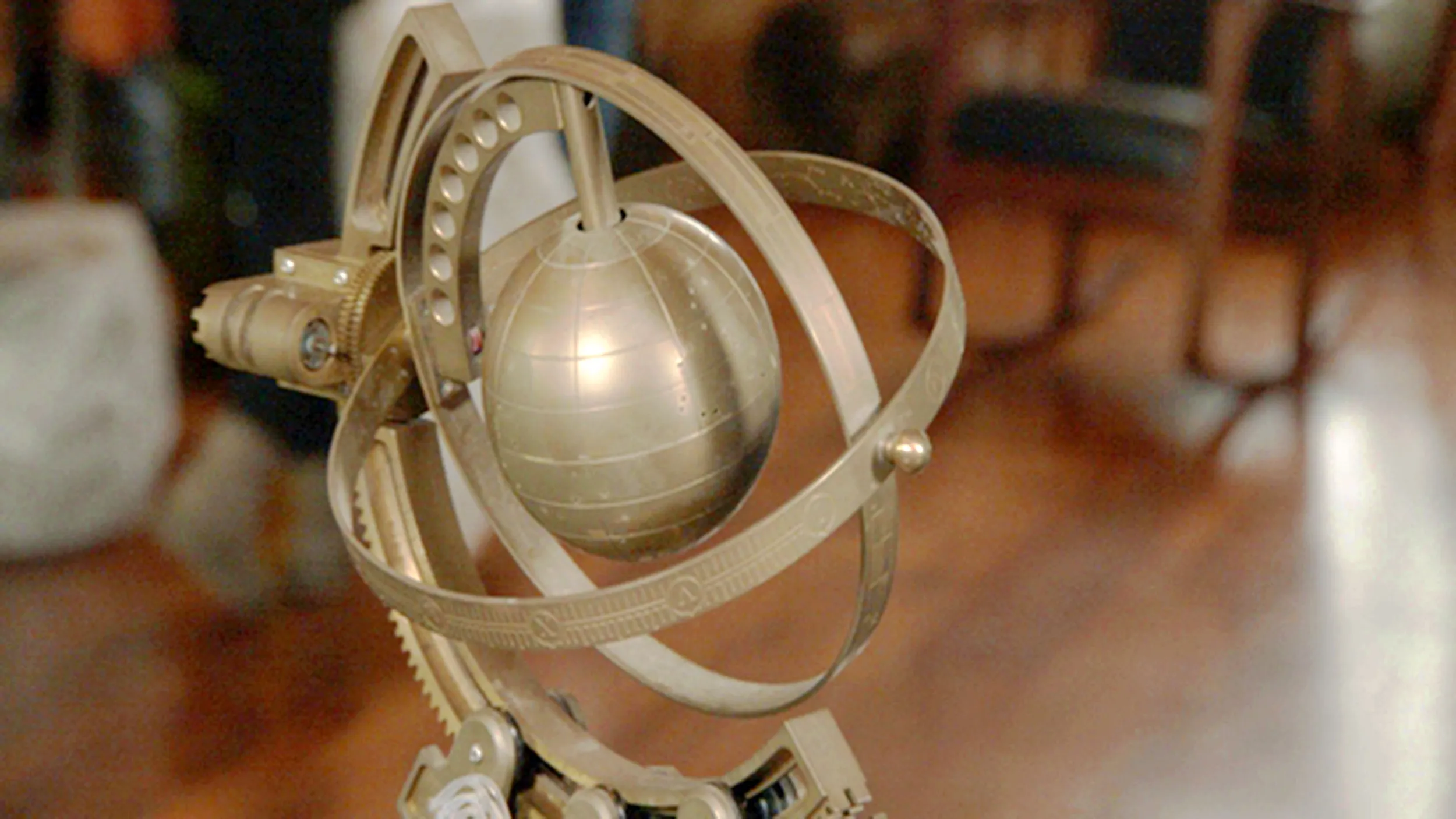
APPRAISER: And what they're trying to do here is they're trying to make this thing look like it's Tang Dynasty, but some of the things that kind of tip you off that it's not-- this material is aluminum that's on here. There was no aluminum at the time.
GUEST: Okay.
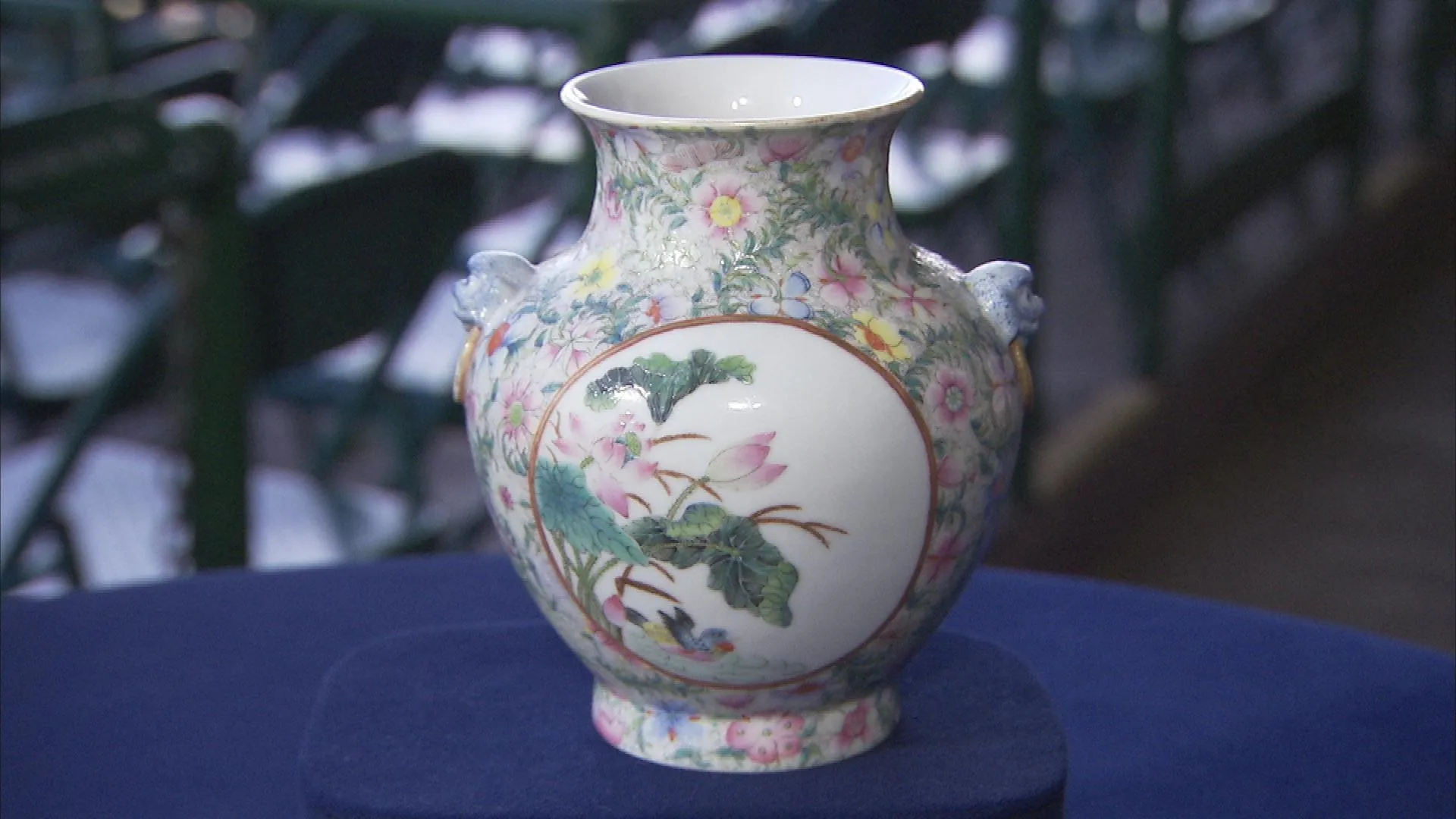
APPRAISER: You know, aluminum is strictly like, um, basically an early- 19th-century thing. This piece here is a pottery. The pottery that's underneath there is called chun yao, and um, it's a ware that was made in Henan province, and it's a… like, a turquoise color with a purple blush. And again, what they're trying to do here is they're trying to, like, put a tracery on it of, like, Tang metalwork. But the metalwork is actually anodized metal. It's not even, you know, any kind of gold or anything.
GUEST: I didn't think this one was because of the way it's rusted.
APPRAISER: Right. So when you see these things, go the other way.
GUEST: I told my husband when we bought this one and the fellow said that he had dug it up, I told my husband he probably only buried it six months ago and just dug it up.
APPRAISER: Yeah, he might’ve - they might have done that just to age it, too. They'll do all sorts of techniques.
GUEST: Uh-huh. And with all the dirt that's still in the filigree.
APPRAISER: Sorry to be the bearer of bad news.
GUEST: Well, we had to find out.
APPRAISER: Mm-hmm.
GUEST: So, even with fakes, are they worth anything at all?
APPRAISER: No, not particularly. $10, $20 apiece.
GUEST: Ah. Okay, well, I was afraid of that.