Ethel Spears Watercolor, ca. 1935
GUEST: In, like 1989, I was working at a government facility in Lexington, Kentucky. They were getting ready to do a bunch of renovation. I kept seeing all these dumpsters and I saw some stuff, lamps and things, I thought was pretty nice. So I asked my boss, "Where is that stuff all going?" He says, "To the dump." I said, "Well, if there's anything in there, that's, that I would like, could I have it?" He said, "Well, sure. Tomorrow, it's going to the landfill."
APPRAISER: Okay.
GUEST: So after work, I went out and looked around a little bit. This was kind of hanging, kind of, precariously out of one of the dumpsters.
APPRAISER: (chuckling) Okay.
GUEST: And I picked it up and looked at it and I said, "Well, this is kind of interesting." I took it home and cleaned the glass off. It had a lot of smoke and nicotine on it. So it's been hanging in our house off and on for a number of years, and we enjoy it. The building started in the early '30s as a federal reformatory for drug users.
APPRAISER: Okay.
GUEST: And then later on in its life, the federal prisons moved in there.
APPRAISER: Gotcha. Okay.
GUEST: And when I was there, it was just a minimum security, so there was no fences or anything like that. But then due to demands, they decided they were going to put fences up. And so that was... that started the renovation; opening up walls and pushing things back and...
APPRAISER: I think it's kind of sad that they didn't want this in a prison, I think this could cheer up a prison.
GUEST: Yeah, that's-that's what I think the whole purpose was, I think, originally, because it is kind of a happy scene.
APPRAISER: Mm-hmm.
GUEST: And, and it could have worked very well there. (chuckles)
APPRAISER: Yeah, absolutely. This work is by Ethel Spears. It's, uh, signed here, lower right. You can see it's very tiny. And it is watercolor and gouache and pencil on paper. Ethel Spears was born in 1903 and she died in 1974. She initially trained at the School of the Art Institute of Chicago in tapestry and textiles. As I understand it, she finished her training and then decided, no, I don't want to do that, and then moved over to paintings. And she studied with a, a modernist muralist, a guy named John Norton. From there, she went to Woodstock, the art colony there, a few years in New York, and then back to Chicago, actually, to the School of the Art Institute, where she became a teacher, and that was in 1937. Before that, she was doing some work for the government. And I think this, this work would have been done right around that time, right around the mid-'30s.
GUEST: Okay.
APPRAISER: She was an artist that worked in a lot of different mediums. Tragically, I-I think that ultimately led to her death. While she was at the, uh, School of the Art Institute, she started an enameling program there in '53.
GUEST: Mm-hmm.
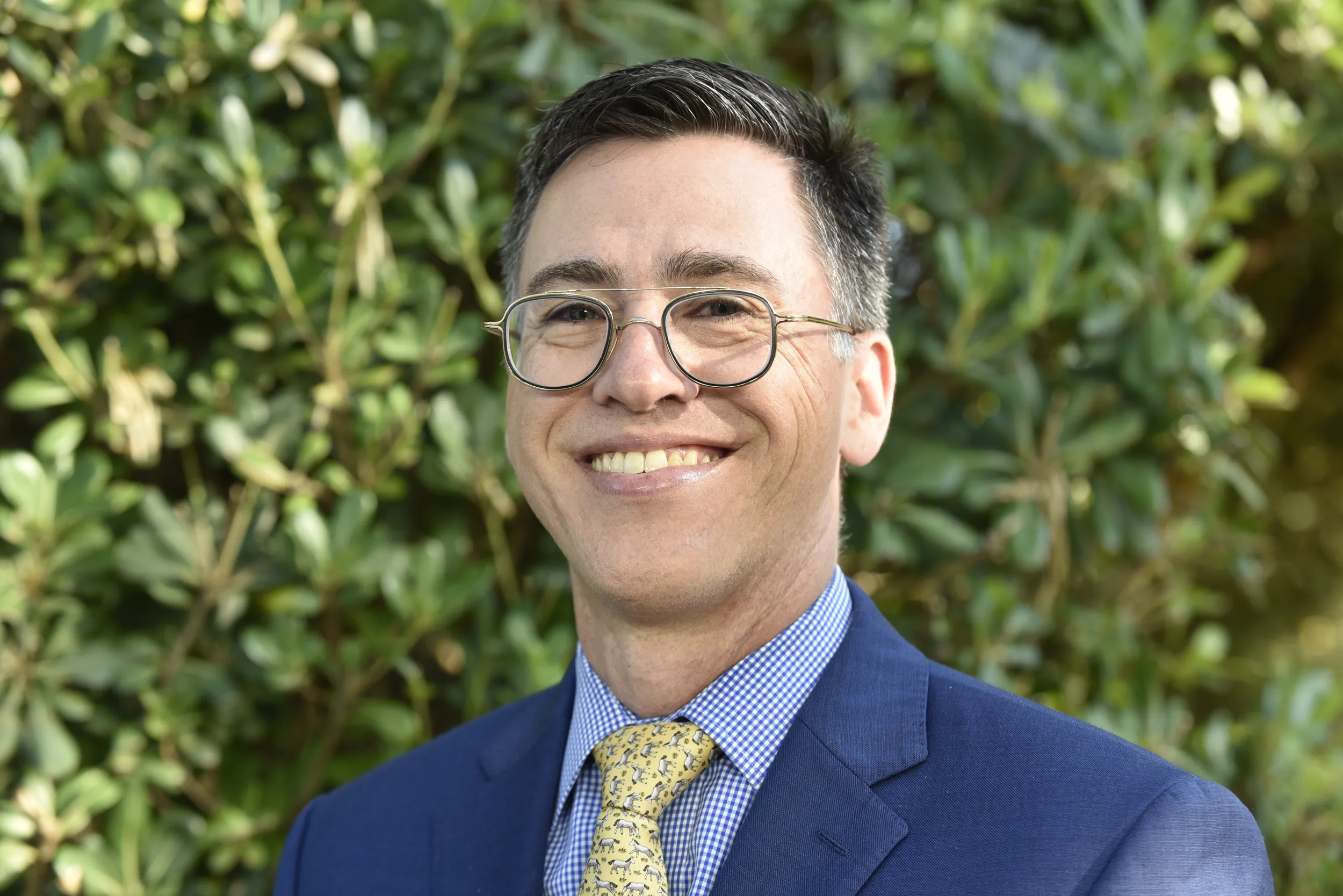
APPRAISER: And it seems pretty clear that, that she got lead poisoning through that work; inadequate ventilation. But there were some great things at the Art Institute as well. She met her partner, Kathleen Blackshear, who's another fairly well-known artist, uh, there at the Art Institute. This picture has sort of signature elements of, of Ethel's work. It's very dense-- there's a lot of figures in it, they tend to all be doing fun things. And even where there's not figures, there's a real density of decoration. There's no part of it that's lazy. It looks like this is the original frame, too. At auction, I would think this would be worth in the realm of $4,000 to $6,000.
GUEST: (chuckling) Oh, interesting. Yeah. You're not kidding? (chuckles) Well, not bad for picking it out of a dumpster.
APPRAISER: Straight out of a dumpster. (chuckles)
GUEST: Yeah. Yeah.
$3,000 - $4,000 Auction
Featured In

episode
Castle Farms, Hour 1
Don't miss ROADSHOW's first visit to charming Charlevoix, Michigan! — Mon, March 30, 2026
2D Art
appraisal

appraisal
Frank Zappa Painting, ca. 1960

appraisal
Edgar Alwin Payne Painting, ca. 1925
appraisal
American School Portrait, ca. 1820
Understanding Our Appraisals
Executive producer Marsha Bemko shares her tips for getting the most out of ANTIQUES ROADSHOW.
Value can change: The value of an item is dependent upon many things, including the condition of the object itself, trends in the market for that kind of object, and the location where the item will be sold. These are just some of the reasons why the answer to the question "What's it worth?" is so often "It depends."
Note the date: Take note of the date the appraisal was recorded. This information appears in the upper left corner of the page, with the label "Appraised On." Values change over time according to market forces, so the current value of the item could be higher, lower, or the same as when our expert first appraised it.
Context is key: Listen carefully. Most of our experts will give appraisal values in context. For example, you'll often hear them say what an item is worth "at auction," or "retail," or "for insurance purposes" (replacement value). Retail prices are different from wholesale prices. Often an auctioneer will talk about what she knows best: the auction market. A shop owner will usually talk about what he knows best: the retail price he'd place on the object in his shop. And though there are no hard and fast rules, an object's auction price can often be half its retail value; yet for other objects, an auction price could be higher than retail. As a rule, however, retail and insurance/replacement values are about the same.
Verbal approximations: The values given by the experts on ANTIQUES ROADSHOW are considered "verbal approximations of value." Technically, an "appraisal" is a legal document, generally for insurance purposes, written by a qualified expert and paid for by the owner of the item. An appraisal usually involves an extensive amount of research to establish authenticity, provenance, composition, method of construction, and other important attributes of a particular object.
Opinion of value: As with all appraisals, the verbal approximations of value given at ROADSHOW events are our experts' opinions formed from their knowledge of antiques and collectibles, market trends, and other factors. Although our valuations are based on research and experience, opinions can, and sometimes do, vary among experts.
Appraiser affiliations: Finally, the affiliation of the appraiser may have changed since the appraisal was recorded. To see current contact information for an appraiser in the ROADSHOW Archive, click on the link below the appraiser's picture. Our Appraiser Index also contains a complete list of active ROADSHOW appraisers and their contact details and biographies.


