GUEST: I bought it in 1971 in Mackinaw City, from a fellow who had just brought it up from an estate sale in Grosse Pointe, Michigan. And I walked around the shop and it just kept talking to me and I was there probably for 45 minutes to an hour and I just decided I had to leave with it, even though it wasn't my style of antiques. I was more into primitives and that kind of thing. So, I brought it home, couldn't find any information about the marks, and I just sort of let it rest since 1971, I'm embarrassed to say.
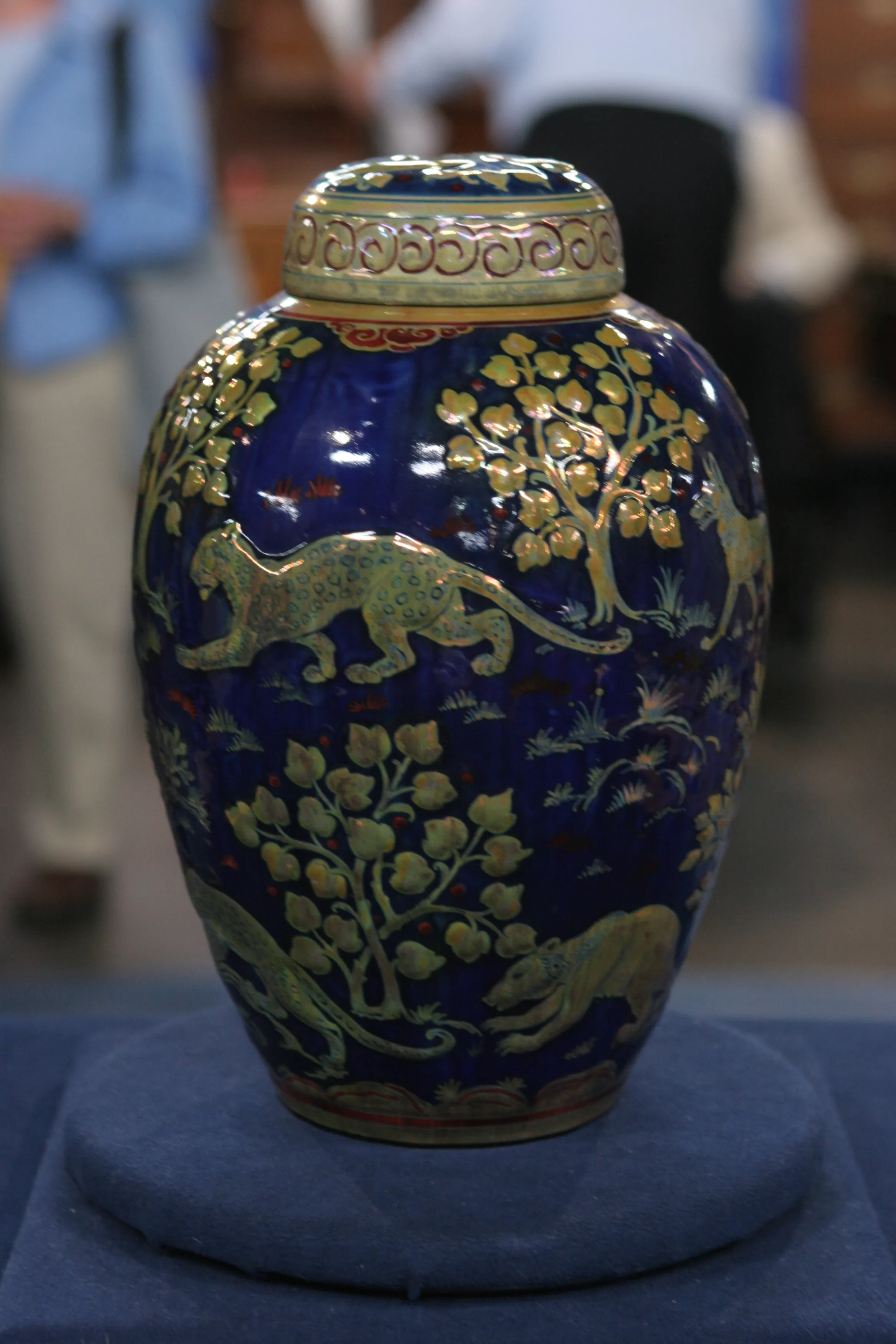
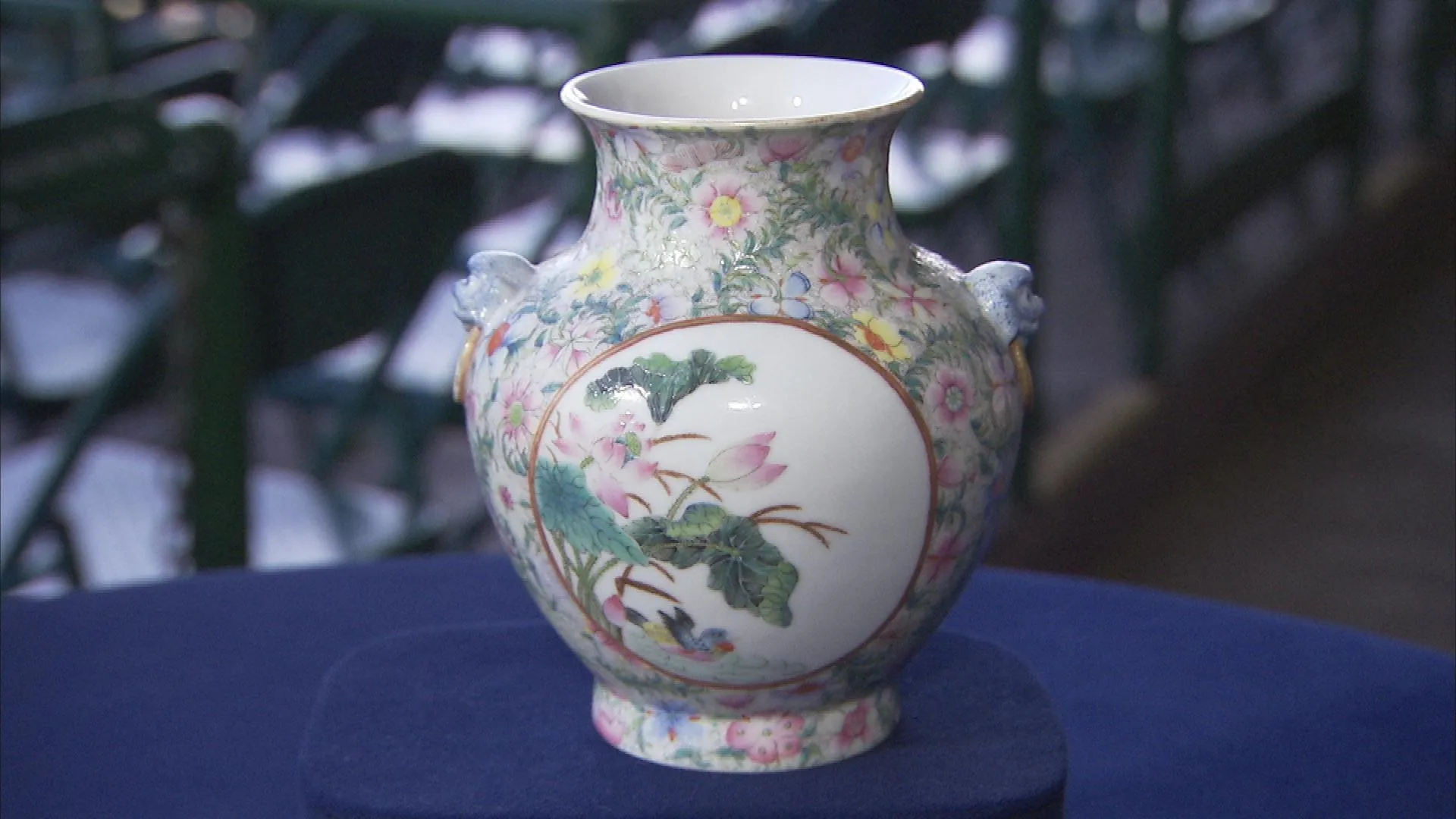
APPRAISER: This is a really beautiful example of English Della Robbia.
GUEST: Della Robbia?
APPRAISER: The original Della Robbias were Italian and you may know them for their beautiful faience around Florence.
GUEST: Absolutely, I've been there.
APPRAISER: You can see here, "DR" for Della Robbia. This English company was put together by two gentlemen, Harold Rathbone and Conrad Dressler. The company was in business between about 1894 and 1906.
APPRAISER: Okay.
GUEST: Rathbone had been a pupil of Ford Maddox Brown, which is a name that you may or may not know from the early days of the English Arts and Crafts movement. And his partner Dressler had worked with William Morris.
GUEST: Oh, yeah.
APPRAISER: So he had worked with the very best designers, doing the very best work. So they got together and in Birkenhead, in England, made this pottery, called it Della Robbia. And the look of the Arts and Crafts movement does look back to the Italian Renaissance-- in some way, it is Pre-Raphaelite. It is ecclesiastical. It's Gothic. This is low-fired earthenware Low-fired, okay. and is covered in a very pale glaze. And that pale glaze then will let any other subsequent glaze that you put over it... Glow through or shine through?
GUEST: Yes.
APPRAISER: And get very bright. It certainly has that look. So it has a loosely Della Robbia look to it. This is a particularly gorgeous example. It's very large. It's very nicely done. There's a small chip here at the base, which seems to have been sort of put back in the firing, because there is glaze around it. The value today of this beautiful piece is in the $2,000 to $3,000 range at auction.
GUEST: GUEST: Wonderful. Wonderful. It was a great $75 investment, then.