Egyptian 18th Dynasty Scarab Ring, ca. 1450 BCE
APPRAISER 1: Why we're testing this-- that usually ancient gold is usually alluvial gold. I just wanted to be sure with the gold.
APPRAISER 2: I'm gonna test the shank.
APPRAISER 1: Okay. Don't wear it out, Kevin.
APPRAISER 2: (chuckles) You know us jewelers, always trying to get a little extra gold. And I'm gonna test the bezel, also.
APPRAISER 1: Okay.
APPRAISER 2: I'm gonna hit it with 18 first. So that's the shank, and that's the bezel.
APPRAISER 1: Okay.
APPRAISER 2: This is 18-karat acid. So, the bezel, it's holding on the 18, the shank, it's not, it's not holding. You see that discoloration right there?
APPRAISER 1: Yeah, sure.
APPRAISER 2: Probably sized with a lesser metal.
APPRAISER 1: Okay.
GUEST: It was given to my grandmother. She was a young woman, and she was working in Palm Beach, Florida, and she met someone, and he had been on an archaeological dig and he gave it to her as a gift, and told her to hold on to it, that it might be worth a lot of money one day. That was in the early 1930s. My parents took it to The Metropolitan Museum of Art. They looked at it and said that it belonged to King Thutmose III, a pharaoh of the 18th Dynasty, I believe. It was priceless, is what we were told, and we have just never been able to have anybody tell us basically what it was worth.
APPRAISER: It's a scarab, and beautifully made, and from the 18th Dynasty, and it is ascribed to Tuthmosis III. He was an extraordinary pharaoh.
GUEST: Yes.
APPRAISER: He was, I think, just two years of age when his father died. And, because he was so young, he then had a regent, his stepmother...
GUEST: Mm-hmm.
APPRAISER: ...and his stepmother was Hatshepsut...
GUEST: Yes.
APPRAISER: ...and she was a really famous pharaoh also. And when she declared herself a pharaoh, most of her sculptures depicted her as a man. She was only, I think, the third woman ever to be a pharaoh in ancient Egypt. It was a good reign, you know...
GUEST: Mm-hmm.
APPRAISER: And it wasn't contentious, because even when she was making her declarations on monuments and things, she would put herself as pharaoh and also acknowledge Tuthmosis III. By the age of about 18, she made him head of the army. He ruled from April 1479 BC until March 1425 BC, and he transformed Egypt into a superpower. Anything with his name on it becomes a very powerful amulet. I don't believe that your ring belonged to Tuthmosis, but it's a very beautiful ring. It would have definitely belonged to one of the elite, 'cause it's gold. Why I think it probably wasn't a royal one, because the choice of stone for the scarab. It would have been lapis or jasper for them. But this is steatite. It's sort of a-- it's a bit of softer stone, but it's nice.
GUEST: Uh-huh.
APPRAISER: It's a rather unusual cut. It has the very high dome on it. It's a wonderful swivel ring here. On the back, it has the cartouche. This is the oval area where it has the name of Tuthmosis III in it. So that's the amulet. What we weren't absolutely sure of was the gold content. Now, normally with antiquity gold, it's alluvial-- found in the river. Some was found in the Nile, but most of it came from Nubia, which is in the Upper Egypt. And when it's alluvial, it's generally pretty pure. We tested it and it was high karat on most of it...
GUEST: Ah.
APPRAISER: ...but one part tested low, like 14 karat. Then we looked at it very carefully, and it's been sized. And so that's the little bit which was 14 karat. Everything else is fine. I'd be very comfortable with a retail value of $12,000 to 15,000.
GUEST: Oh, really?
APPRAISER: Yes.
GUEST (surprised laughter): Okay. That's pretty awesome.
APPRAISER: I would insure this for $20,000.
GUEST: Oh, really?
APPRAISER: It's a beautiful ring...
GUEST: Yes.
APPRAISER: ...and the color of that ancient gold is extraordinary.
GUEST: It's lovely, you know. Oh, thank you.

$12,000 Auction
$20,000 Insurance
Featured In

episode
Georgia State Railroad Museum, Hour 2
Premiered Mon, Feb 2, 2026 — All aboard as ROADSHOW travels to Savannah, Georgia, in search of America’s hidden treasures.
Gold

appraisal
Elgin Student Watch & Papers, ca. 1924
appraisal
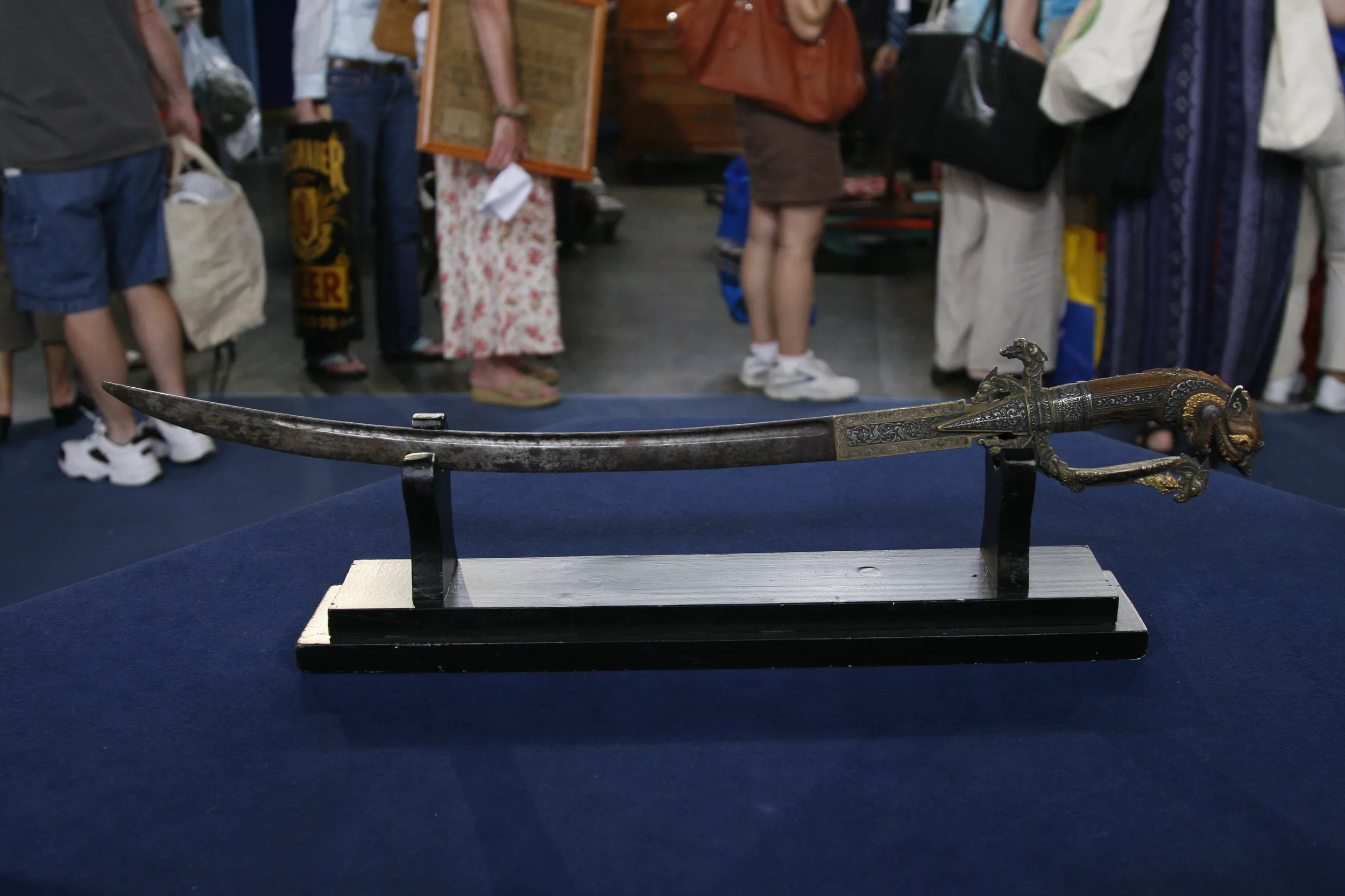
Sri Lankan Kastane (Sword), ca. 1800

appraisal
Carved Emerald & Ruby Ring, ca. 1925

appraisal
1953 Mickey Mantle All Star Watch
Understanding Our Appraisals
Executive producer Marsha Bemko shares her tips for getting the most out of ANTIQUES ROADSHOW.
Value can change: The value of an item is dependent upon many things, including the condition of the object itself, trends in the market for that kind of object, and the location where the item will be sold. These are just some of the reasons why the answer to the question "What's it worth?" is so often "It depends."
Note the date: Take note of the date the appraisal was recorded. This information appears in the upper left corner of the page, with the label "Appraised On." Values change over time according to market forces, so the current value of the item could be higher, lower, or the same as when our expert first appraised it.
Context is key: Listen carefully. Most of our experts will give appraisal values in context. For example, you'll often hear them say what an item is worth "at auction," or "retail," or "for insurance purposes" (replacement value). Retail prices are different from wholesale prices. Often an auctioneer will talk about what she knows best: the auction market. A shop owner will usually talk about what he knows best: the retail price he'd place on the object in his shop. And though there are no hard and fast rules, an object's auction price can often be half its retail value; yet for other objects, an auction price could be higher than retail. As a rule, however, retail and insurance/replacement values are about the same.
Verbal approximations: The values given by the experts on ANTIQUES ROADSHOW are considered "verbal approximations of value." Technically, an "appraisal" is a legal document, generally for insurance purposes, written by a qualified expert and paid for by the owner of the item. An appraisal usually involves an extensive amount of research to establish authenticity, provenance, composition, method of construction, and other important attributes of a particular object.
Opinion of value: As with all appraisals, the verbal approximations of value given at ROADSHOW events are our experts' opinions formed from their knowledge of antiques and collectibles, market trends, and other factors. Although our valuations are based on research and experience, opinions can, and sometimes do, vary among experts.
Appraiser affiliations: Finally, the affiliation of the appraiser may have changed since the appraisal was recorded. To see current contact information for an appraiser in the ROADSHOW Archive, click on the link below the appraiser's picture. Our Appraiser Index also contains a complete list of active ROADSHOW appraisers and their contact details and biographies.


