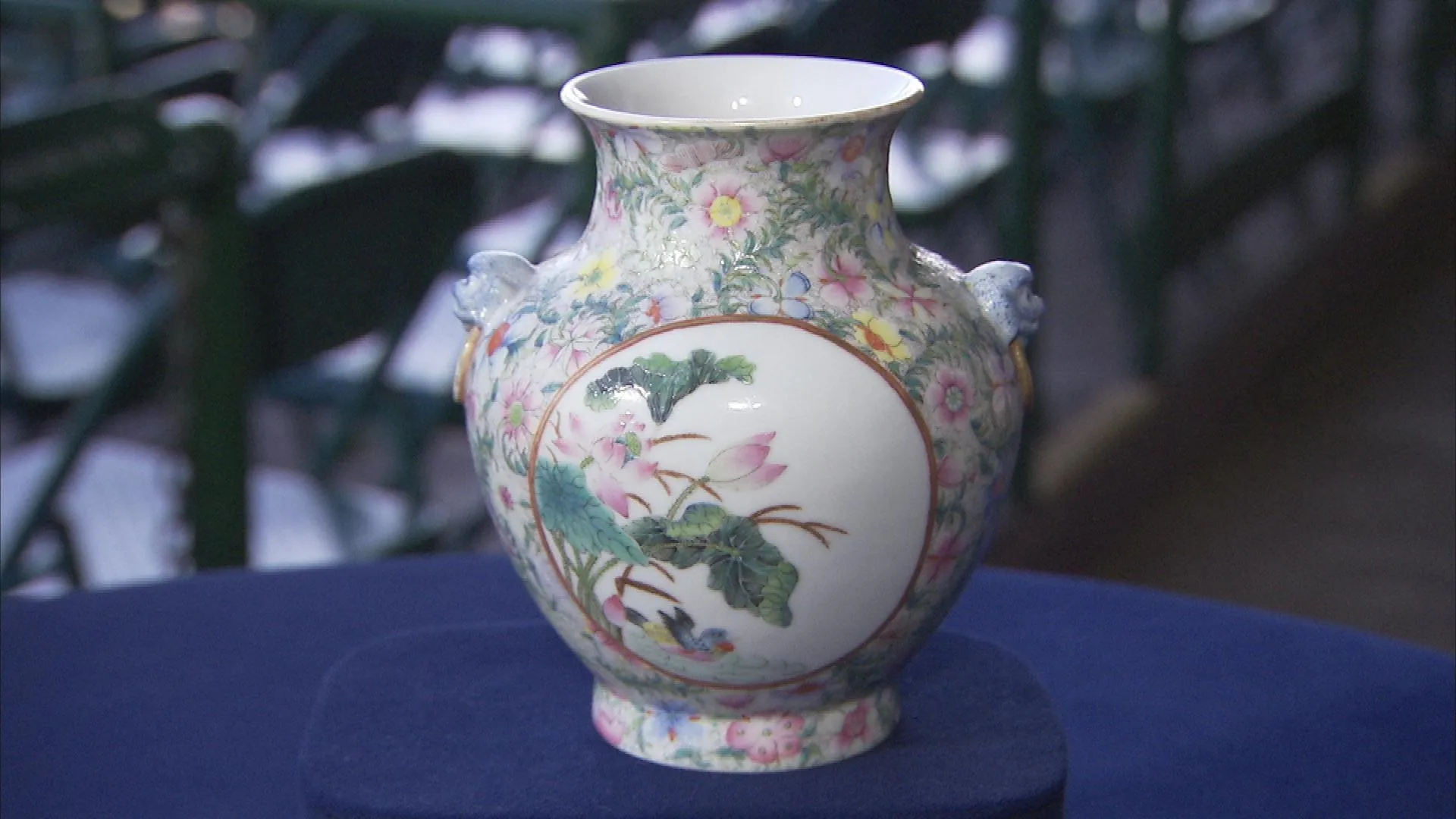
GUEST: About 30 years ago, my husband and I came here and I brought this with me. It's always been in our house growing up and I'm not sure where my mother got it. I think she got it from her mother. I think it came from England, but I'm not too sure.
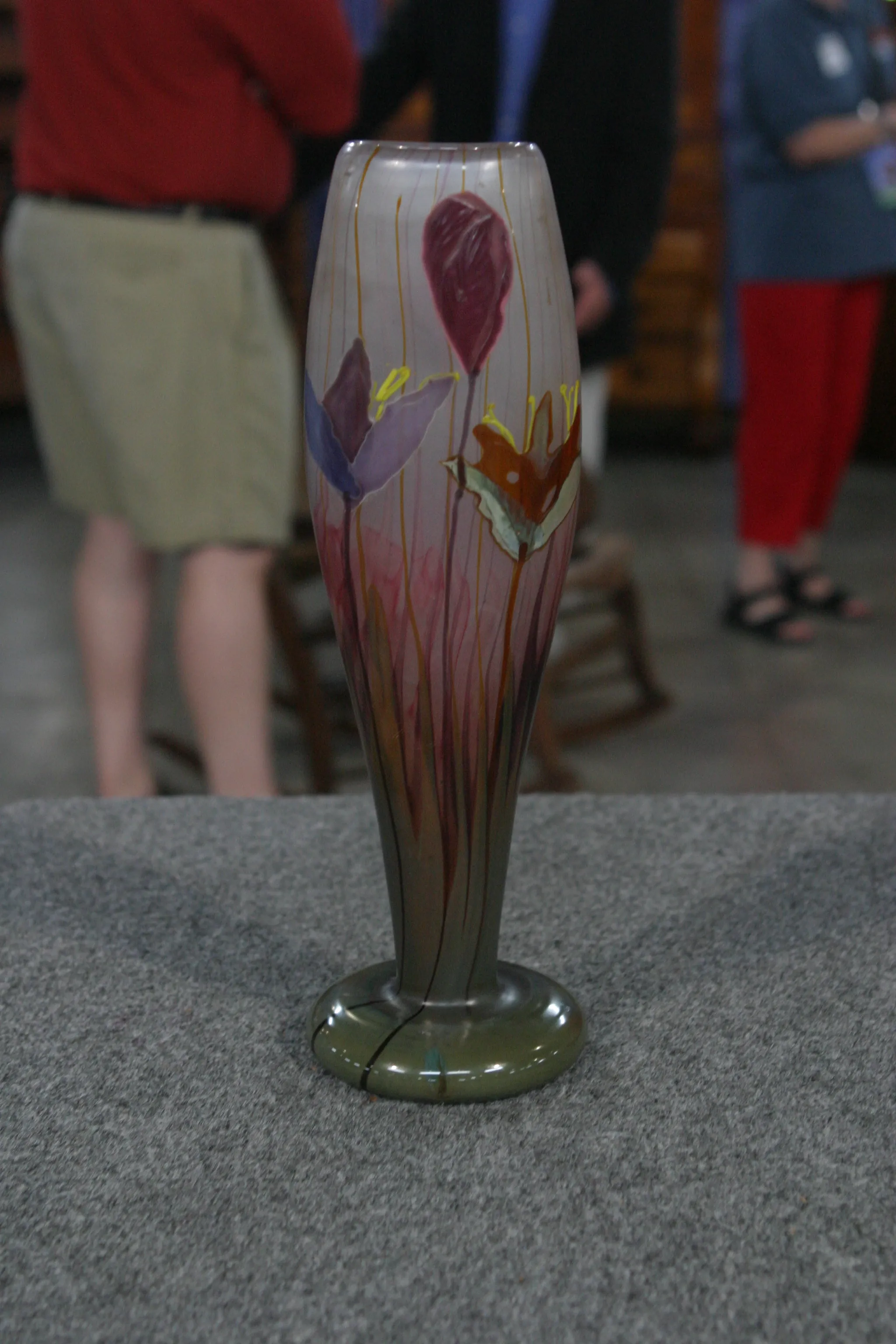
APPRAISER: It is in fact English and it's a piece of MacIntyre pottery. It's called Florian Ware, and I'll show you the mark on the bottom. That's how you know it's Florian Ware, which was only made for about a six- or seven-year period. So we date this to about 1900 to 1905, very specifically. What's also interesting is that William Moorcroft's signature is on the bottom. And William Moorcroft is a very famous potter. A pottery by his name is still in existence. You've seen many pieces with similar type of decoration; it's called tube lining or cloisonné decoration on the ceramic. Moorcroft designed this line influenced by William Morris, another Englishman. So it shows both English Arts and Crafts and English Art Nouveau. And this is a piece that shows that harmony between design and form. The condition of this piece is excellent. The fluting is paper thin around the top. You would expect to see some damage over the years and you don't. The one place where you think you might see damage is on the bottom here. It's got this line going through it.
GUEST: Right. Right.
APPRAISER: Very often the bottom of pieces 'cause they're set down hard, you get hairline cracks or spider cracks. This one's in the manufacturing,
GUEST: All right.
APPRAISER: which is important because the piece, the condition it's in, which is perfect, is easily worth $2,000 at auction. Maybe $2,500, but let's say $2,000 to be safe. If that was a crack on the bottom, the piece would only be worth about a thousand dollars or maybe even $700. So it's significant that we determine that piece be manufacturing and not post-manufacturing.
GUEST: Right, right. All right.