Early 20th C. Tiffany Glass Collection
GUEST: My family acquired this through my great-aunts and -uncle that lived in Norwalk. And when Tiffany factory shut down, what we have heard is that they bought two barrels of Tiffany. So there's a large collection. This is just part of it. And we have divided it among our family, my sisters and myself. And I have brought in four pieces that I really love.
APPRAISER: It is all Tiffany glass. These I would absolutely date from about 1928, this piece, this piece, and this piece. And this one is actually much earlier. Uh, it was made between 1900 and 1903. And this is a very unusual piece, 'cause it's what we call a paperweight glass vase.
GUEST: Mm-hmm.
APPRAISER: Paperweight because of the heaviness, but also because it's transparent. I've seen one other like it in a different form. That one is actually from the 1920s. This one, it says a V prefix, so it's V with an, a number following it. And the V prefixes, they only made 999 of them.
GUEST: Mm-hmm.
APPRAISER: And I have always believed that these may have been prototypes kind of pieces, because they're always a little more unusual and you don't see the same thing coming and going. So I think this is a unique piece. The decoration on this is fabulous, too, because you have these trailings, these vines, or stems, in purple-- not brown and not green.
GUEST: Mm-hmm.
APPRAISER: And then these beautiful little white flowers with little yellow centers. And then these lovely leaves. It almost looks like they're floating in water. Now, the other pieces, from the 1920s, or, the, uh, certainly, this plate here and the bowl is what you would see Tiffany making in the 1920s, which was the pastel glass.
GUEST: Mm-hmm.
APPRAISER: But what makes yours more interesting is that it's a combination of techniques. Yes, it is pastel glass, but it's actually paperweight pastel.
GUEST: Oh!
APPRAISER: And it has these wonderful pink morning glories in them.
GUEST: Mm-hmm.
APPRAISER: And on top of that, we also have these pulled areas of glass, so you have these little knobs.
GUEST: Mm-hmm.
APPRAISER: And that's really unusual, the combination of techniques. So it's not your typical type of pastel glass. It's, it's, they pulled out all the stops in making these.
GUEST: Wonderful.
APPRAISER: And this one, which is a flower-form vase, this particular form is called a calyx, because of, it's got the elongated cup...
GUESTL Mm-hmm.
APPRAISER: ...and it has the three flattened sides. What makes this really appealing is that it's really a miniature. Do you have any idea what your family might have paid for those barrels of glass?
GUEST: I have no idea. And they were schoolteachers, so I doubt that there was a lot sunk into it.
APPRAISER: I would say that this particular piece would, I would put a value of $4,000 to $5,000 on it.
GUEST: Mm-hmm.
APPRAISER: This piece, I would say $5,000 to $7,000.
GUEST: Mm, nice.
APPRAISER: This piece, $6,000 to $8,000.
GUEST: Mm.
APPRAISER: And this piece, $25,000 to $30,000.
GUEST: Wonderful.
APPRAISER: So the total for the group ranges from $40,000 to $50,000 retail.
GUEST: That's lovely. They're beautiful.

$40,000 - $50,000 Retail
Featured In

episode
Denver Botanic Gardens Chatfield Farms, Hour 2
ROADSHOW strikes gold in Colorado with amazing finds from a stop in Littleton!
Decorative Objects
appraisal
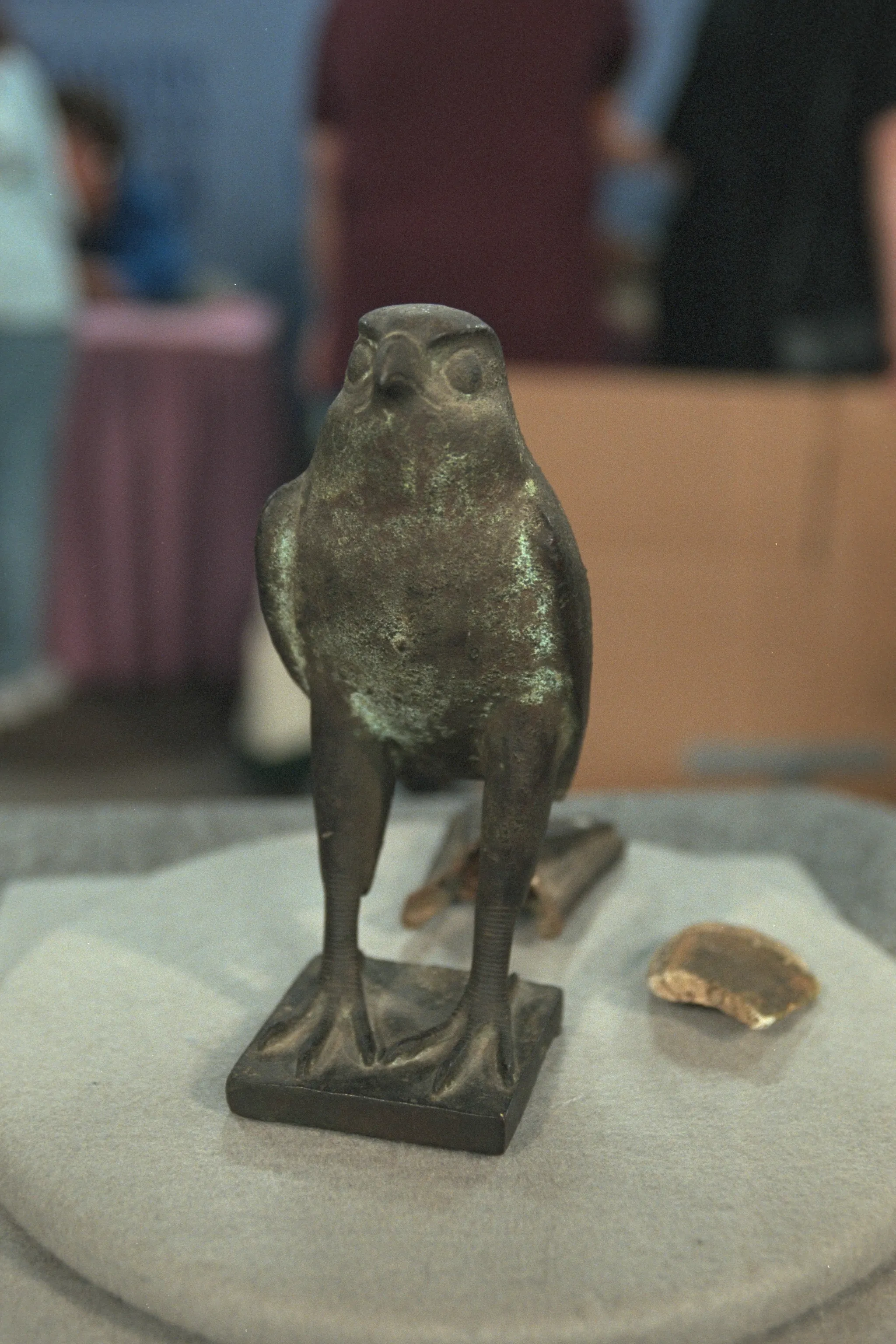
Late Period Egyptian Bronze Falcon

appraisal
Dirk Van Erp Copper Vase, ca. 1930
appraisal
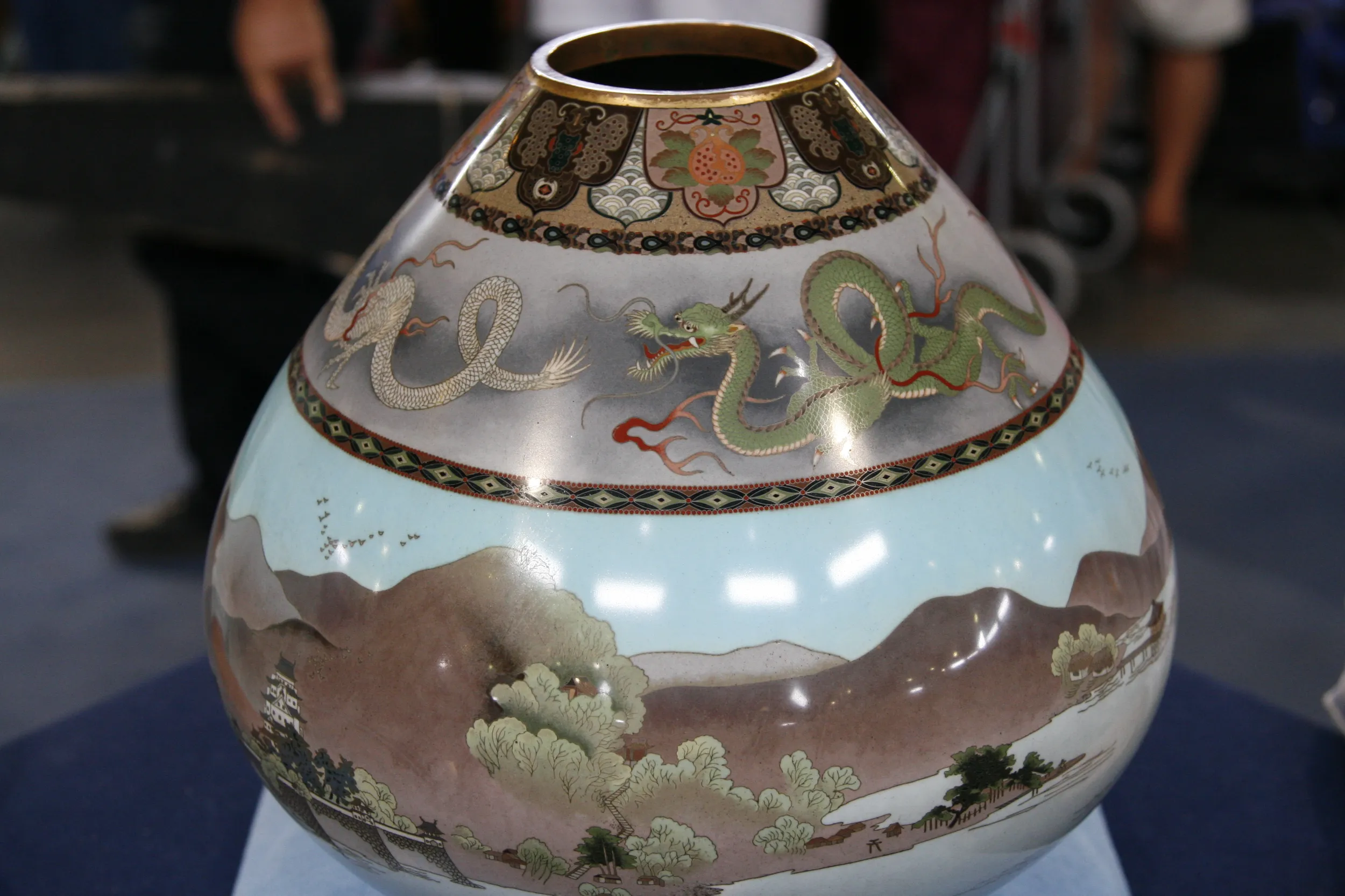
Meiji Period Namikawa School Cloisonné Vase

appraisal
Venetian Glass Vase, ca. 1935
Understanding Our Appraisals
Executive producer Marsha Bemko shares her tips for getting the most out of ANTIQUES ROADSHOW.
Value can change: The value of an item is dependent upon many things, including the condition of the object itself, trends in the market for that kind of object, and the location where the item will be sold. These are just some of the reasons why the answer to the question "What's it worth?" is so often "It depends."
Note the date: Take note of the date the appraisal was recorded. This information appears in the upper left corner of the page, with the label "Appraised On." Values change over time according to market forces, so the current value of the item could be higher, lower, or the same as when our expert first appraised it.
Context is key: Listen carefully. Most of our experts will give appraisal values in context. For example, you'll often hear them say what an item is worth "at auction," or "retail," or "for insurance purposes" (replacement value). Retail prices are different from wholesale prices. Often an auctioneer will talk about what she knows best: the auction market. A shop owner will usually talk about what he knows best: the retail price he'd place on the object in his shop. And though there are no hard and fast rules, an object's auction price can often be half its retail value; yet for other objects, an auction price could be higher than retail. As a rule, however, retail and insurance/replacement values are about the same.
Verbal approximations: The values given by the experts on ANTIQUES ROADSHOW are considered "verbal approximations of value." Technically, an "appraisal" is a legal document, generally for insurance purposes, written by a qualified expert and paid for by the owner of the item. An appraisal usually involves an extensive amount of research to establish authenticity, provenance, composition, method of construction, and other important attributes of a particular object.
Opinion of value: As with all appraisals, the verbal approximations of value given at ROADSHOW events are our experts' opinions formed from their knowledge of antiques and collectibles, market trends, and other factors. Although our valuations are based on research and experience, opinions can, and sometimes do, vary among experts.
Appraiser affiliations: Finally, the affiliation of the appraiser may have changed since the appraisal was recorded. To see current contact information for an appraiser in the ROADSHOW Archive, click on the link below the appraiser's picture. Our Appraiser Index also contains a complete list of active ROADSHOW appraisers and their contact details and biographies.


