Donald Bush Cordry Painted Box, ca. 1930
GUEST: My father told me that it was painted by his cousin, Donald Bush Cordry. And this was given to the family probably in the '20s. He went to the Minneapolis School of Art, and eventually met, I believe, Tony Sarg.
APPRAISER: Oh!
GUEST: And got interested in the Mexican masks. He collected masks, but he also did puppetry and marionettes. And his famous Sprite and the Dolly Sisters are in the Smithsonian Institution.
APPRAISER: So he was very highly regarded.
GUEST: Yes.
APPRAISER: And very creative. Do you remember it as a child?
GUEST: Oh, yeah, yeah. As a matter of fact, I scratched the teeth out of the wolf because it scared me.
APPRAISER: (laughing) Well, for a kid, that makes sense. These creatures are menacing, and yet-- and this one toothless, not quite so menacing now.
GUEST: (laughs)
APPRAISER: So we're going to, we're going to turn it around, and you can, you could see that he was intent on painting every surface. It's almost as if it was meant to be in the middle of the room and not against the wall.
GUEST: Mm-hmm. Prairie dogs, vampire bat.
APPRAISER: At first, when I saw it, I thought, "Oh, this was done by an outsider artist that just had fun." But, obviously, he became something very different than that.
GUEST: Mm-hmm.
APPRAISER: It's survived in really great condition. This wonderful, bright choice of palette. There's a great sense of humor here. And it's scary at the same time. It's got a lot of elements that I find very, very endearing. So I would think, in this instance, we came up with a figure of $3,000 to $5,000, at least, for instance, if it were being estimated for auction purposes.
GUEST: Mm-hmm.
APPRAISER: But I suspect there isn't enough money in the world to buy this box.
GUEST: Right.
APPRAISER: And I think it's-- I think it's very special.
GUEST: Thank you so much.
APPRAISER: Wonderful.
$3,000 - $5,000 Insurance
$3,000 - $5,000 Insurance
Featured In
episode
Crocker Art Museum, Hour 2
See stunning Sacramento finds appraised at Crocker Art Museum like one worth $80K-$120K!
1930s
appraisal
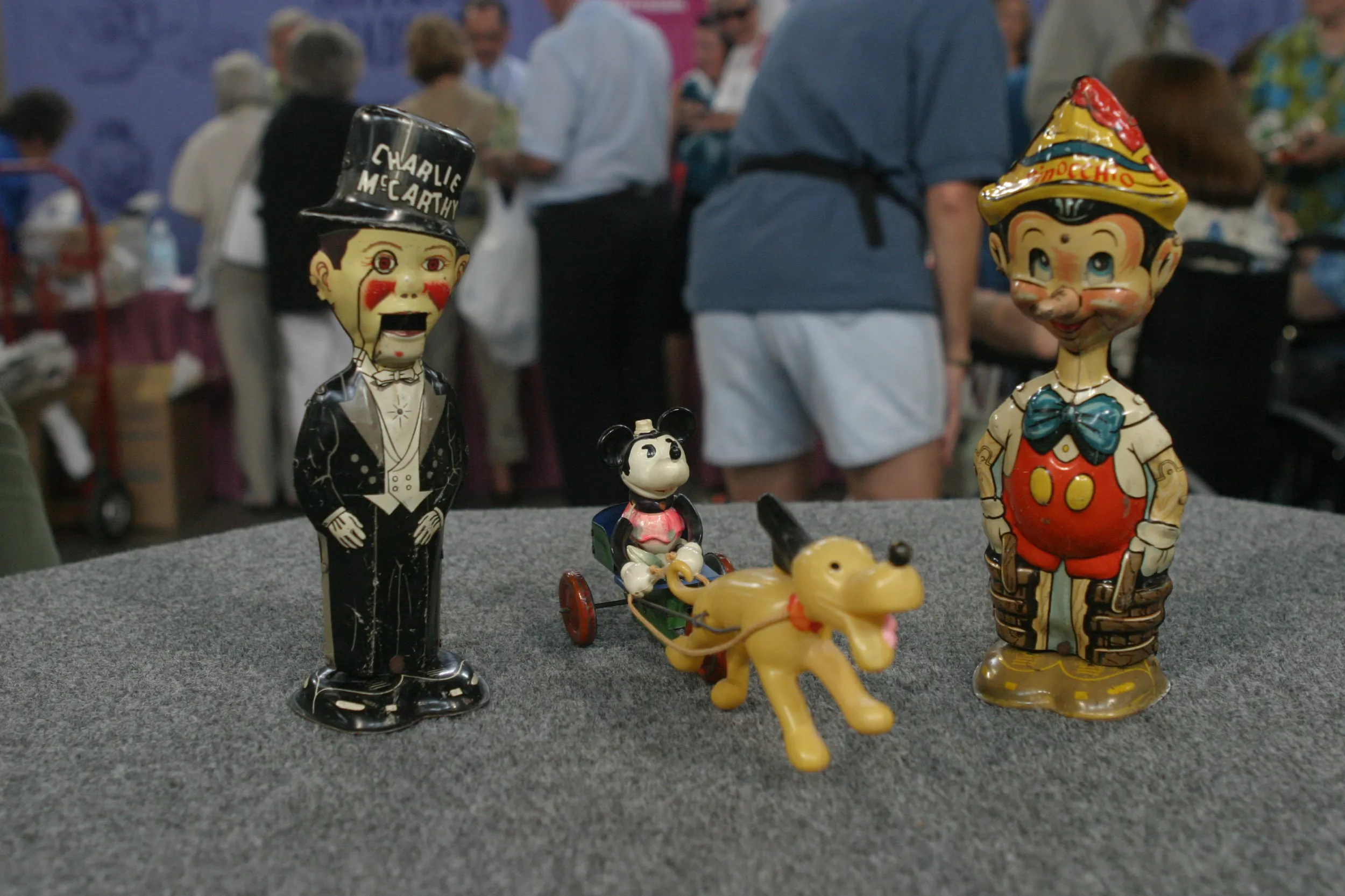
Comic Wind-up Toys, ca. 1930

appraisal
Dr. Seuss “Kangaroo Bird," ca. 1938

appraisal
appraisal
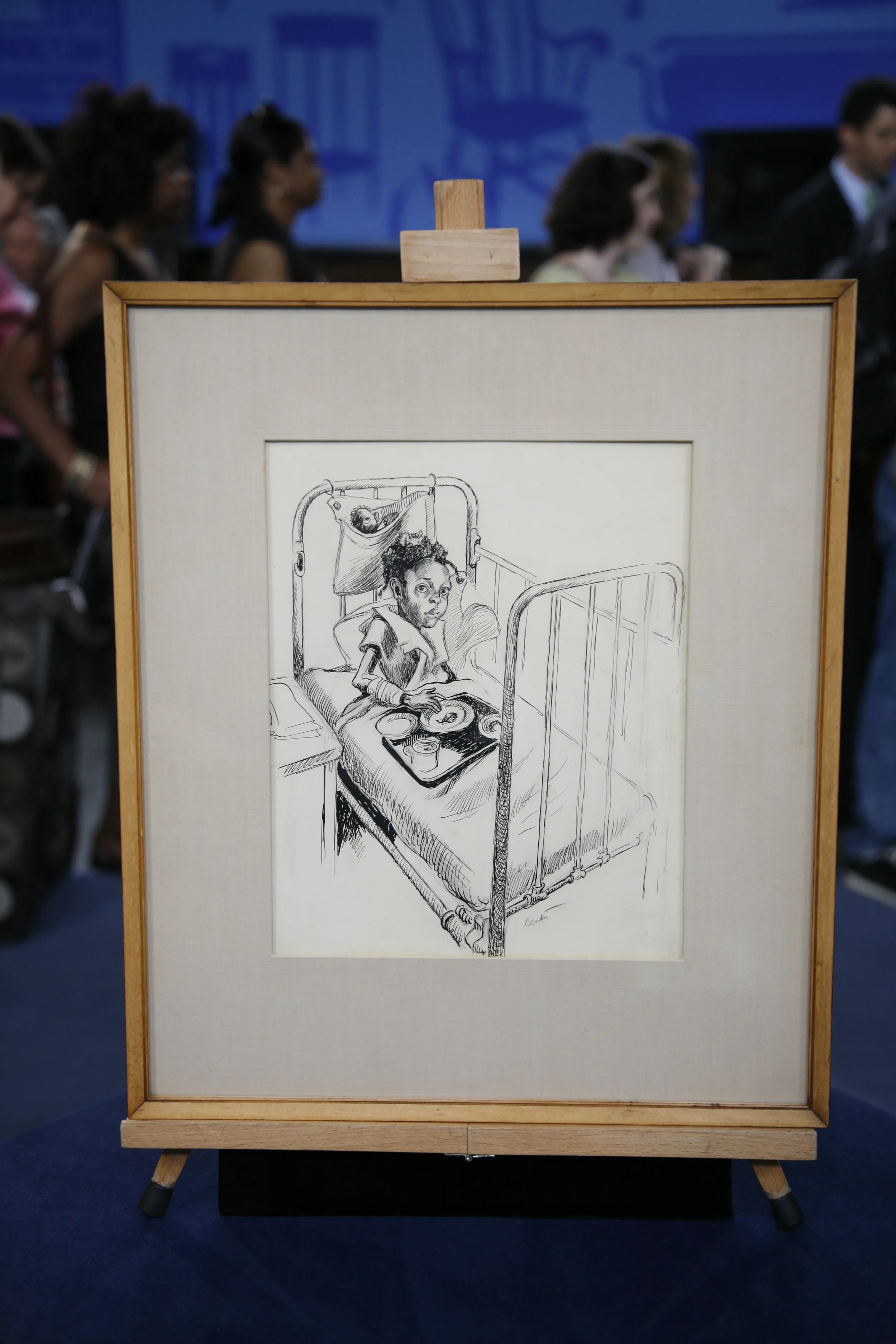
Thomas Hart Benton Drawing, ca. 1933
Understanding Our Appraisals
Executive producer Marsha Bemko shares her tips for getting the most out of ANTIQUES ROADSHOW.
Value can change: The value of an item is dependent upon many things, including the condition of the object itself, trends in the market for that kind of object, and the location where the item will be sold. These are just some of the reasons why the answer to the question "What's it worth?" is so often "It depends."
Note the date: Take note of the date the appraisal was recorded. This information appears in the upper left corner of the page, with the label "Appraised On." Values change over time according to market forces, so the current value of the item could be higher, lower, or the same as when our expert first appraised it.
Context is key: Listen carefully. Most of our experts will give appraisal values in context. For example, you'll often hear them say what an item is worth "at auction," or "retail," or "for insurance purposes" (replacement value). Retail prices are different from wholesale prices. Often an auctioneer will talk about what she knows best: the auction market. A shop owner will usually talk about what he knows best: the retail price he'd place on the object in his shop. And though there are no hard and fast rules, an object's auction price can often be half its retail value; yet for other objects, an auction price could be higher than retail. As a rule, however, retail and insurance/replacement values are about the same.
Verbal approximations: The values given by the experts on ANTIQUES ROADSHOW are considered "verbal approximations of value." Technically, an "appraisal" is a legal document, generally for insurance purposes, written by a qualified expert and paid for by the owner of the item. An appraisal usually involves an extensive amount of research to establish authenticity, provenance, composition, method of construction, and other important attributes of a particular object.
Opinion of value: As with all appraisals, the verbal approximations of value given at ROADSHOW events are our experts' opinions formed from their knowledge of antiques and collectibles, market trends, and other factors. Although our valuations are based on research and experience, opinions can, and sometimes do, vary among experts.
Appraiser affiliations: Finally, the affiliation of the appraiser may have changed since the appraisal was recorded. To see current contact information for an appraiser in the ROADSHOW Archive, click on the link below the appraiser's picture. Our Appraiser Index also contains a complete list of active ROADSHOW appraisers and their contact details and biographies.


