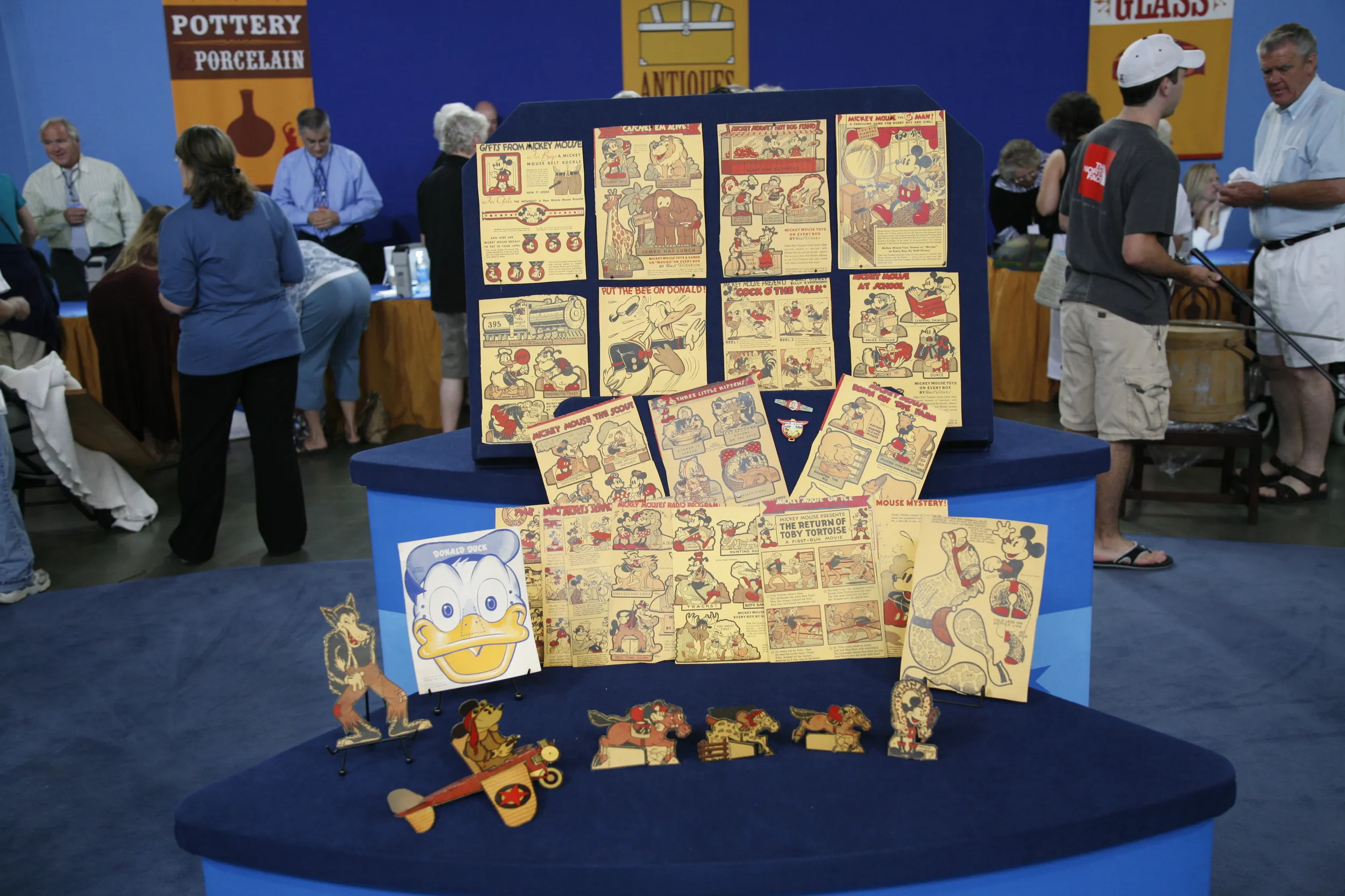
GUEST: I brought you the Post Toasties cutouts from the cereal boxes from the 1930s.
APPRAISER: Where'd you get them?
GUEST: I got them at a farm auction in Indiana. They were in a box and the cutouts were on top. And I like paper dolls and all kinds of toys, so they intrigued me. It started to rain, so I made a quick bid and took them to the car and looked through and... and saw that there were hundreds of them.
APPRAISER: But most of them were cutouts, right?
GUEST: Most of them are cutout. There's 21 that are the solid backs and there were hundreds of the cutouts, all in excellent shape. There are just perfectly cut out. And the other amazing thing was the fact that the tabs hadn't been bent, nor had they been played with.
APPRAISER: So, do you think they're worth anything?
GUEST: Well, you know, there's a lot of them. I know that the full boxes are quite valuable because people didn't save those kind of things.
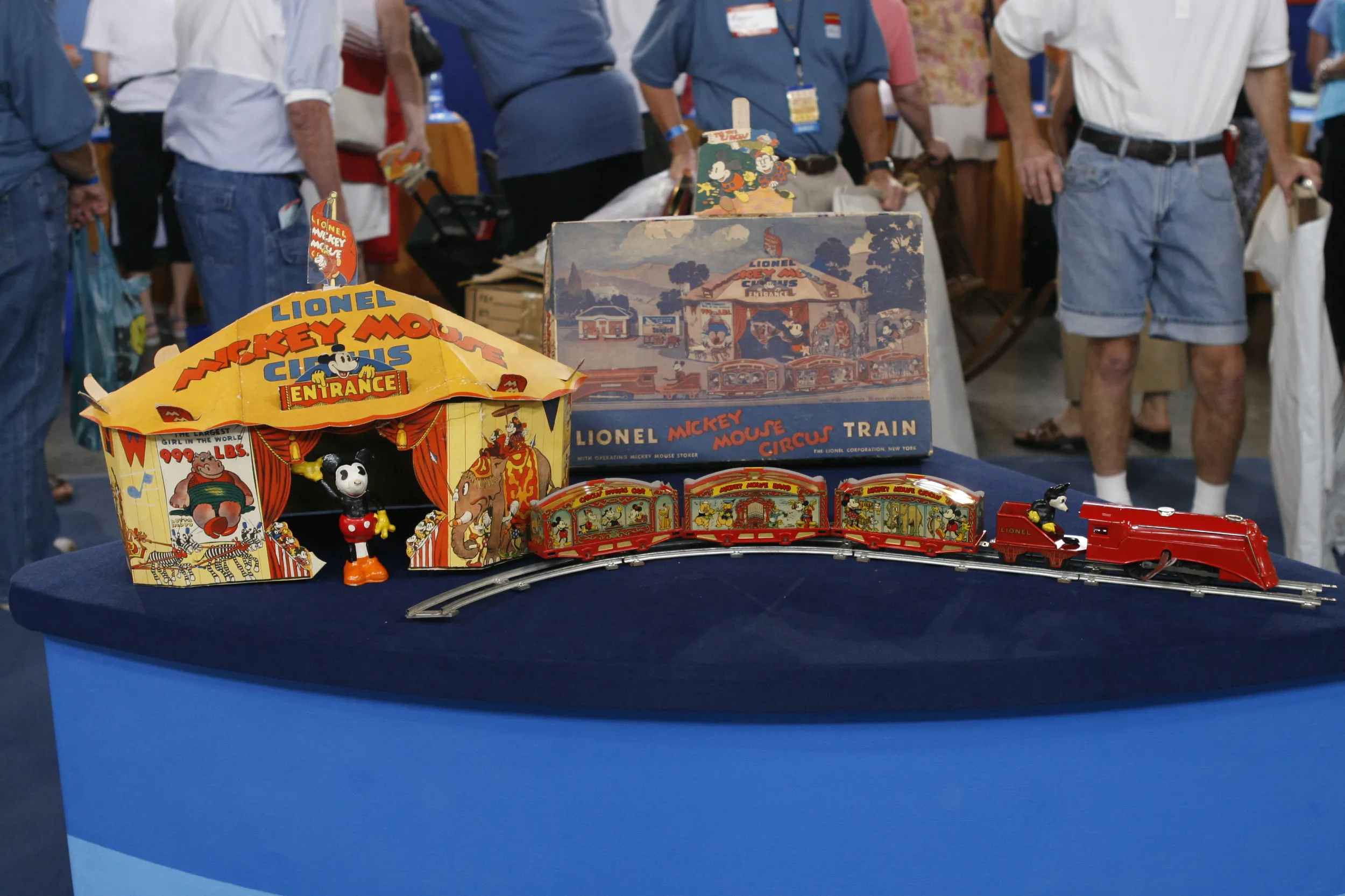
APPRAISER: Well, these aren't full boxes. These are just the backs. Cutouts. And the cutouts. Now, back in the '30s, the cereal companies found out they could sell a lot more cereal if they put Mickey Mouse on it.
GUEST: Okay.
APPRAISER: And so Post went to Disney through a gentleman named Kay Kaman, who came up with this whole merchandising idea for Disney and putting Mickey Mouse and the Disney characters on everything. Post Toasties became one of the earliest adopters and worked a great deal with Disney for probably close to ten years they were doing products. Now, on the box backs, they would do the cutouts, but they also would do games, puzzles...
GUEST: Yes.
APPRAISER:...and comic strips.
GUEST: Yes.
APPRAISER: Post Toasties would come up with different series that they would come out with-- the circus, farms, zoos; different types of characters.
GUEST: Yes.
APPRAISER: So these different types of characters would be less valuable than the Mickey Mouse ones, of course, because it's based on supply and demand.
GUEST: Sure, sure.
APPRAISER: Now, there's a huge demand for cereal boxes. A complete cereal box of any of these would sell for over a thousand dollars. The collection you brought in included literally hundreds of these little cutouts.
GUEST: Exactly.
APPRAISER: How many did you count?
GUEST: I counted well over 300.
APPRAISER: So including the 300 cutouts, all the cereal box backs and the premiums-- these little metal pieces actually came in cereal-- your whole collection would probably sell, in a shop, pieced out, at $3,500.
GUEST: Oh, wow.
APPRAISER: What did you pay?
GUEST: I paid 15.
APPRAISER: I'd say each of the box tops, 40, 50 bucks each per box top. Maybe even more. The cutouts are probably $50 a set.
GUEST: No kidding.
APPRAISER: Well, thanks for showing me this; I loved it.
GUEST: Thank you so much, Gary.