Cuban Volunteer Cazadores Flag, ca. 1898
GUEST: I brought this flag from the Spanish American War that my grandfather gave me, but his father gave to him, so my great-grandfather.
APPRAISER: Do you know anything about what he did during the war?
GUEST: Not particularly. I know that he was in the Navy, I believe.
APPRAISER: It is from the Spanish American War, but actually this particular item predates our involvement in the Spanish American War, Somewhere in that 1895 to early 1898 era. We very selfishly call it the Spanish American War. In 1895 there was a rebellion that started amongst the Cubans against Spanish colonial rule. Like our own rebellion here in the United States, you had people who were very passionately on the side of the insurrectos. You had people who simply didn't care and wanted to be left alone. And he had people who were loyal to the Spanish colonial government in Spain. And the flag that you have here is actually from one of those organizations that remain loyal to the Spanish crown.
GUEST: Okay.
APPRAISER: The Cazadores, or "hunters," is Spanish light infantry. And then the other clue that you have here is this is from Jesus del Monte, that was a suburb of Havana. So you have to wonder what's the suburb of Havana have to do with a military battle flag? That's where the volunteers who made up this organization were recruited from. So these are native Cubans who are on the side of the Spanish colonials fighting against their own fellows, the insurrectos, or the mambises…
GUEST: Alright.
APPRAISER: …as they were called. They joined the Cazadores, and this would have been their company battle flag.
GUEST: Okay.
APPRAISER: So this is for one company of infantry. And if we were able to look on the opposite side of this, we would be able to tell which company that was. It's nice that you have it framed, that also reduces the amount of information that we can see. The hunting horn is the infantry symbol, and then we have the Spanish flags and the Spanish coat of arms. This particular unit was not actively engaged in combat against the Americans. So this isn't the type of thing that you can ascribe to a flag that was captured in battle. More than likely, it's something that your relative acquired after the war was over during the American occupation of the country.
GUEST: Okay.
APPRAISER: The fact that it's a silk flag with hand embroidery makes it a little more rare than the cotton flags that you see of the period that every Spanish soldier carried called a knapsack flag. These tend not to survive very well because of the nature of the material that they're made of. It would have had bullion fringe around the edge, and that hurts it a little bit from a condition point of view, but it's still a very presentable, very beautiful relic of the Spanish American war. In a retail setting, this flag in its current condition would sell for between $2,500 and $3,000.
GUEST: Wow, that's good. Good chunk of change.

$2,500 - $3,500 Retail
$2,500 - $3,500 Retail
Featured In
episode
Cleveland, Hour 3 (2016)
A "Big Bronco" horse, a Bill Watterson archive, and a Tiffany & Co. necklace.
Silk
appraisal
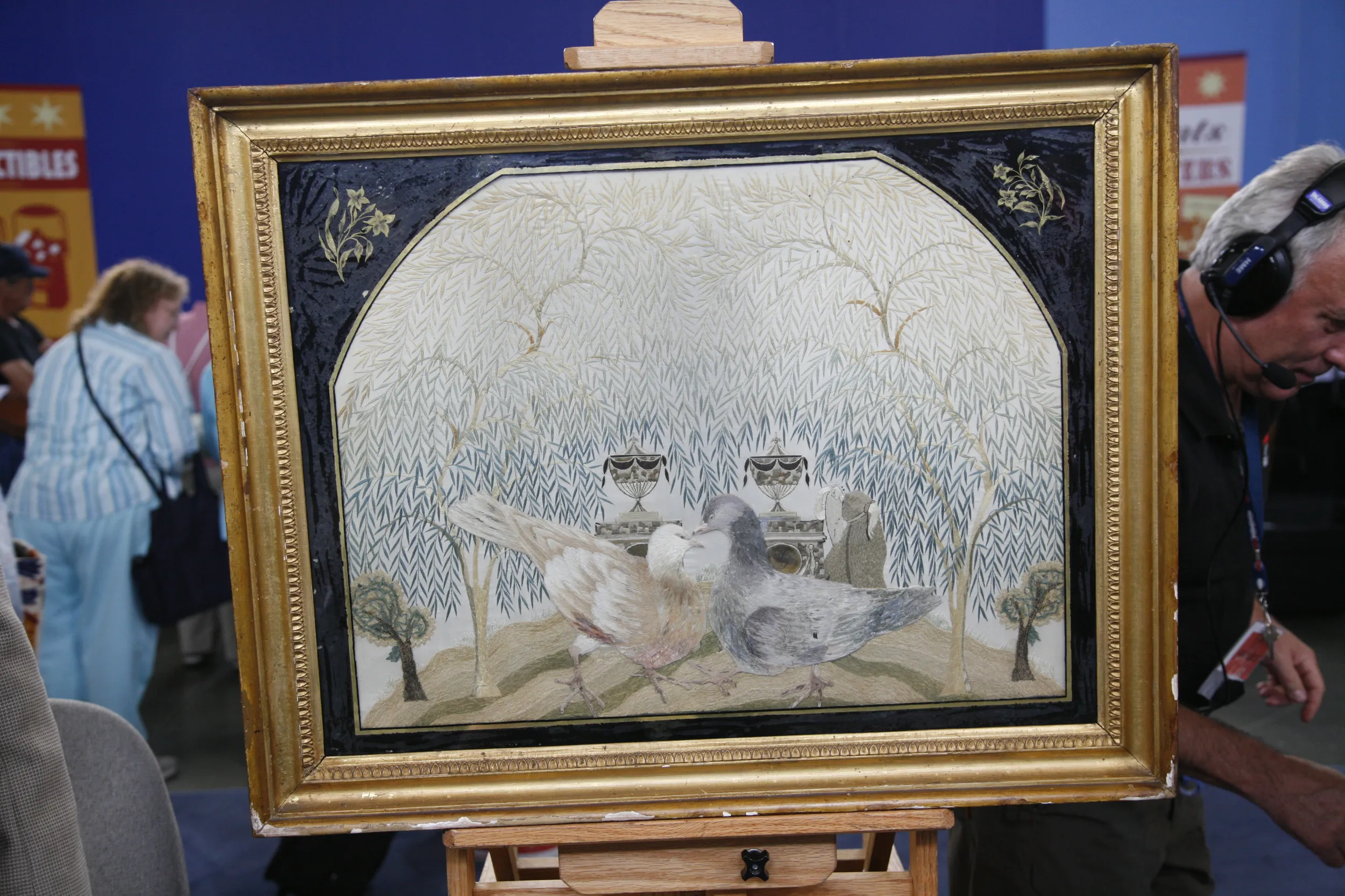
Mary Balch School Mourning Picture, ca. 1805
appraisal
appraisal
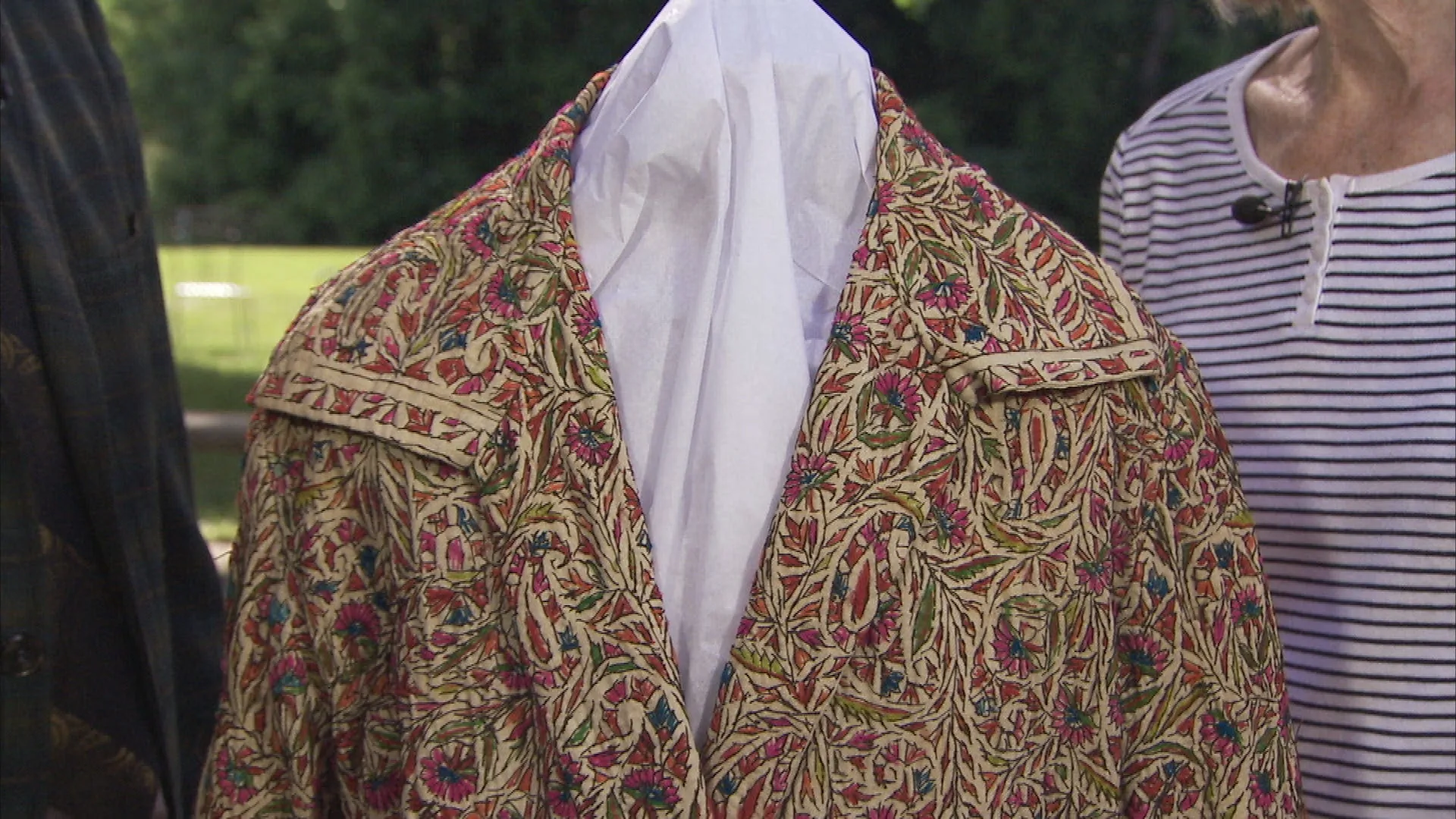
Egyptian Needlework Jacket, ca. 1925
appraisal
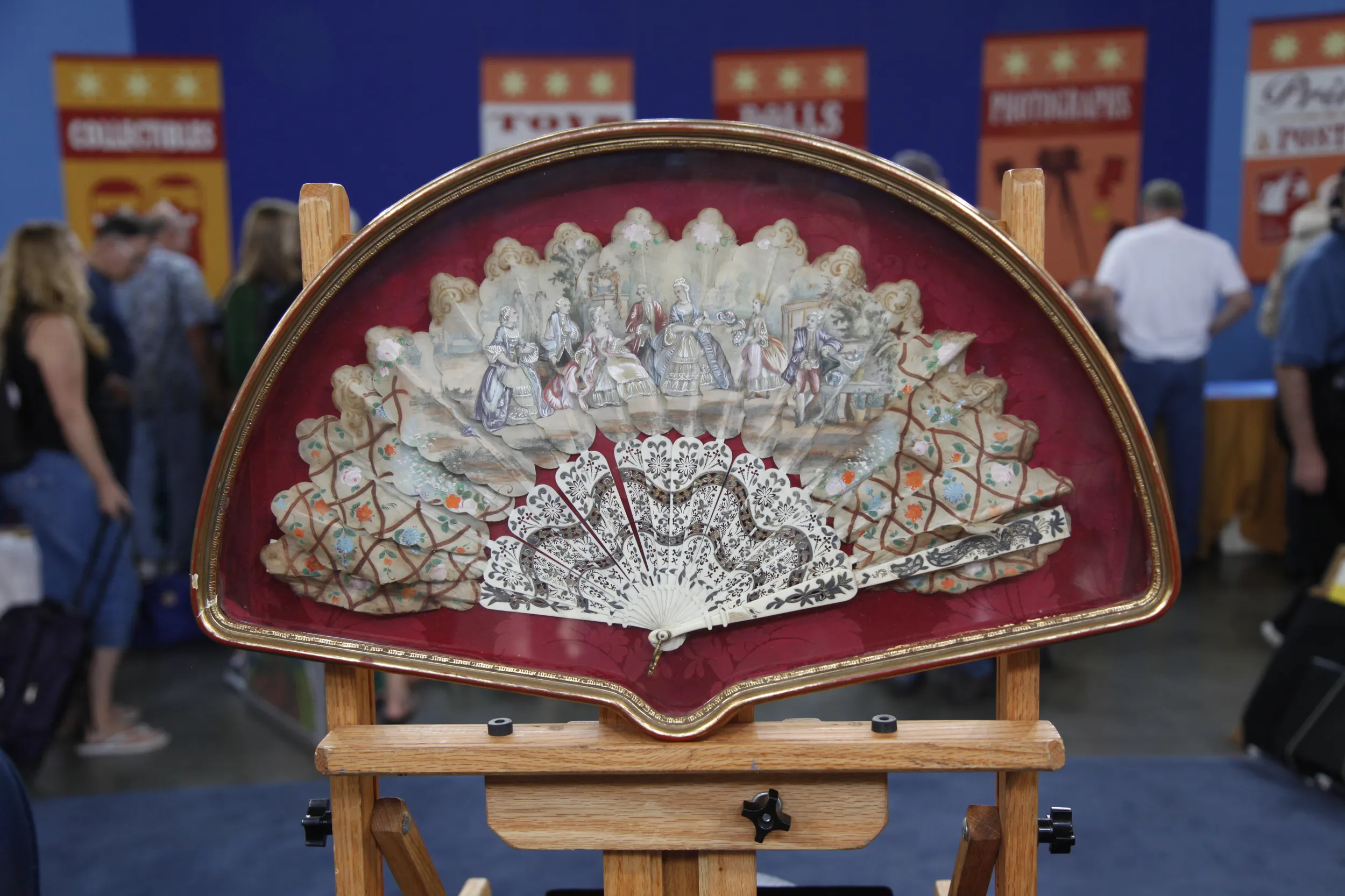
French Silk and Bone Fan, ca. 1800
Understanding Our Appraisals
Executive producer Marsha Bemko shares her tips for getting the most out of ANTIQUES ROADSHOW.
Value can change: The value of an item is dependent upon many things, including the condition of the object itself, trends in the market for that kind of object, and the location where the item will be sold. These are just some of the reasons why the answer to the question "What's it worth?" is so often "It depends."
Note the date: Take note of the date the appraisal was recorded. This information appears in the upper left corner of the page, with the label "Appraised On." Values change over time according to market forces, so the current value of the item could be higher, lower, or the same as when our expert first appraised it.
Context is key: Listen carefully. Most of our experts will give appraisal values in context. For example, you'll often hear them say what an item is worth "at auction," or "retail," or "for insurance purposes" (replacement value). Retail prices are different from wholesale prices. Often an auctioneer will talk about what she knows best: the auction market. A shop owner will usually talk about what he knows best: the retail price he'd place on the object in his shop. And though there are no hard and fast rules, an object's auction price can often be half its retail value; yet for other objects, an auction price could be higher than retail. As a rule, however, retail and insurance/replacement values are about the same.
Verbal approximations: The values given by the experts on ANTIQUES ROADSHOW are considered "verbal approximations of value." Technically, an "appraisal" is a legal document, generally for insurance purposes, written by a qualified expert and paid for by the owner of the item. An appraisal usually involves an extensive amount of research to establish authenticity, provenance, composition, method of construction, and other important attributes of a particular object.
Opinion of value: As with all appraisals, the verbal approximations of value given at ROADSHOW events are our experts' opinions formed from their knowledge of antiques and collectibles, market trends, and other factors. Although our valuations are based on research and experience, opinions can, and sometimes do, vary among experts.
Appraiser affiliations: Finally, the affiliation of the appraiser may have changed since the appraisal was recorded. To see current contact information for an appraiser in the ROADSHOW Archive, click on the link below the appraiser's picture. Our Appraiser Index also contains a complete list of active ROADSHOW appraisers and their contact details and biographies.


