Cotton Printed Women's Dress, ca. 1798
GUEST: It was given to us by a good friend of my wife's mother, and it was from her family and we think it was in the 1800s this... the dress was made. My wife is a home EC teacher and so she was very interested in all the work that went into making the dress. It was given to my wife about in the 1960s.
APPRAISER: It's earlier than you think. It is a very rare example of an indigo printed cotton dress. That dates to 1798. Or thereabouts.
GUEST: Oh, my goodness.
APPRAISER: This type of printing was very complicated. And so we as Americans, just a few decades after the Revolutionary War, we didn't have that skill and that infrastructure to make this type of multi-process printing. And so there is very good possibility the fabric, at least, comes from England. It's in wonderful condition. It's a glazed cotton and I can see around certain areas it's a little shiny. It is lined-- the bodice is lined with a very heavy linen to kind of keep body sweats away. It has a pull drawstring tie at the top and one on right at the bodice. And the inside, there's just a little opening. You can see there is sort of a flap closure inside, just for modesty's sake. The aspect that really helps us zero in on the date is all in the back. We have a really tight triangle piece that's put here with amazing, tiny little hand-done pleats. Everything is hand-handmade here, um, and a lot of fullness. This is a pleating with a lot of fullness in the back. Later on, even ten years later, five years later, we slowly start to see this more like a column. But this sort of nice sweep and fullness at the back is helping to date it to the very late 1790s. Had you ever thought about the value?
GUEST: No, we've never really worried about it. My wife just said it's just a museum piece and we just need to keep it because it's a very valuable dress.
APPRAISER: She is absolutely right that it's that's the kind of level of dress it is. It is a very elevated, up-to-date day dress in great condition. For insurance purposes, you would have an insurance value of $15,000.
GUEST: Oh, my goodness. That's amazing.
APPRAISER: It-it's very rare.
GUEST: Unsuspected. (chuckling)
APPRAISER: Unsuspected. My heart stopped when we saw it!
GUEST: (chuckling)
APPRAISER: The color alone and then looking at it...
GUEST: Yeah.
APPRAISER: ...and dating it to that early, there was a lot of excitement on the table. So, um, thank you so much for bringing it in.
GUEST: Okay. Well, we appreciate all your help in telling us more about it.

$15,000 Insurance
Featured In

episode
Denver Botanic Gardens Chatfield Farms, Hour 3
NEW! ROADSHOW discovers treasures during the third hour from Littleton, CO.
Dress
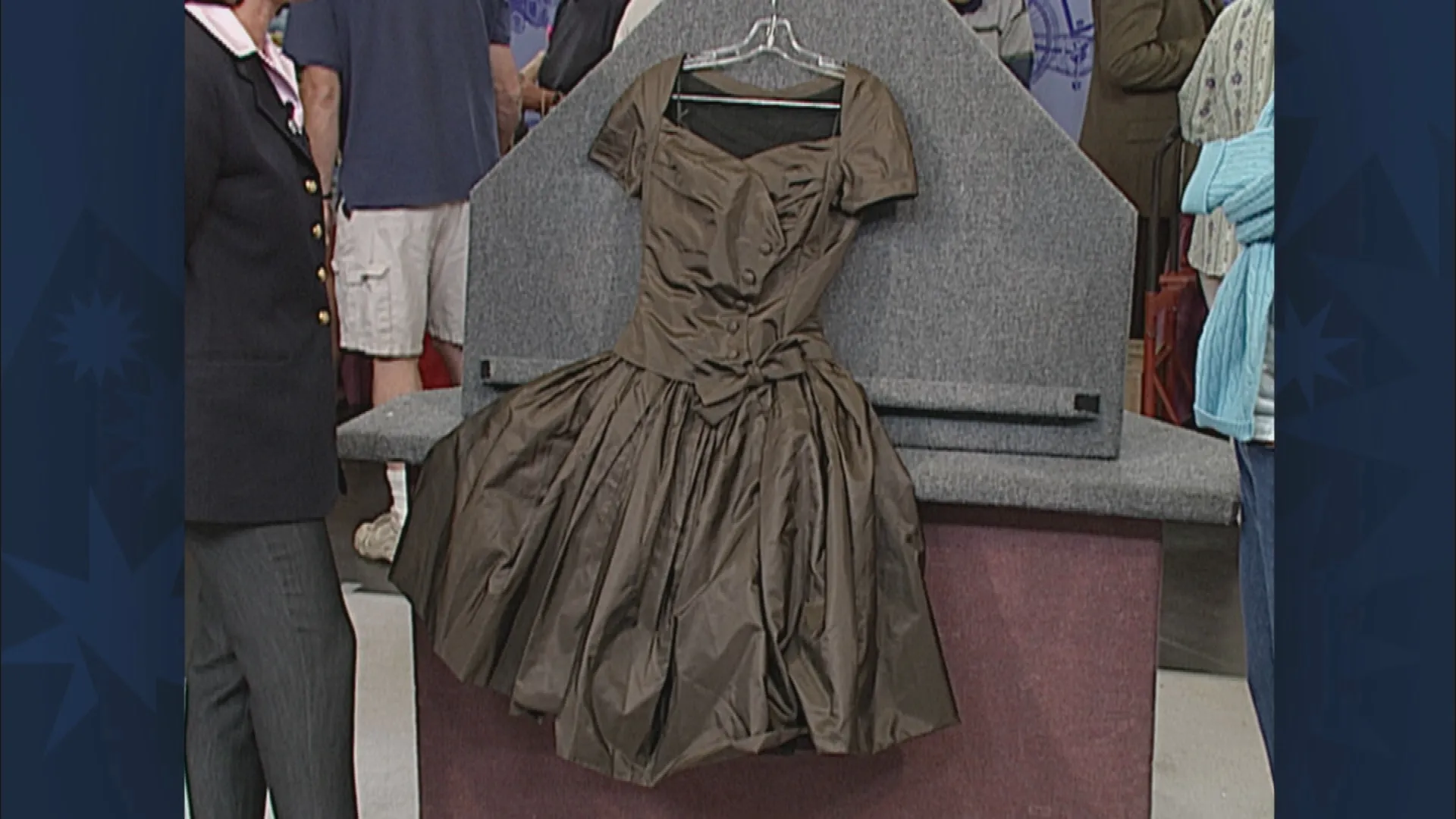
appraisal
1954 Christian Dior Couture Dress
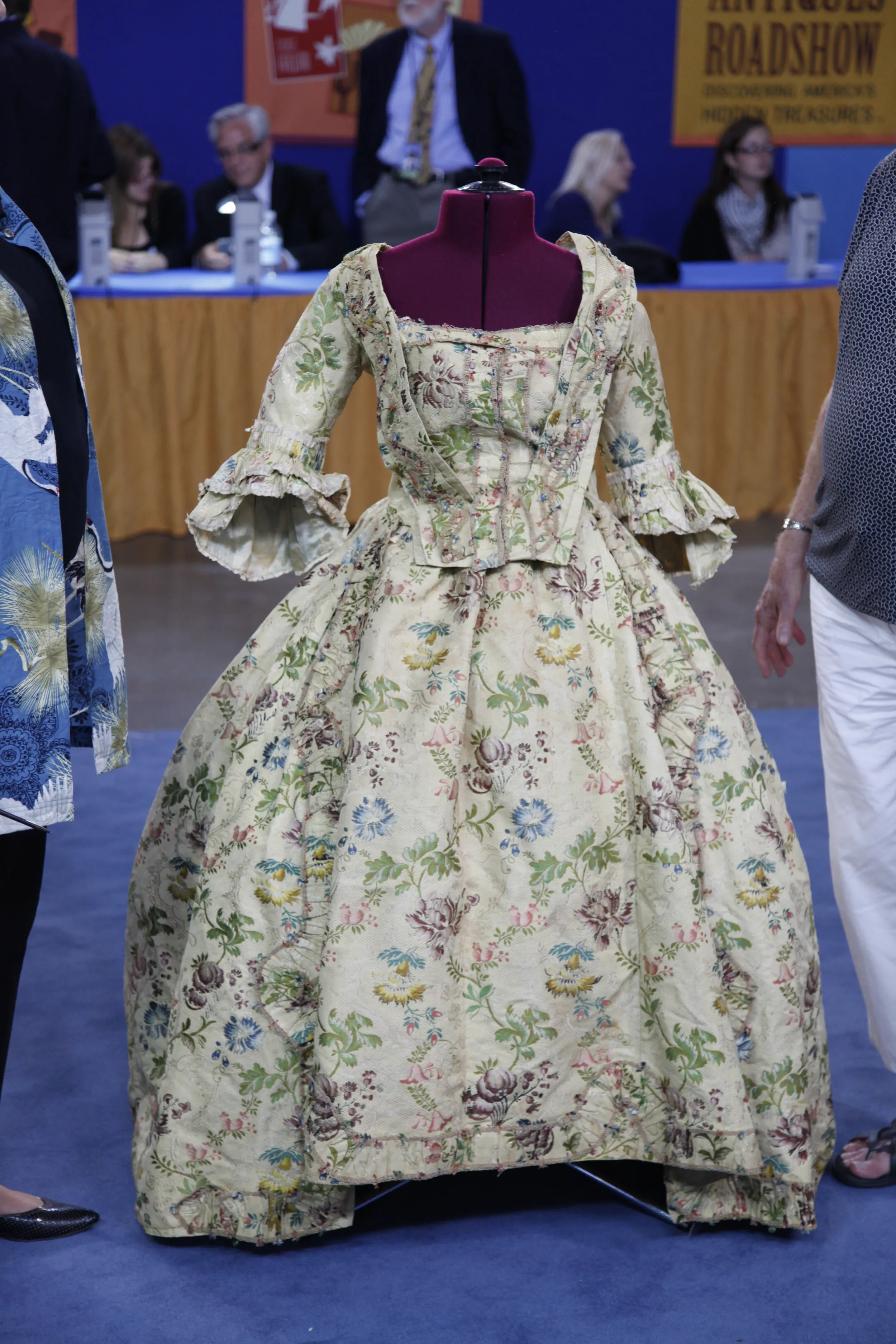
appraisal
French Brocade Dress, ca. 1775

appraisal
Dorothy Lamour Signed Sarong, ca. 1940
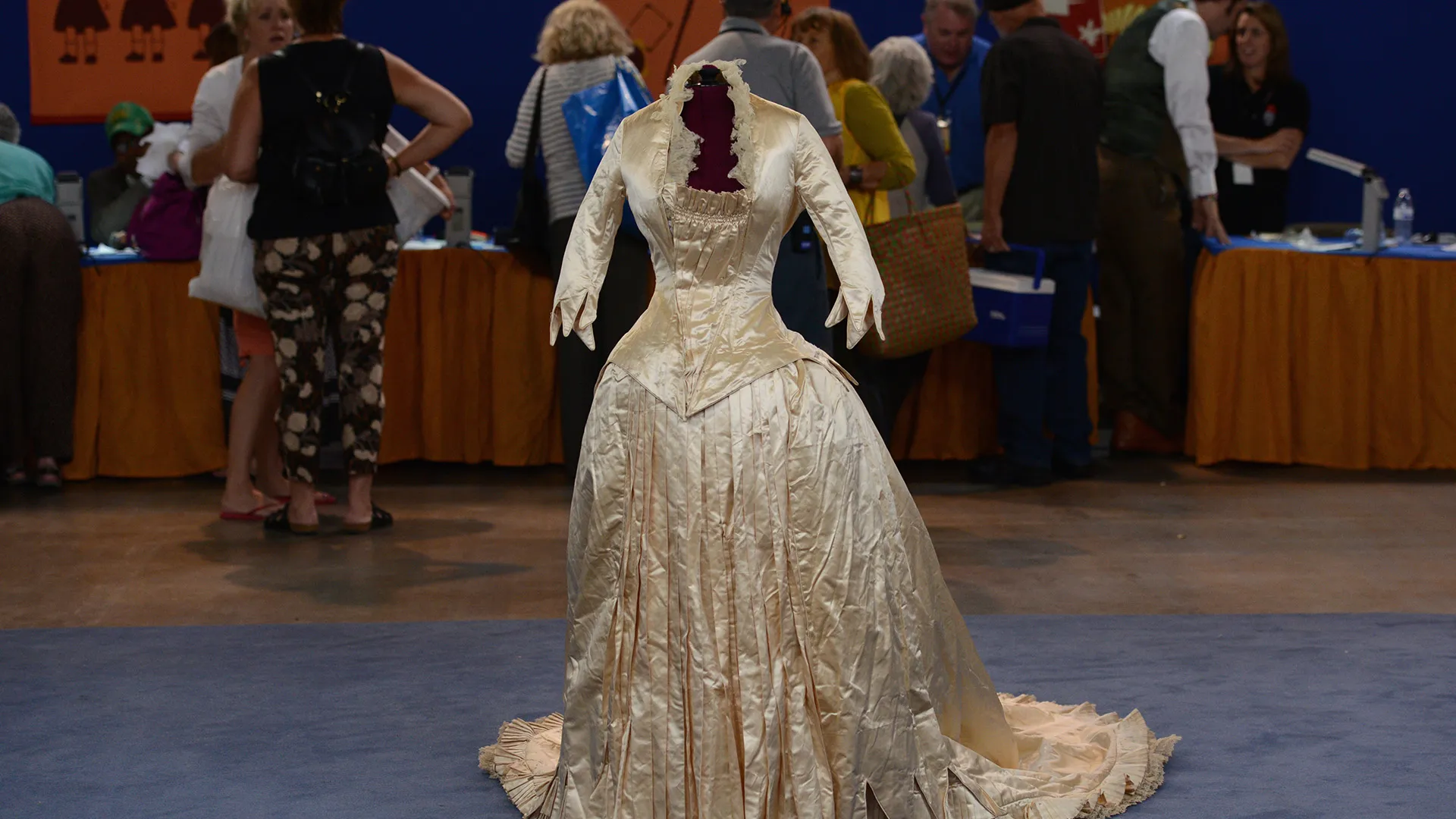
appraisal
Silk Wedding Gown, ca. 1875
Understanding Our Appraisals
Executive producer Marsha Bemko shares her tips for getting the most out of ANTIQUES ROADSHOW.
Value can change: The value of an item is dependent upon many things, including the condition of the object itself, trends in the market for that kind of object, and the location where the item will be sold. These are just some of the reasons why the answer to the question "What's it worth?" is so often "It depends."
Note the date: Take note of the date the appraisal was recorded. This information appears in the upper left corner of the page, with the label "Appraised On." Values change over time according to market forces, so the current value of the item could be higher, lower, or the same as when our expert first appraised it.
Context is key: Listen carefully. Most of our experts will give appraisal values in context. For example, you'll often hear them say what an item is worth "at auction," or "retail," or "for insurance purposes" (replacement value). Retail prices are different from wholesale prices. Often an auctioneer will talk about what she knows best: the auction market. A shop owner will usually talk about what he knows best: the retail price he'd place on the object in his shop. And though there are no hard and fast rules, an object's auction price can often be half its retail value; yet for other objects, an auction price could be higher than retail. As a rule, however, retail and insurance/replacement values are about the same.
Verbal approximations: The values given by the experts on ANTIQUES ROADSHOW are considered "verbal approximations of value." Technically, an "appraisal" is a legal document, generally for insurance purposes, written by a qualified expert and paid for by the owner of the item. An appraisal usually involves an extensive amount of research to establish authenticity, provenance, composition, method of construction, and other important attributes of a particular object.
Opinion of value: As with all appraisals, the verbal approximations of value given at ROADSHOW events are our experts' opinions formed from their knowledge of antiques and collectibles, market trends, and other factors. Although our valuations are based on research and experience, opinions can, and sometimes do, vary among experts.
Appraiser affiliations: Finally, the affiliation of the appraiser may have changed since the appraisal was recorded. To see current contact information for an appraiser in the ROADSHOW Archive, click on the link below the appraiser's picture. Our Appraiser Index also contains a complete list of active ROADSHOW appraisers and their contact details and biographies.


