Constantin Korovin Paintings, ca. 1930
GUEST: I brought some Russian artwork by Konstantin Korovine. My husband is a constant hunter and he... we lived in Irvine, California, at the time, and he was out estate sale shopping and found them in an estate sale in Irvine about 1993.
APPRAISER: How much did he pay for them?
GUEST: He said he paid $50 each.
APPRAISER: I'll talk a little bit about Konstantin Korovine. He was, uh, known and is known as one of Russia's foremost Impressionist painters.
GUEST: Oh.
APPRAISER: Impressionism is usually something that we... when we hear, we think about French Impressionists.
GUEST: Yes.
APPRAISER: The French definitely have, uh, the right to say that they invented Impressionism. But Korovine was painting in an Impressionist style even before he went to France in the 1880s. He visited France for the first time in around 1885.
GUEST: Oh. d
APPRAISER: And when he saw what the Impressionists were doing, he said, "I've been doing that all along."
GUEST: (chuckling): That's exciting.
APPRAISER: He was born in 1861. He studied at the Moscow School of Painting, Sculpture, and Architecture. He was involved in a lot of the more important art movements successively as they came about in Russia. He would, uh, travel with the Abramtsevo group. He would travel to Spain, he would travel to France. He returned to Russia, he became a famous professor at the same institute in Moscow. Then the Russian Revolution happened. He decided to go to, to France for various reasons. His health was bad and also he had a son who tragically lost his feet in a tramway accident.
GUEST: Oh, my gosh.
APPRAISER: So he had to support his disabled son and himself. He went to France in 1923. There was a big exhibition planned of his paintings. And right before it was exhibited, all the paintings were, were stolen.
GUEST: Oh, my gosh.
APPRAISER: So he was really left in a bad place, penniless. None of these are dated. But what he started to do is he, he painted these scenes basically
after 1923 until his death in 1939. What we're looking at are three subject matters that he enjoyed painting and that he painted a lot after he moved to Paris. One was Paris at night.
GUEST: Mm-hmm.
APPRAISER: And he would also do a lot of winter scenes that reminded people of Russia. And he was openly nostalgic for Russia. Here he was painting a lot from memory. So here we have Per...Paris at night. Uh, next to you we have one of his winter scenes. And next to me is another scene that he enjoyed painting-- he did this a lot-- which was musicians around a campfire. These are all oil on board. These works are still very popular. The best auction estimate I could give you would be on these two pieces next to me, the Parisian scene and the musicians around the campfire. About $10,000 to $15,000 each at auction.
GUEST: Really? Oh, my God. Really? Okay.
APPRAISER: And the one next to you...
GUEST: That's exciting.
APPRAISER: (chuckles) And the one next to you, I would...I would put it a little less. Probably closer to like $5,000 to $10,000.
GUEST: Oh.
APPRAISER: Only because there's a l... just a little bit less going on there.
GUEST: Yeah.
APPRAISER: So, all together that, that would be around $25,000 to $40,000 at auction for the grouping.
GUEST: That's really exciting.
APPRAISER: His work has sold in the millions of dollars. These were selling for a little bit more when current events aren't like they are right now. But...
GUEST: I was wondering about that, what the war had effect on...
APPRAISER: It does.
GUEST: ...the Russian market.
APPRAISER: It does. But there's still an appetite for his works.

$25,000 - $40,000 Auction
Featured In

episode
Springs Preserve, Hour 3
ROADSHOW heads to the Mojave Desert in search of marvels at Springs Preserve in Las Vegas.
1930s
appraisal
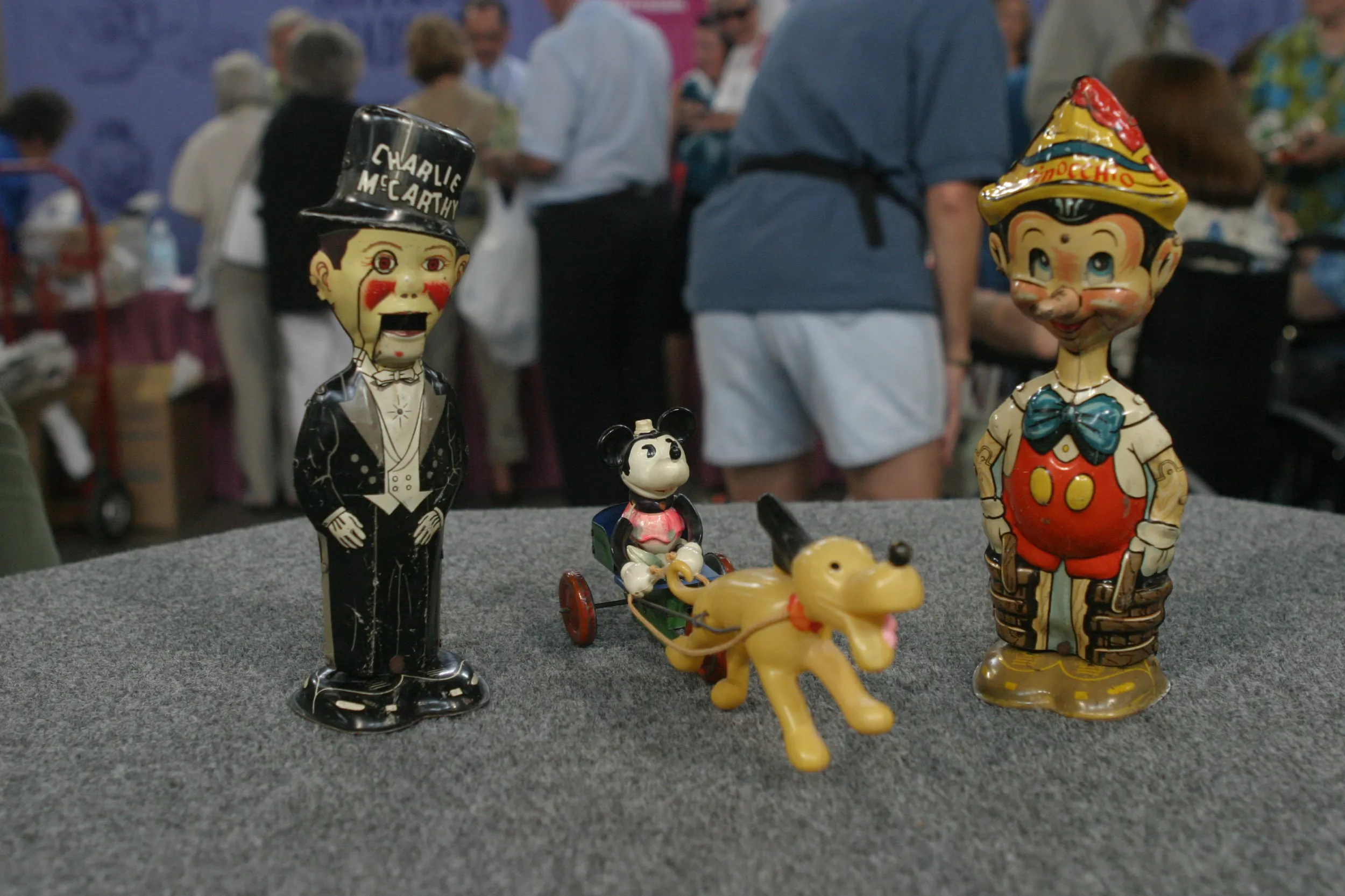
Comic Wind-up Toys, ca. 1930

appraisal
Dr. Seuss “Kangaroo Bird," ca. 1938

appraisal
appraisal
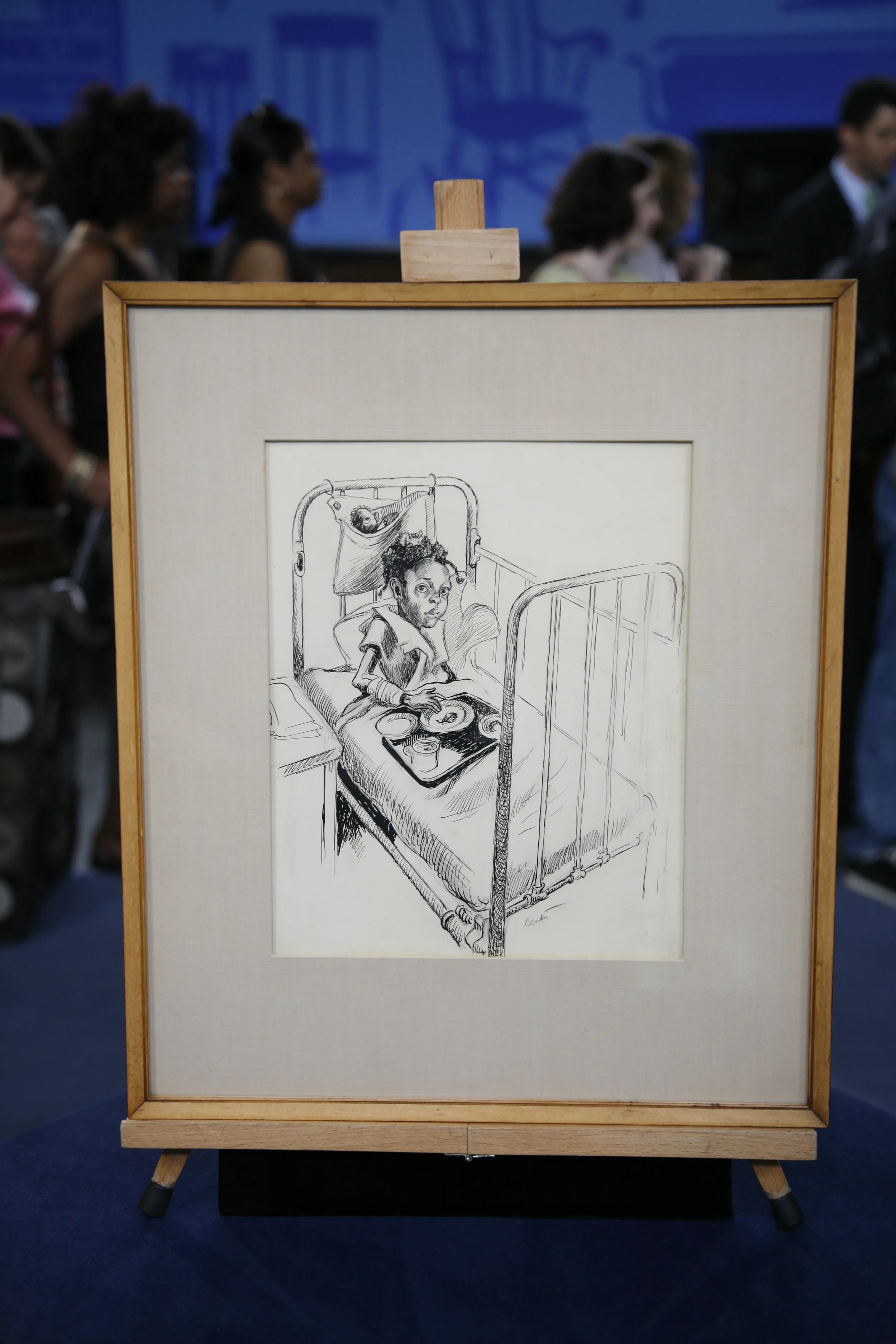
Thomas Hart Benton Drawing, ca. 1933
Understanding Our Appraisals
Executive producer Marsha Bemko shares her tips for getting the most out of ANTIQUES ROADSHOW.
Value can change: The value of an item is dependent upon many things, including the condition of the object itself, trends in the market for that kind of object, and the location where the item will be sold. These are just some of the reasons why the answer to the question "What's it worth?" is so often "It depends."
Note the date: Take note of the date the appraisal was recorded. This information appears in the upper left corner of the page, with the label "Appraised On." Values change over time according to market forces, so the current value of the item could be higher, lower, or the same as when our expert first appraised it.
Context is key: Listen carefully. Most of our experts will give appraisal values in context. For example, you'll often hear them say what an item is worth "at auction," or "retail," or "for insurance purposes" (replacement value). Retail prices are different from wholesale prices. Often an auctioneer will talk about what she knows best: the auction market. A shop owner will usually talk about what he knows best: the retail price he'd place on the object in his shop. And though there are no hard and fast rules, an object's auction price can often be half its retail value; yet for other objects, an auction price could be higher than retail. As a rule, however, retail and insurance/replacement values are about the same.
Verbal approximations: The values given by the experts on ANTIQUES ROADSHOW are considered "verbal approximations of value." Technically, an "appraisal" is a legal document, generally for insurance purposes, written by a qualified expert and paid for by the owner of the item. An appraisal usually involves an extensive amount of research to establish authenticity, provenance, composition, method of construction, and other important attributes of a particular object.
Opinion of value: As with all appraisals, the verbal approximations of value given at ROADSHOW events are our experts' opinions formed from their knowledge of antiques and collectibles, market trends, and other factors. Although our valuations are based on research and experience, opinions can, and sometimes do, vary among experts.
Appraiser affiliations: Finally, the affiliation of the appraiser may have changed since the appraisal was recorded. To see current contact information for an appraiser in the ROADSHOW Archive, click on the link below the appraiser's picture. Our Appraiser Index also contains a complete list of active ROADSHOW appraisers and their contact details and biographies.


