GUEST: I know it's a Colt revolver, and it was given to my great great grandfather in about 1872 by a good friend of his who... they both served in the Civil War together. And this friend of his was, according to this letter, a bodyguard for President Lincoln and supposedly got a shot off at John Wilkes Booth during the assassination. And since then, the revolver has been passed down through my grandfathers on my father's side uh, down to my father. And now it's in my possession.
APPRAISER: And this letter is dated 1923.
GUEST: That's correct, and it was written by my great grandfather. The friend of my great great grandfather's-- this Fletcher Budd-- was a criminal lawyer in Philadelphia in the 1870s, 1880s. And other than that, we don't know much about him.
APPRAISER: What do you know about the Lincoln assassination?
GUEST: The basic story, that he was shot at Ford Theater and Wilkes Booth supposedly broke his leg when he fell off the balcony or jumped off the balcony.
APPRAISER: I believe that the letter actually says that Fletcher Budd broke John Wilkes Booth's leg, firing at him.
GUEST: It does say that and I have never read that in any history books, so I don't know.
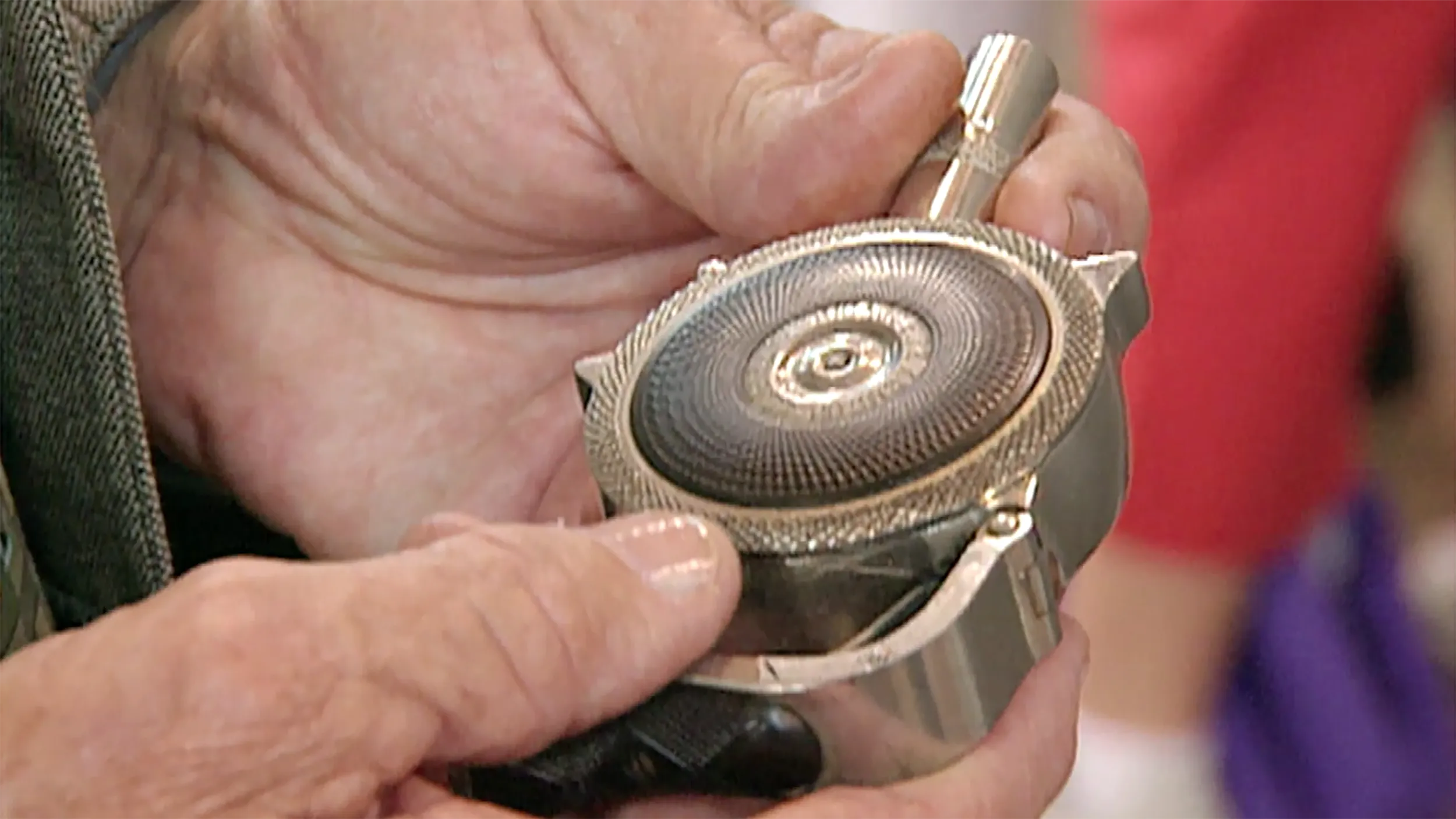
APPRAISER: Yeah. So, let's start with the gun. The gun is a Colt model 1849 pocket revolver.
GUEST: Okay.
APPRAISER: It's cased and with, it appears, all the original accessories.
GUEST: Oh, wonderful.
APPRAISER: I did a little bit of research on the serial number here and found out that the gun was made in 1862. As you know, Lincoln was assassinated on April 14, 1865.
GUEST: Yes.
APPRAISER: So, it's conceivable that this gun, at least from a timeline, could have been used.
GUEST: Right.
APPRAISER: From what I know of the assassination, Lincoln only had one bodyguard that night.
GUEST: Right.
APPRAISER: And he left his post that evening, which allowed John Wilkes Booth to enter into Lincoln's private booth and assassinate him with a Henry Derringer pistol.
GUEST: Okay.
APPRAISER: My only trouble is that the only research that I've discovered is that the name of his bodyguard was John Parker.
GUEST: Right.
APPRAISER: And that's all I've ever heard.
GUEST: Yeah.
APPRAISER: Lincoln didn't have, as you pointed out, any sort of official group of guys that were his bodyguards, and, in fact, John Parker was on loan to him from the Metropolitan Police Service that evening. The Secret Service actually didn't begin until July of 1865.
GUEST: Oh, okay.
APPRAISER: And their primary responsibility was to find counterfeiters.
GUEST: Oh.
APPRAISER: It wasn't to protect the president.
GUEST: Right.
APPRAISER: At that point. In this condition, at auction, I would estimate this pistol is worth about $2,000 to $3,000.
GUEST: Oh, wow.
APPRAISER: If there was any way that we could truly document the history behind it and support it more, I would guess it would be about $15,000 to $20,000.
GUEST: Oh, wow.
APPRAISER: And, um, part of this is that in many cases, family histories become cloudy.
GUEST: Exactly.
APPRAISER: Even if he was there, and did take a shot, it would have been big news. I mean...
GUEST: You would think so, exactly.
APPRAISER: This is one of the most investigated crimes in its day, so if he had any sort of even peripheral association, it would have been documented.
GUEST: Well, thank you.
APPRAISER: You're welcome.
GUEST: That's good to know.