Coalport Porcelain Dessert Set, ca. 1810
GUEST: This came down from my grandmother's side of the family. My parents had it appraised in the '70s, and they appraised it as Royal Worcester and for, like, I think, either $700 or $1,000. I can't really remember. But recently, I had a couple of pieces restored by a professional restorer, and they told me it wasn't English, because it's not marked, that more likely it was early French before the French started marking their porcelain.
APPRAISER: Well, first I looked at it, and I thought "Chinese export porcelain."
GUEST: Mm-hmm.
APPRAISER: Because it does look very similar to several variations of patterns called tobacco leaf that were made on 18th-century Chinese export porcelain.
GUEST: Yes.
APPRAISER: However, the colors are not quite right. And so this was an interpretation by Europeans. You've heard several things, but actually, this set is absolutely English.
GUEST: Oh, really?
APPRAISER: There are several ways I can tell that, but primarily, because it is soft-paste porcelain.
GUEST: Uh-huh.
APPRAISER: If it had been French, it would have been hard-paste porcelain. I am fairly certain that it was made by Coalport. It dates about 1800 to 1825. And the reasons that I think that it's Coalport partially is the shapes. And if you notice, the plates have slight notches in them.
GUEST: Yes.
APPRAISER: That's typical of Coalport from that time period.
GUEST: Okay.
APPRAISER: It is a dessert set, and a dessert set was arranged around serving not only sweets, like baked goods, but also lots of fruits. This piece here is called a fruit cooler. And if we take the lid off, you've got a piece missing. There is supposed to be a liner that fits in here.
GUEST: Okay.
APPRAISER: So you would put a layer of ice...
GUEST: Uh-huh.
APPRAISER: Then the liner would fit in, and then you would put fruit or whatever food that you wanted to keep cold. The lid would be placed back on it, and then the lid is shaped like this, it's very deep, so you could put ice on top of it.
GUEST: Oh, okay.
APPRAISER: This piece is a sauce tureen, probably used for a sweet sauce. Then you've got three shapes of dessert dishes. You've got this oval dish, you've got a pair of these shell-shaped dishes...
GUEST: Mm-hmm.
APPRAISER: And you actually have three of these square dishes. And then, finally, you have the dessert serving plates. You've got a total, I believe, of 15...
GUEST: 15, yes.
APPRAISER: The value on this is not so much the age as the decoration. This is considered spectacular decoration.
GUEST: Oh, okay.
APPRAISER: And therefore is quite valuable. If we add together this set...
GUEST: Uh-huh.
APPRAISER: A retail value, or an insurance value, would be between $20,000 and $30,000.
GUEST: Oh... Oh, my. My mom's going to see this, and... And she going to ask for it back, probably.

$20,000 - $30,000 Retail
$20,000 - $30,000 Retail
Featured In
episode
Baltimore, Hour 1
Roadshow host Mark L. Walberg wanders the whimsical and elegant Ladew Topiary Gardens.
episode
Special: Tasty Treasures
ROADSHOW serves up a cornucopia of appetizing antiques and delectable collectibles.
episode
Vintage Baltimore 2021, Hour 2
What are treasures from the 2007 Baltimore ROADSHOW worth now?
Pottery & Porcelain
appraisal
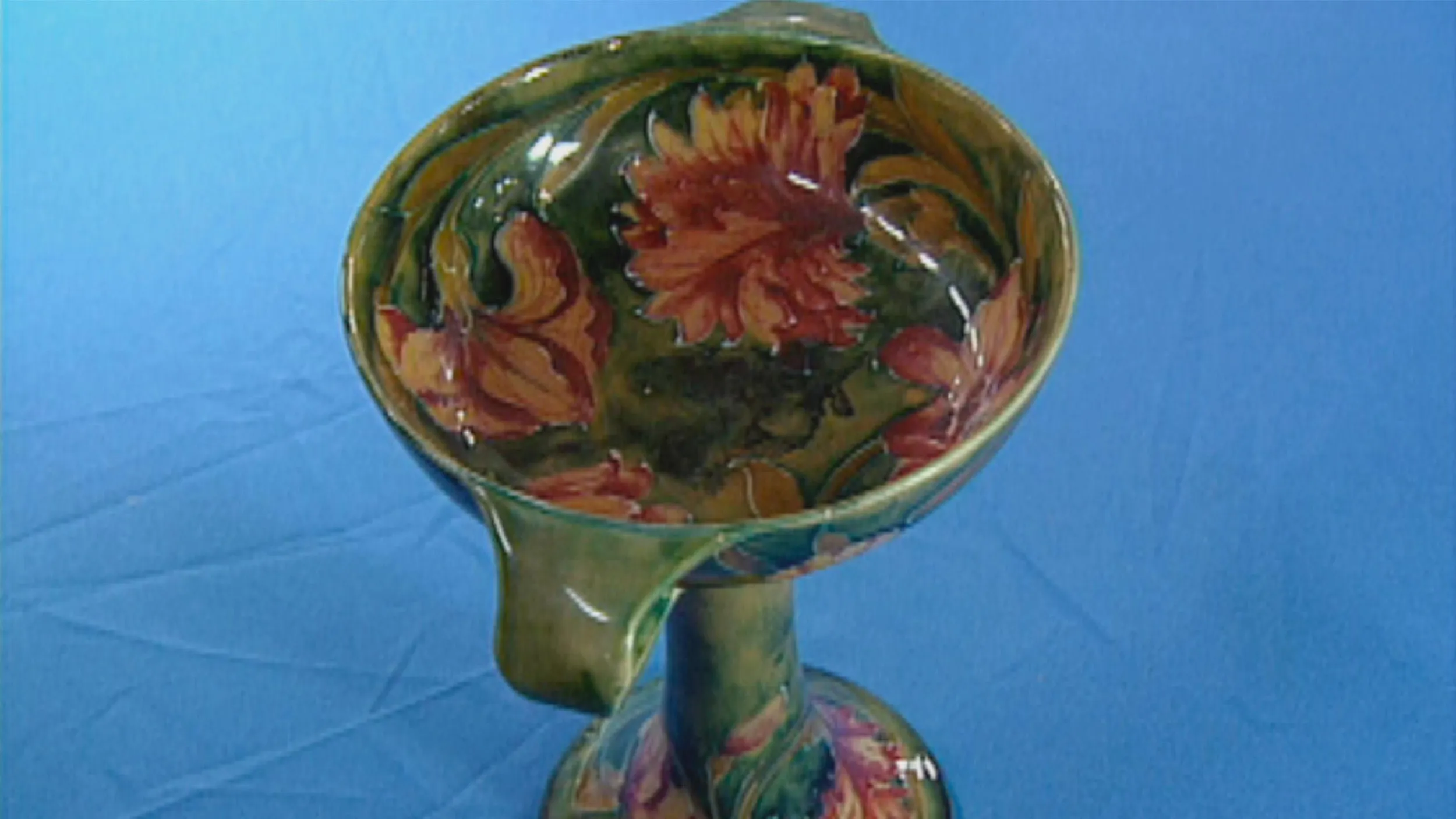
William Moorcroft Pottery, ca. 1910

appraisal
1876 John Alexander Stoneware Cooler
appraisal
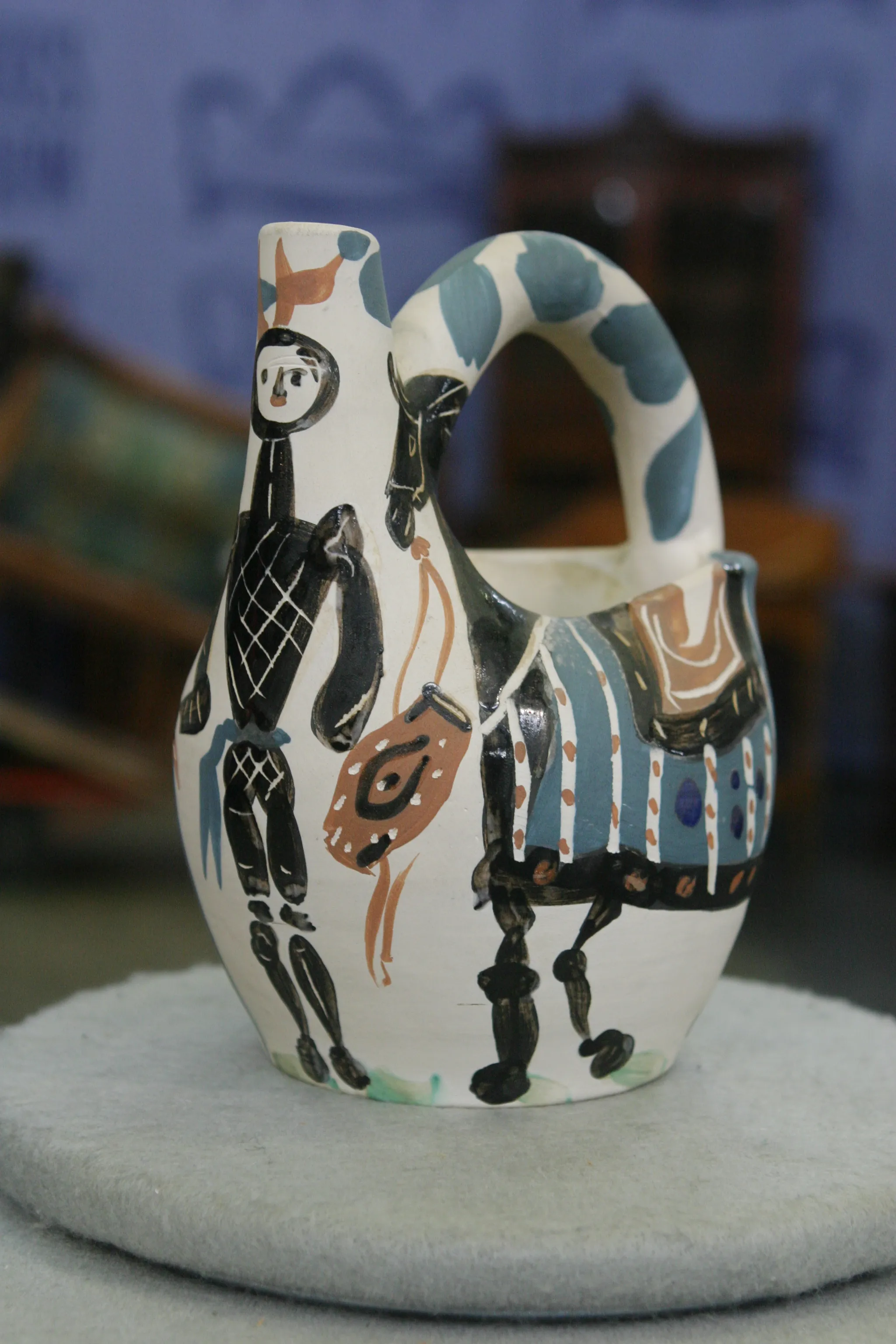
1952 Picasso Madoura Ceramic Jug

appraisal
Understanding Our Appraisals
Executive producer Marsha Bemko shares her tips for getting the most out of ANTIQUES ROADSHOW.
Value can change: The value of an item is dependent upon many things, including the condition of the object itself, trends in the market for that kind of object, and the location where the item will be sold. These are just some of the reasons why the answer to the question "What's it worth?" is so often "It depends."
Note the date: Take note of the date the appraisal was recorded. This information appears in the upper left corner of the page, with the label "Appraised On." Values change over time according to market forces, so the current value of the item could be higher, lower, or the same as when our expert first appraised it.
Context is key: Listen carefully. Most of our experts will give appraisal values in context. For example, you'll often hear them say what an item is worth "at auction," or "retail," or "for insurance purposes" (replacement value). Retail prices are different from wholesale prices. Often an auctioneer will talk about what she knows best: the auction market. A shop owner will usually talk about what he knows best: the retail price he'd place on the object in his shop. And though there are no hard and fast rules, an object's auction price can often be half its retail value; yet for other objects, an auction price could be higher than retail. As a rule, however, retail and insurance/replacement values are about the same.
Verbal approximations: The values given by the experts on ANTIQUES ROADSHOW are considered "verbal approximations of value." Technically, an "appraisal" is a legal document, generally for insurance purposes, written by a qualified expert and paid for by the owner of the item. An appraisal usually involves an extensive amount of research to establish authenticity, provenance, composition, method of construction, and other important attributes of a particular object.
Opinion of value: As with all appraisals, the verbal approximations of value given at ROADSHOW events are our experts' opinions formed from their knowledge of antiques and collectibles, market trends, and other factors. Although our valuations are based on research and experience, opinions can, and sometimes do, vary among experts.
Appraiser affiliations: Finally, the affiliation of the appraiser may have changed since the appraisal was recorded. To see current contact information for an appraiser in the ROADSHOW Archive, click on the link below the appraiser's picture. Our Appraiser Index also contains a complete list of active ROADSHOW appraisers and their contact details and biographies.


