GUEST: This is a rifle from my grandfather. He was from Montana, married a woman from Cincinnati. He was a competitive shooter, and his wife had a friend who had been recently widowed.
APPRAISER: Mm-hmm.
GUEST: And she didn't want this in the house, along with another gun. She was going to toss them off the bridge into the Ohio River.
APPRAISER: (laughs)
GUEST: And my grandfather stepped in and said, "I'll take them off your hands, if you don't mind."
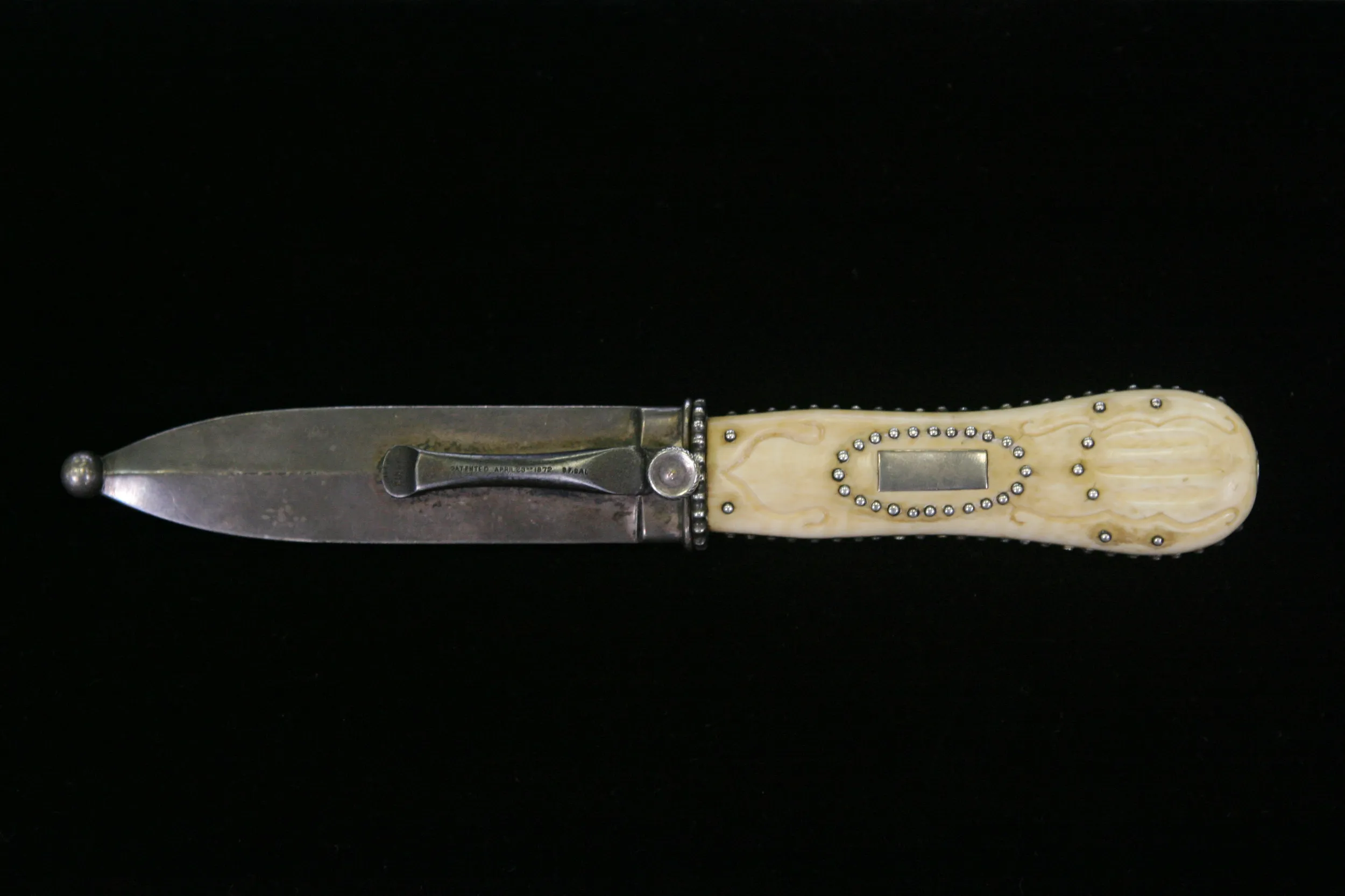
APPRAISER: So these guns are referred to as Turner rifles, because they were used by the Turner societies, which were, uh, German athletic societies. But it wasn't just calisthenics and, and gymnastics, as we think of it normally. It also involved things like target shooting. And then the American Civil War broke, and these immigrants decided that it was very important to them that they support the Union and that they help fight for individual freedoms and individual rights for all the people that lived in their new adopted country. So they took their Turner rifles that were civilian target guns, and many of them they had modified. The primary adaptation was the addition of the bayonet bar on the side of the barrel near the muzzle, which allowed this large brass-handled, Bahn Frei-style saber bayonet to be added to the gun. Two of the most notable regiments were the Ninth Ohio, which was raised in Cincinnati, and the 17th Missouri, out of the St. Louis area, which was actually nicknamed the Western Turner Rifles. What's interesting about your gun, it came from the Cincinnati area. Even though it's not marked, I would guarantee you this was made by Henry Seibert, who was a German immigrant gunsmith in the Cincinnati area during the 1850s. As a matter of fact, he actually ran a shop from 1856 to 1858 in Cincinnati called the Buckeye Gun Shop. This is just typical of the kind of work he did. Your bayonet is also very special. It's got the Turner motto on it, "Bahn Frei," which colloquially, essentially means, "Get out of the way, clear the way, here we come." And most of those are not marked in any way to know who made them. This one, however, is marked. On the blade, in very, very small letters, it says "Hug." And Rudolph Hug was a Cincinnati-based cutler and dental instrument maker. And when the Civil War broke out, he also produced bayonets for these rifles. These men marched off to war, many of them in these regiments that not only were entirely German-raised, but actually drilled and fought and gave orders in German, with German officers, German men. And eventually, they did get better weapons. They got the guns that were being issued to the balance of the Union Army. But we do know that these guns were in use with at least some of those Ninth Ohio guys as late as the very end of 1862, beginning of 1863, 'cause one of those bayonets was recovered at the Battle of Stones River, which was actually fought over that, that New Year's period, between '62 and '63, in Murfreesboro, Tennessee. Incredibly scarce gun, wonderful story. As a grouping, I would put a very conservative auction estimate on this set at between $4,000 and $6,000. The fact that the bayonet is maker-marked makes it much more desirable. Hug bayonets are not particularly common. As a matter of fact, the last time I had one, which was about a dozen years ago, at that time, there were only nine or ten known.
GUEST: Wow.
APPRAISER: It's such a really cool part of Civil War history that most people don't know about. They don't know about these German-language regiments that fought for the Union.
GUEST: That's amazing.
APPRAISER: A few years ago, the market was a little hotter. Maybe ten years ago, this would've been $8,000 to $10,000?