Civil War Draft Box, ca. 1863
GUEST: This is a Civil War draft wheel. And this was in a museum in Marengo, Illinois, that was run by a local undertaker from, like, the early 1900s into the 1940s. And it got passed along by the family, and they were finally moving out of the area, and I purchased it from them.
APPRAISER: How long ago did you acquire it?
GUEST: Uh, in 2017.
APPRAISER: Got it.
GUEST: And what it was used for was, um, in 1863, the U.S. Congress passed the Enrollment Act. And as a result of that, every congressional district in the United States had a provost marshal's office. And this drum was used to draft people into the Union Army.
APPRAISER: And you also have some cards here that were part of the drum, right?
GUEST: Yes. The provost marshal went around and he would register all the people that are eligible to go into the army. And that's what those cards are.
It has their name and then the sub-district within that congressional district.
APPRAISER: So the number here represents the sub-district?
GUEST: Yes, sir.
APPRAISER: I think it's interesting about these cards is that a couple of them have actually the age of the potential draftee on them. This gentleman was 30 years old. This person here was 23 at the time.
GUEST: Yes.
APPRAISER: The Civil War was really the first U.S. attempt at initiating a formal draft. Some folks during the Civil War when the draft came up, often referred to it as, a rich man's war, poor man's fight. Because if you had some money and you were drafted, you could pay a fee and get out of it. I think at the time it was, like, $300. So there was some issue with the draft, and there were riots in New York. Lincoln had to pull troops from the Gettysburg battle in order to quell these riots. But what's interesting about what you brought today, is that it shows us how they were trying to be as egalitarian as possible. First of all, it's a 12-sided box that rotates and it's mostly glass, except for the panel where you open it up. And I think that was an attempt to say, "Hey, we're trying to make this so that you can see that it's a fair situation." That said, once your name was pulled, if you had the money, you could also get out of it. So it was a complicated time. We look at the box, what's unique about it is that it was most certainly handmade, uh, for the, the provost's office there. Almost like a, like a bingo setup. This was a situation where you weren't lucky to get pulled.
GUEST: Exactly. It's not a game you want to win.
APPRAISER: And we flash forward to the Vietnam War and now we're televising it. So it's really a moment in time in America where we see, uh, you know, the... this initiation of the draft. That said, it's an unusual thing. I mean, have you ever seen others?
GUEST: I've seen several in museums.
APPRAISER: And the others you've seen, how similar are they?
GUEST: Uh, they're quite different.
APPRAISER: Right, exactly.
GUEST: Yes.
APPRAISER: Leading to believe that the concept was initiated by someone. And then they basically let them build it however they felt was the best way forward. What did you pay for it back in the day?
GUEST: About $500.
APPRAISER: And it came with all the cards?
GUEST: Yes.
APPRAISER: It can be tricky to value a thing like this. And part of it will be based on the connection to Illinois. Were there a specific regiment that served very conspicuously, that came out of that area and that could tie this box to them? But as is, after a bit of, uh, back and forth and some research, I, I would say, conservatively, for insurance purposes, I would say you're in the $3,000 to $5,000 range.
GUEST: Oh, excellent.
APPRAISER: It's one thing to say the draft. It's one thing to have a poster, it's another thing to see the names in a barrel, right?
GUEST: Yeah.
APPRAISER: That's, that really brings it home.

$3,000 - $5,000 Insurance
Featured In

episode
Living History Farms, Hour 1
ROADSHOW visits Living History Farms for treasures and a top $75,000 to $125,000 find.
Furniture

appraisal
Cinnabar Lacquer Box, Ca. 1765

appraisal
appraisal
Duncan Phyfe Sewing Table, ca. 1805
appraisal
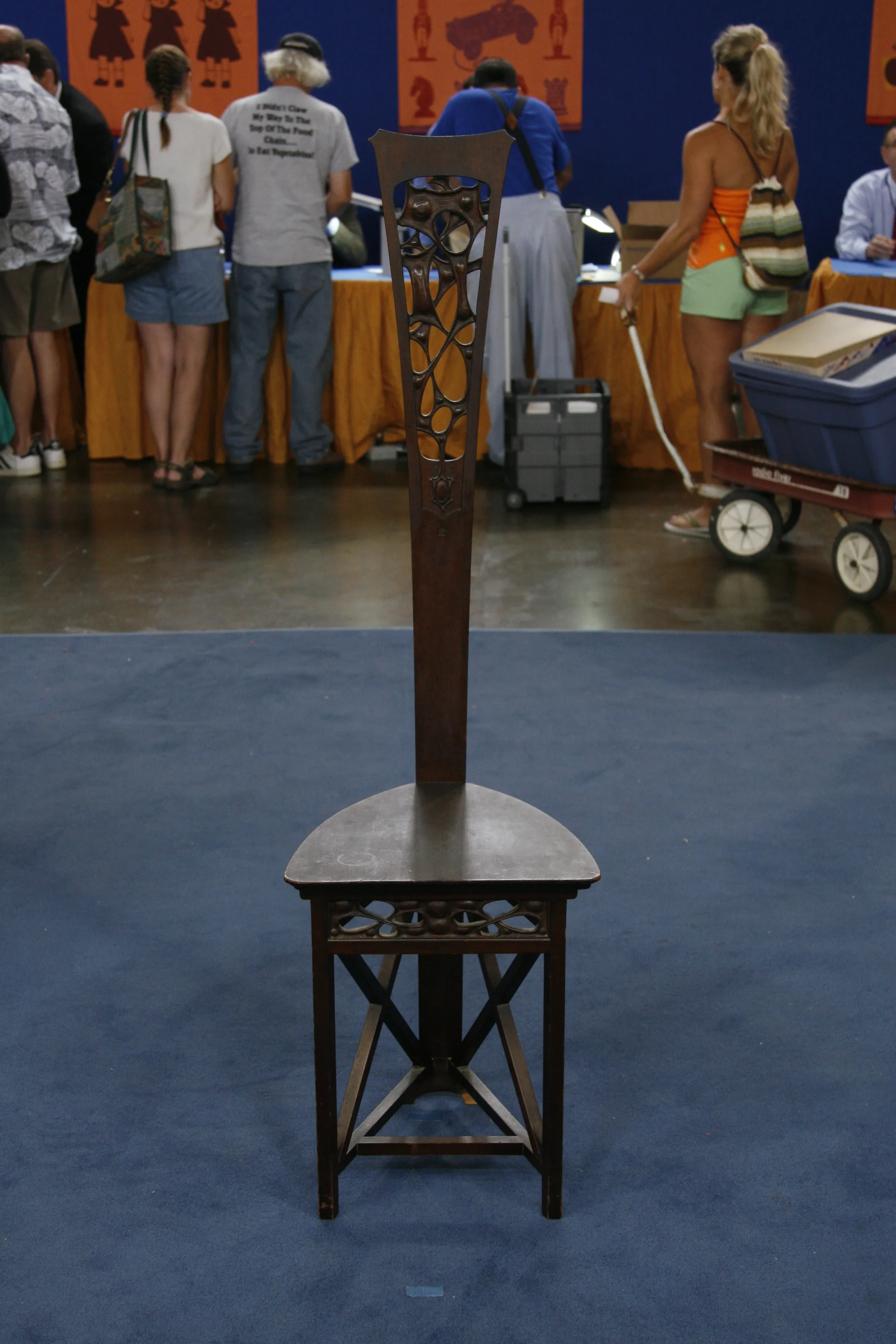
Charles Rohlfs Mahogany Chair, ca. 1910
Understanding Our Appraisals
Executive producer Marsha Bemko shares her tips for getting the most out of ANTIQUES ROADSHOW.
Value can change: The value of an item is dependent upon many things, including the condition of the object itself, trends in the market for that kind of object, and the location where the item will be sold. These are just some of the reasons why the answer to the question "What's it worth?" is so often "It depends."
Note the date: Take note of the date the appraisal was recorded. This information appears in the upper left corner of the page, with the label "Appraised On." Values change over time according to market forces, so the current value of the item could be higher, lower, or the same as when our expert first appraised it.
Context is key: Listen carefully. Most of our experts will give appraisal values in context. For example, you'll often hear them say what an item is worth "at auction," or "retail," or "for insurance purposes" (replacement value). Retail prices are different from wholesale prices. Often an auctioneer will talk about what she knows best: the auction market. A shop owner will usually talk about what he knows best: the retail price he'd place on the object in his shop. And though there are no hard and fast rules, an object's auction price can often be half its retail value; yet for other objects, an auction price could be higher than retail. As a rule, however, retail and insurance/replacement values are about the same.
Verbal approximations: The values given by the experts on ANTIQUES ROADSHOW are considered "verbal approximations of value." Technically, an "appraisal" is a legal document, generally for insurance purposes, written by a qualified expert and paid for by the owner of the item. An appraisal usually involves an extensive amount of research to establish authenticity, provenance, composition, method of construction, and other important attributes of a particular object.
Opinion of value: As with all appraisals, the verbal approximations of value given at ROADSHOW events are our experts' opinions formed from their knowledge of antiques and collectibles, market trends, and other factors. Although our valuations are based on research and experience, opinions can, and sometimes do, vary among experts.
Appraiser affiliations: Finally, the affiliation of the appraiser may have changed since the appraisal was recorded. To see current contact information for an appraiser in the ROADSHOW Archive, click on the link below the appraiser's picture. Our Appraiser Index also contains a complete list of active ROADSHOW appraisers and their contact details and biographies.


