Civil War Battle of Shiloh Regimental Drum
GUEST: My great-great-grandfather was a drummer boy in the Battle of Shiloh. And it's been passed down through the family, and at this point, I've ended up with it.
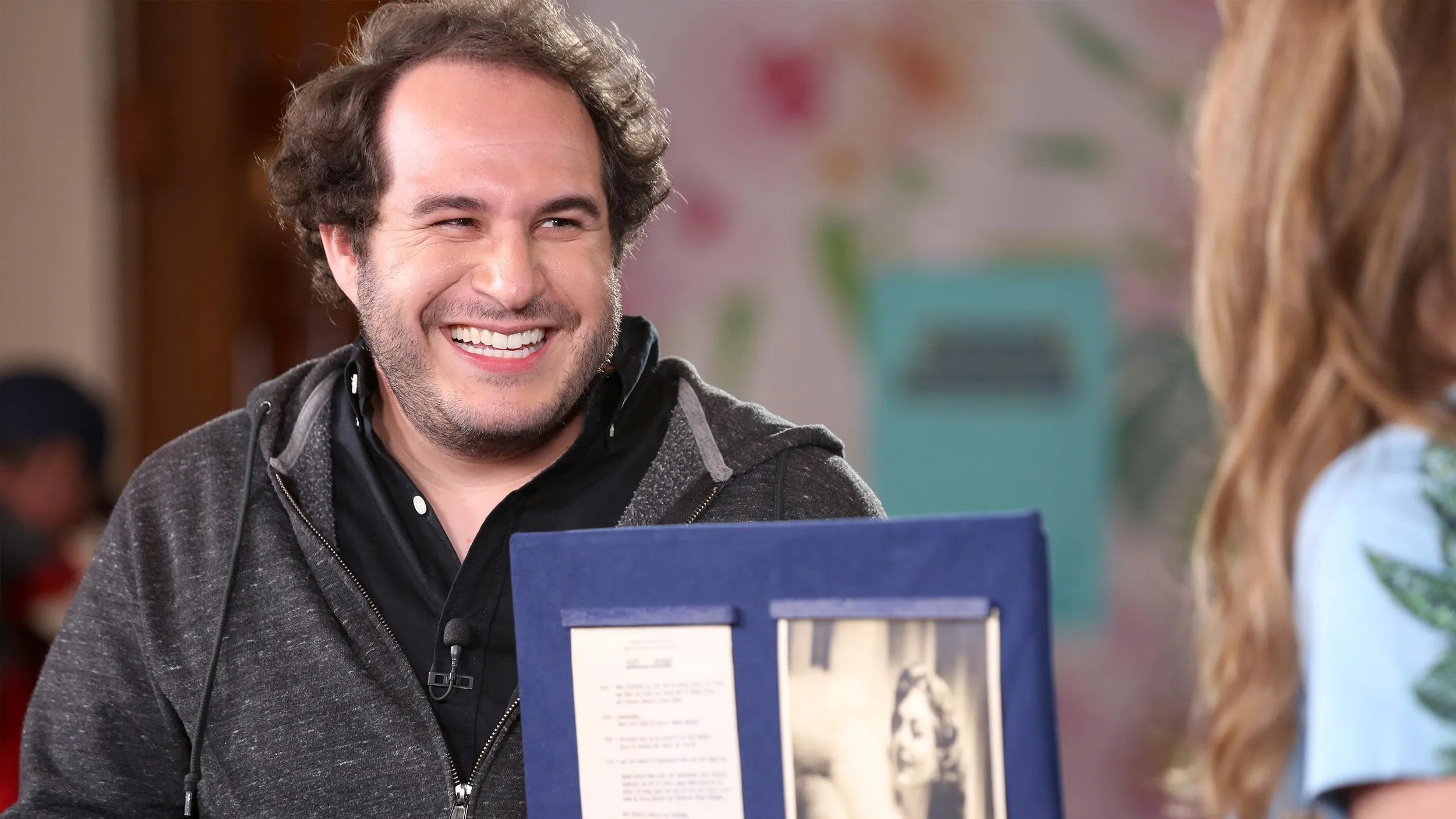
APPRAISER: And that's one of the things that is documented in the photographs that we see over there. Tell me about your-- the people who appear in that photo.
GUEST: Well, the first photo here, it would be Philoh Case, my great-great-grandfather. And then his son Sherman Case, my granddad, my dad, and myself. I've got a son and a grandson that will receive this, as well.
APPRAISER: What do you know about his role in, was it the Second Iowa?
GUEST: Yes-- he enrolled before the Civil War and became a drummer boy, and then was at the Shiloh location, the Shiloh church, when this incident happened. The South snuck up on the Union Army there one morning, and he was given the order to drum the long roll to start the battle.
APPRAISER: And that's one of the things that separates the modern military from the Napoleonic-era military-- field music still has a role.
GUEST: Yeah.
APPRAISER: Your relative there would have been engaged on a daily basis drumming the various calls that signal the tasks that the troops are to do during the day.
GUEST: Yes.
APPRAISER: He would have had a significant role on the march. Morale, it can flag when you've been asked to walk 15 or 20 miles in a day with a pack on your back and a musket on your shoulder, and it is amazing what the picking-up of that beat, what field music will do. Brings everybody back into shape. And then in battle, depending on the situation, they might be in a place where you really can't hear voice commands. And so there were a number of commands that were given by the drum.
GUEST: Yes.
APPRAISER: Firing by the drum, there were calls to retreat, calls to advance, and so he would have been involved in all of that. From the documentation that you have there, it looks like he was a pretty young fellow when the Civil War started.
GUEST: He was, I think, about 22 years old when he was a drummer boy there.
APPRAISER: What he brought home is a standard-issue regulation Union Army drum.
What we see here on the front is that it is marked to the second regiment of
infantry. And that's really what makes these. Not everybody painted their drums.
But the ones that are painted are certainly better than the ones that are not. What we see on the back... This tack pattern is sometimes the only embellishment that you see on a drum. But in this case, it's a beautiful painted drum. It has had a little work done to it. Philoh has added this, which takes the drumstick holder from the baldric and moves it to the drum, which is very convenient. But down here... You see, this is pretty new. And this tape would indicate that at some point, it might have been restrung. One of the things that we look for in a drum is the maker, and in this case, we cannot see the maker because that little hole that you look through is obscured on the inside. There are some photographs that have been glued in there, which make it interesting. It has value just simply as a Civil War drum. Now, was this the drum that he carried at the Battle of Shiloh?
GUEST: Yes.
APPRAISER: Obviously, we believe that. And you have a tremendous amount of documentation that supports that. You have newspaper articles, you've got photographs of him as a J.A.R. member. We have his own written testimony to this fact. Can't really prove it in a court of law, but you're talking about that difference between 100% sure and 99.9% sure.
GUEST: Yeah.
APPRAISER: We believe, as appraisers here-- and I believe, more importantly, the market would believe-- this is the drum that he carried at those engagements. A solid retail price for this would be $15,000.
GUEST: Okay. That's... that's good-- that's a good amount. (laughs) I think Philoh would be greatly surprised if it ever-- if he ever found out that it was of that value.
APPRAISER: If we did not believe that it was carried by an individual in an important regiment, the drum itself would be a $5,000 drum.
$15,000 Retail
$15,000 Retail
Featured In
episode
Hotel del Coronado, Hour 2
Discover covetable California items appraised at Hotel del Coronado!
Musical

appraisal
Weissenborn Style 4 Guitar, ca. 1925

appraisal

appraisal

appraisal
1952 Fender Esquire Guitar
Understanding Our Appraisals
Executive producer Marsha Bemko shares her tips for getting the most out of ANTIQUES ROADSHOW.
Value can change: The value of an item is dependent upon many things, including the condition of the object itself, trends in the market for that kind of object, and the location where the item will be sold. These are just some of the reasons why the answer to the question "What's it worth?" is so often "It depends."
Note the date: Take note of the date the appraisal was recorded. This information appears in the upper left corner of the page, with the label "Appraised On." Values change over time according to market forces, so the current value of the item could be higher, lower, or the same as when our expert first appraised it.
Context is key: Listen carefully. Most of our experts will give appraisal values in context. For example, you'll often hear them say what an item is worth "at auction," or "retail," or "for insurance purposes" (replacement value). Retail prices are different from wholesale prices. Often an auctioneer will talk about what she knows best: the auction market. A shop owner will usually talk about what he knows best: the retail price he'd place on the object in his shop. And though there are no hard and fast rules, an object's auction price can often be half its retail value; yet for other objects, an auction price could be higher than retail. As a rule, however, retail and insurance/replacement values are about the same.
Verbal approximations: The values given by the experts on ANTIQUES ROADSHOW are considered "verbal approximations of value." Technically, an "appraisal" is a legal document, generally for insurance purposes, written by a qualified expert and paid for by the owner of the item. An appraisal usually involves an extensive amount of research to establish authenticity, provenance, composition, method of construction, and other important attributes of a particular object.
Opinion of value: As with all appraisals, the verbal approximations of value given at ROADSHOW events are our experts' opinions formed from their knowledge of antiques and collectibles, market trends, and other factors. Although our valuations are based on research and experience, opinions can, and sometimes do, vary among experts.
Appraiser affiliations: Finally, the affiliation of the appraiser may have changed since the appraisal was recorded. To see current contact information for an appraiser in the ROADSHOW Archive, click on the link below the appraiser's picture. Our Appraiser Index also contains a complete list of active ROADSHOW appraisers and their contact details and biographies.


