Chinese Porcelain & Stoneware Collection
GUEST: In the spring of 1982, my parents took a trip, and they went to China for a month. And they traveled all over, and they came back, and they were fascinated by the beautiful things they'd seen there. And in downtown Denver, there, uh, was a Chinese, Asian, uh, shop. Pretty soon, things started showing up. And I didn't pay much attention to 'em. But then as more came and more came, I really did kind of like them very much. My dad told me that this was from 2000 BC. It was so breathtaking to me that I could hold something
APPRAISER: (chuckling)
GUEST: from 2000 BC. (chuckles)
APPRAISER: (chuckling) This is not that old, unfortunately, which is not a reason to be discouraged.
GUEST: Okay.
APPRAISER: It is old. These are all antiques in their own respect. Represented here at the table, there's a wide variety, not just stylistically, but in terms of the ages of when these were produced. This jar is, I think, from the region of Henan in China. But I think it dates from around the year 1200 or 1300. So it's a really, it's a nice considerably old piece, but one that probably dates from the Song dynasty in Chinese history. This very cheerful footed dish in the form of a fish has a six-character mark on the bottom. And this indicates the Ming dynasty.
GUEST: Okay.
APPRAISER: "Da Ming" being at the beginning. Th-this is from the Xuande Emperor. And then this just says "period made." But it's not of that period. It's not of-- no, this is actually, this is actually something later. We're gonna come finally to this blue and white dish. And this has what's called a rain mark on the base. It's this square seal. "Da Qing Qianlong, the Emperor, period made." "Qing Dynasty, Qianlong, period made." This is something that is very much firmly in the imperial style. This is an imperial dish that dates from the 18th century that would have been made at the imperial workshop...
GUEST: Oh.
APPRAISER: ...in Beijing…
GUEST: Wow.
APPRAISER: …for use within the Forbidden City.
GUEST: Wow.
APPRAISER: This is actually the treasure of the group.
GUEST: Wow. Huh.
APPRAISER: It's difficult to find this kind of porcelain in the market right now. It's what the Chinese, who are driving the market, are really yearning for. There's actually a price tag on this-- and we don't know if that's what they paid...
GUEST: Yeah, I don't know.
APPRAISER: ...probably something-- of $500.
GUEST: Yeah.
APPRAISER: The value on this has increased tenfold. So I'd put, at auction, a value of $5,000 to $7,000...
GUEST: (laughing) Oh, for heaven's sakes.
APPRAISER: ...for this dish alone.
GUEST: I almost didn't bring it. (laughs) That's quite a surprise.
APPRAISER: This would be more $700 to $900, maybe $800 to $1,200.
GUEST: Okay.
APPRAISER: This dish, 19th century. It's actually the newest of the three...
GUEST: Okay.
APPRAISER: ...that are here on the table. And this one, I would put an auction value probably $800 to $1,200 or so.
GUEST: Okay.
APPRAISER: Okay?
GUEST: Wow.

$6,600 - $9,400 Auction
Featured In

episode
Denver Botanic Gardens Chatfield Farms, Hour 3
NEW! ROADSHOW discovers treasures during the third hour from Littleton, CO.
Qing Dynasty
appraisal
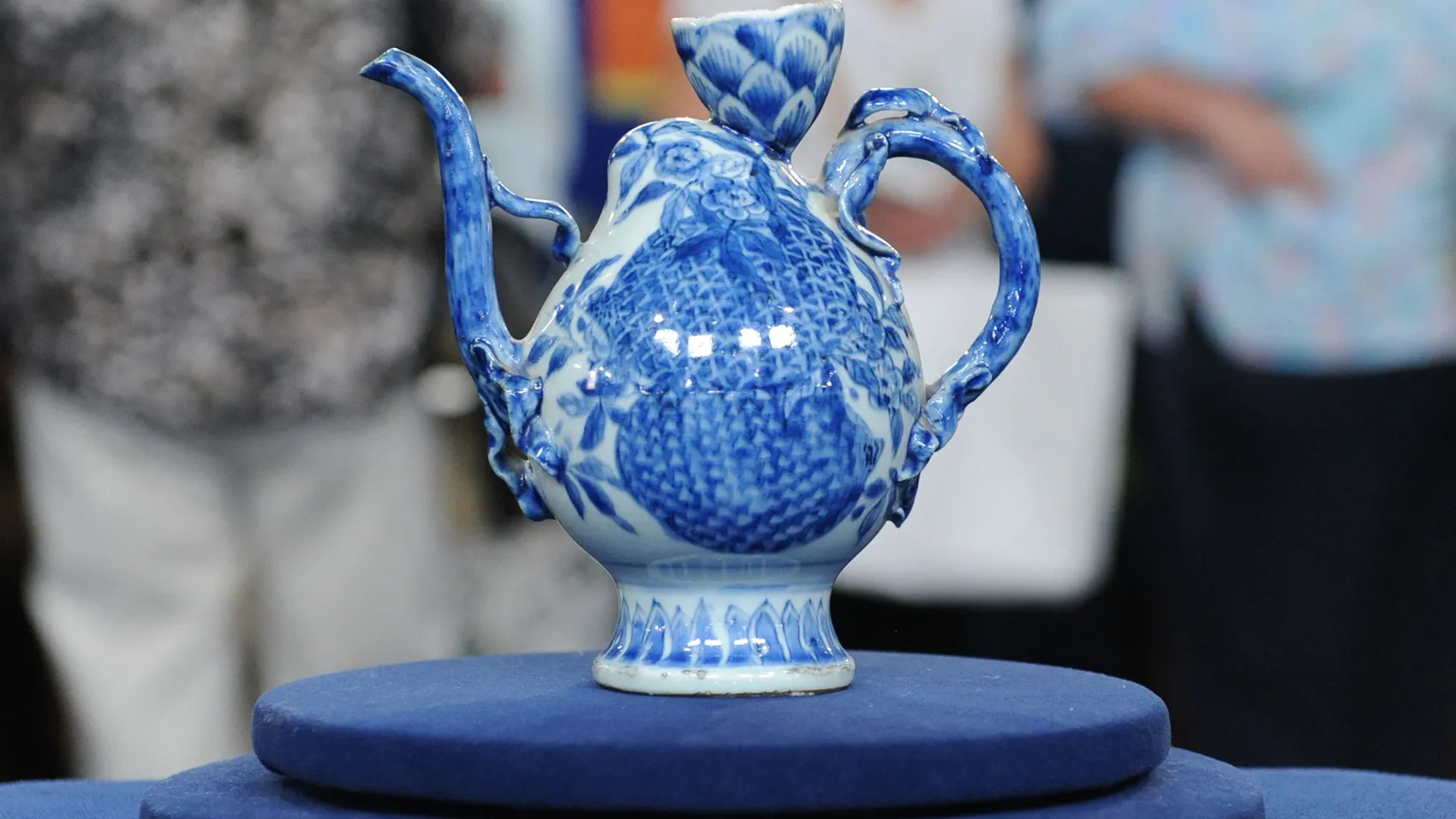
17th-Century Chinese Transitional Wine Pot

appraisal
18th-Century Flambé Meiping Vase
appraisal
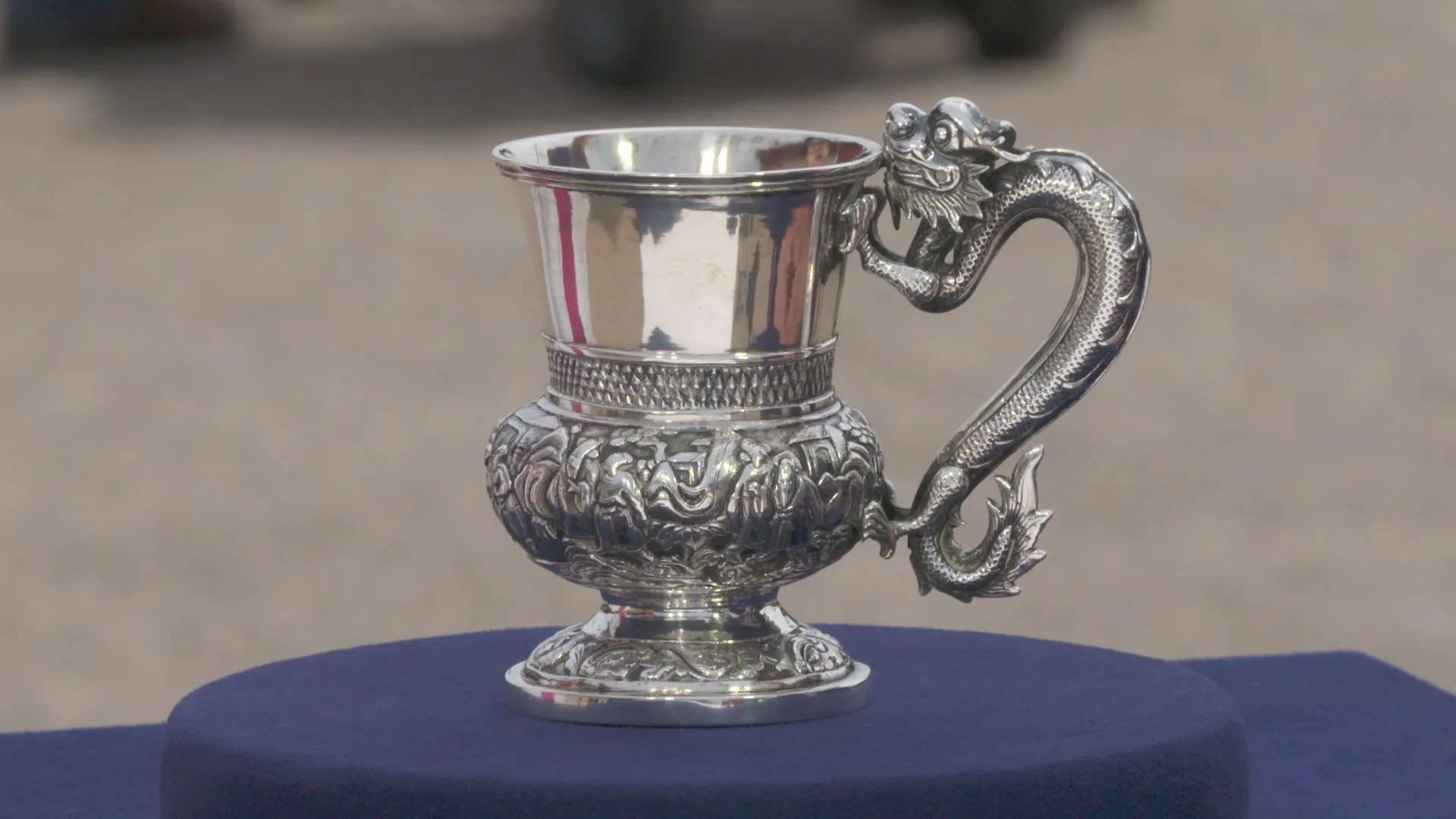
Leeching Chinese Export Silver Cup, ca. 1870

appraisal
Chinese Bamboo Mountain Carving, ca. 1890
Understanding Our Appraisals
Executive producer Marsha Bemko shares her tips for getting the most out of ANTIQUES ROADSHOW.
Value can change: The value of an item is dependent upon many things, including the condition of the object itself, trends in the market for that kind of object, and the location where the item will be sold. These are just some of the reasons why the answer to the question "What's it worth?" is so often "It depends."
Note the date: Take note of the date the appraisal was recorded. This information appears in the upper left corner of the page, with the label "Appraised On." Values change over time according to market forces, so the current value of the item could be higher, lower, or the same as when our expert first appraised it.
Context is key: Listen carefully. Most of our experts will give appraisal values in context. For example, you'll often hear them say what an item is worth "at auction," or "retail," or "for insurance purposes" (replacement value). Retail prices are different from wholesale prices. Often an auctioneer will talk about what she knows best: the auction market. A shop owner will usually talk about what he knows best: the retail price he'd place on the object in his shop. And though there are no hard and fast rules, an object's auction price can often be half its retail value; yet for other objects, an auction price could be higher than retail. As a rule, however, retail and insurance/replacement values are about the same.
Verbal approximations: The values given by the experts on ANTIQUES ROADSHOW are considered "verbal approximations of value." Technically, an "appraisal" is a legal document, generally for insurance purposes, written by a qualified expert and paid for by the owner of the item. An appraisal usually involves an extensive amount of research to establish authenticity, provenance, composition, method of construction, and other important attributes of a particular object.
Opinion of value: As with all appraisals, the verbal approximations of value given at ROADSHOW events are our experts' opinions formed from their knowledge of antiques and collectibles, market trends, and other factors. Although our valuations are based on research and experience, opinions can, and sometimes do, vary among experts.
Appraiser affiliations: Finally, the affiliation of the appraiser may have changed since the appraisal was recorded. To see current contact information for an appraiser in the ROADSHOW Archive, click on the link below the appraiser's picture. Our Appraiser Index also contains a complete list of active ROADSHOW appraisers and their contact details and biographies.


