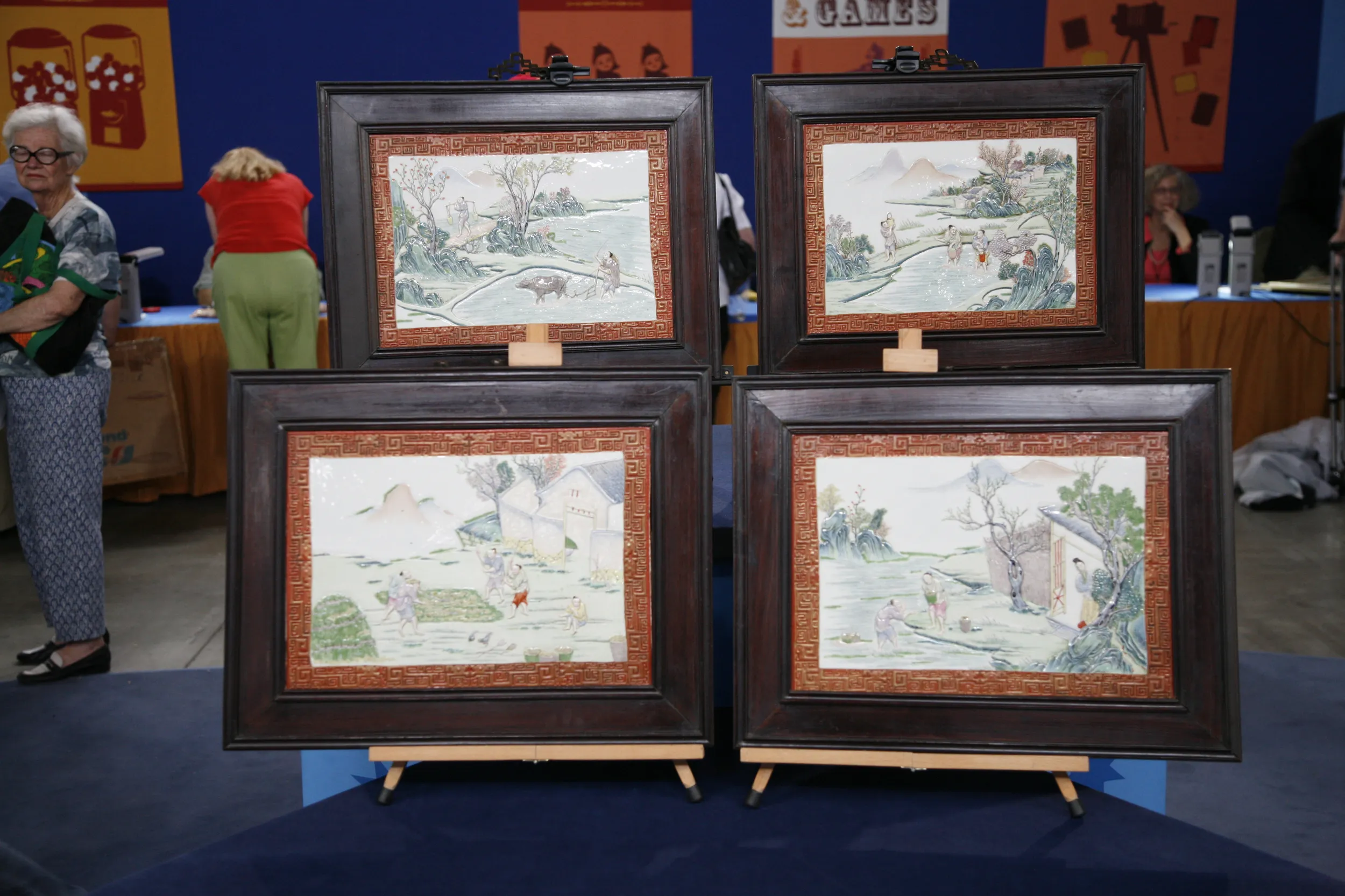
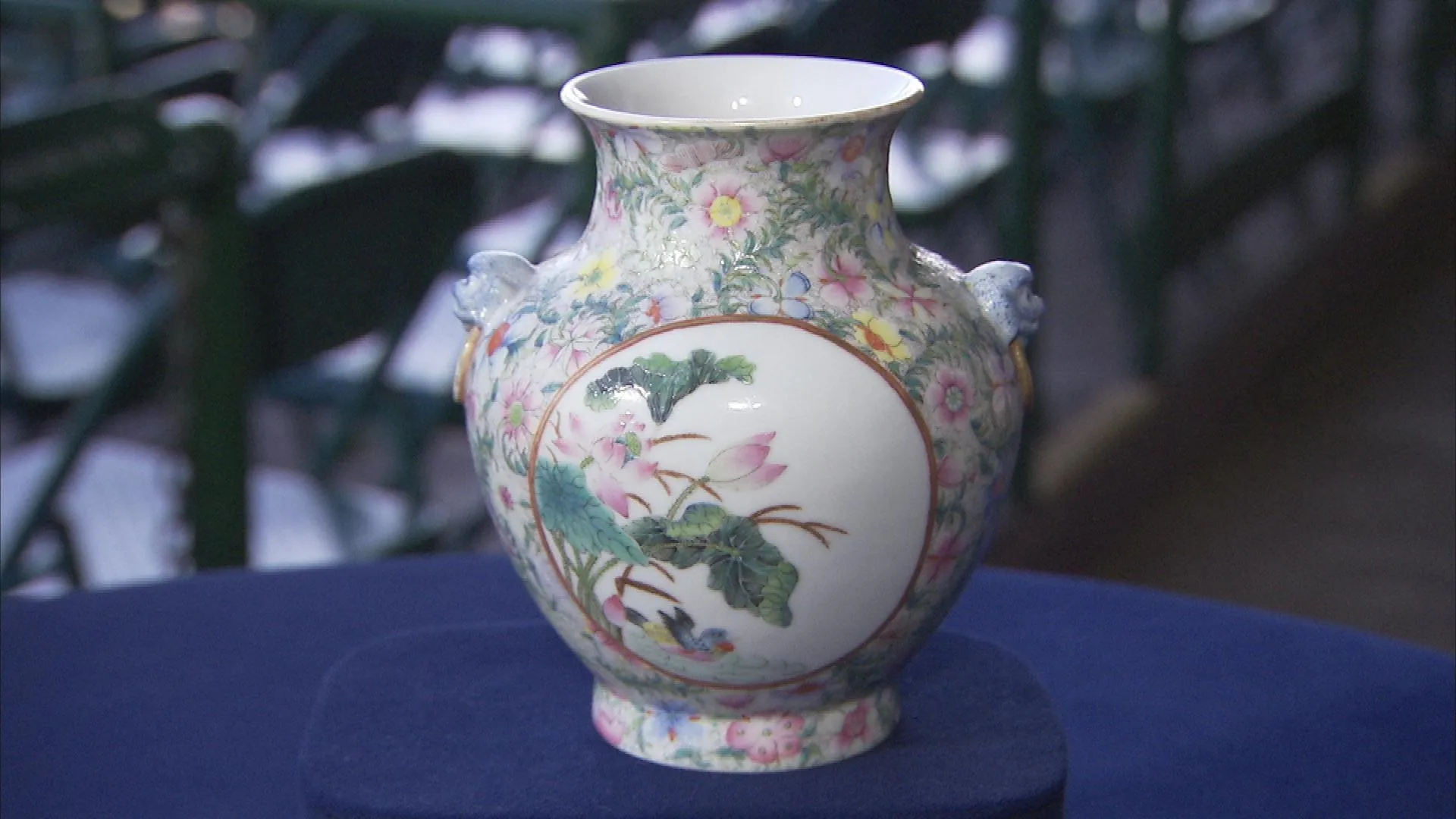
GUEST: I know that it is Chinese. I know that it is polychrome. I know that it is old. I don't know what it is. I've been told a few things.
APPRAISER: What have you been told about it?
GUEST: That it is a pillow, but it seems to be very large and angular compared to other pillows that I've seen that are Chinese. I've been told it could be a table. So I really don't know.
APPRAISER: What it actually is, it would still be referred to as a pillow because one thing about Chinese pillows is they are not soft. They're hard. They use the word "pillow," but what it actually is, it's an arm rest.
GUEST: Really?
APPRAISER: In north Chinese houses, there's a platform called a kang.
GUEST: Sure.
APPRAISER: And this would have been on it for the summertime.
GUEST: Oh, for heaven's sake. So there would have been two, it would have been a pair?
APPRAISER: One, usually. Just one to lean on on one side.
GUEST: Oh.
APPRAISER: And the reason for the porcelain is because it's cold and it cools down.
GUEST: Sure.
APPRAISER: And then the reason why it's got designs all around it is the climate in north China in the summertime is miserable, so the reason why it's decorated all around is because you'd play with it.
GUEST: Is that right?
APPRAISER: You'd move it around and look at this design and look at that design. And they're all designs of either the Taoist immortals...
GUEST: Right.
APPRAISER: Or various auspicious scenes. And then there's scenes from theater. What did you know about the date?
GUEST: I only know because I collect Chinese porcelain that it fit into the color scheme of what I collect, and it's generally early 19th century is what I focus on.
APPRAISER: Yeah, it's actually not. It's late 19th century. It's late 19th century. Yeah, probably after about 1865, and probably before 1880. Beautifully painted, and one of the reasons why it's so lively: they had just come through a horrendous civil war in which millions of people were killed. So that's one of the reasons why it's so joyous, because that period of time was over for them. It's basically impossible to know where this was made other than in south China.
GUEST: What kind of an owner would have had this in their home? I mean, it's awfully decorative for a typical Chinese peasant to have.
APPRAISER: It would have absolutely been something that was upper middle class.
GUEST: Like a general?
APPRAISER: It could be a general, but more likely a merchant, a wealthy merchant.
GUEST: I'll be darned.
APPRAISER: The holes on the side that you can see here are cash coin motifs, because Chinese copper and brass money was suspended on a cord. Those are actually there both for the decorative effect and also to prevent the item from blowing up in the kiln. That red seal there is probably a 1920s export seal. What did you pay for it?
GUEST: $1,500.
APPRAISER: Get it around the area here?
GUEST: Chicago.
APPRAISER: Well, talking with my colleagues, we came up with an auction estimate of $5,000 to $7,000.
GUEST: Really? Oh, my God, I got a bargain! One of my Roadshow bargains, that's great.
APPRAISER: Beautifully painted, really nice one.
GUEST: I appreciate it. Thank you.