Chinese Imperial Silk Panel, ca. 1900
GUEST: It belonged to a friend of mine's father. He had purchased it probably in the early '80s for his wife at that time. And we had moved him up from Florida to, up to Michigan here. This was to be discarded, and so I saved it, and I've had it for close to 18, 19 years.
APPRAISER: And the gentleman that had it before, was it displayed or not?
GUEST: You can see some of the color discoloration up there, and that was, we always felt, due to the Miami sun. He had it in his condo.
APPRAISER: Did you see it on display in the condominium?
GUEST: I did, I, and I immediately just fell for it.
APPRAISER: This is... (exhales) ...exactly what it appears to be a silk hanging panel with gold wrap thread, and the thread likely is also silk.
GUEST: Wow.
APPRAISER: The brilliant color of the blue, which you can see at the very tip top, is sky blue. And that's the unfaded part.
GUEST: Mm-hmm.
APPRAISER: Right below that, you can see a yellow line. But the original color would've been a very vibrant sky blue. And that was purposeful, because what it is representing is the sky.
GUEST: Beautiful.
APPRAISER: So, we have clouds, we have bats, we have dragons. And down here at the bottom, we have these phoenix, which are these mythical birds that are perched on rockwork, and at the base is the Earth. So, this has all kinds of different emblems that are all positive. They are meant to project strength.
GUEST: Mm.
APPRAISER: They're meant to project importance. What kind of person do you think would have owned this?
GUEST: Um... A high muckety-muck. (both laugh)
APPRAISER: Someone important.
GUEST: I don't know-- yeah, absolutely.
APPRAISER: Well, I think it could've easily been the, an, a commission for the imperial household...
GUEST: (gasps)
APPRAISER: ...during the reign of the Emperor Guangxu, who reigned from 1875 to 1908. And behind the scenes was the Dowager Empress Cixi who died also in 1908. She was kind of the power behind the throne. I believe it was meant to show imperial power. The five claws of the dragons are representative of the imperial throne and household, shows that this was an important object that likely was in a reception hall where important people would have come. And it was a place, because of this kind of color palette, that probably was frequented by the dowager empress. So you have an important object.
GUEST: Incredible-- incredible.
APPRAISER: And it's actually in remarkably good condition. A lot of the colors, particularly these down at the bottom part, are just as vibrant as they were when they were originally made. I think for replacement value purposes, a reasonable figure would be around $30,000.
GUEST (stifles laugh) (inhales) (chuckling) Wow, thank you. Wow. Incredible.

$30,000 Insurance
Featured In

episode
Castle Farms, Hour 2
See Michigan marvels unveiled during ROADSHOW’s stop at Castle Farms in Charlevoix! — Mon, April 6, 2026
Textiles & Needlecraft
appraisal
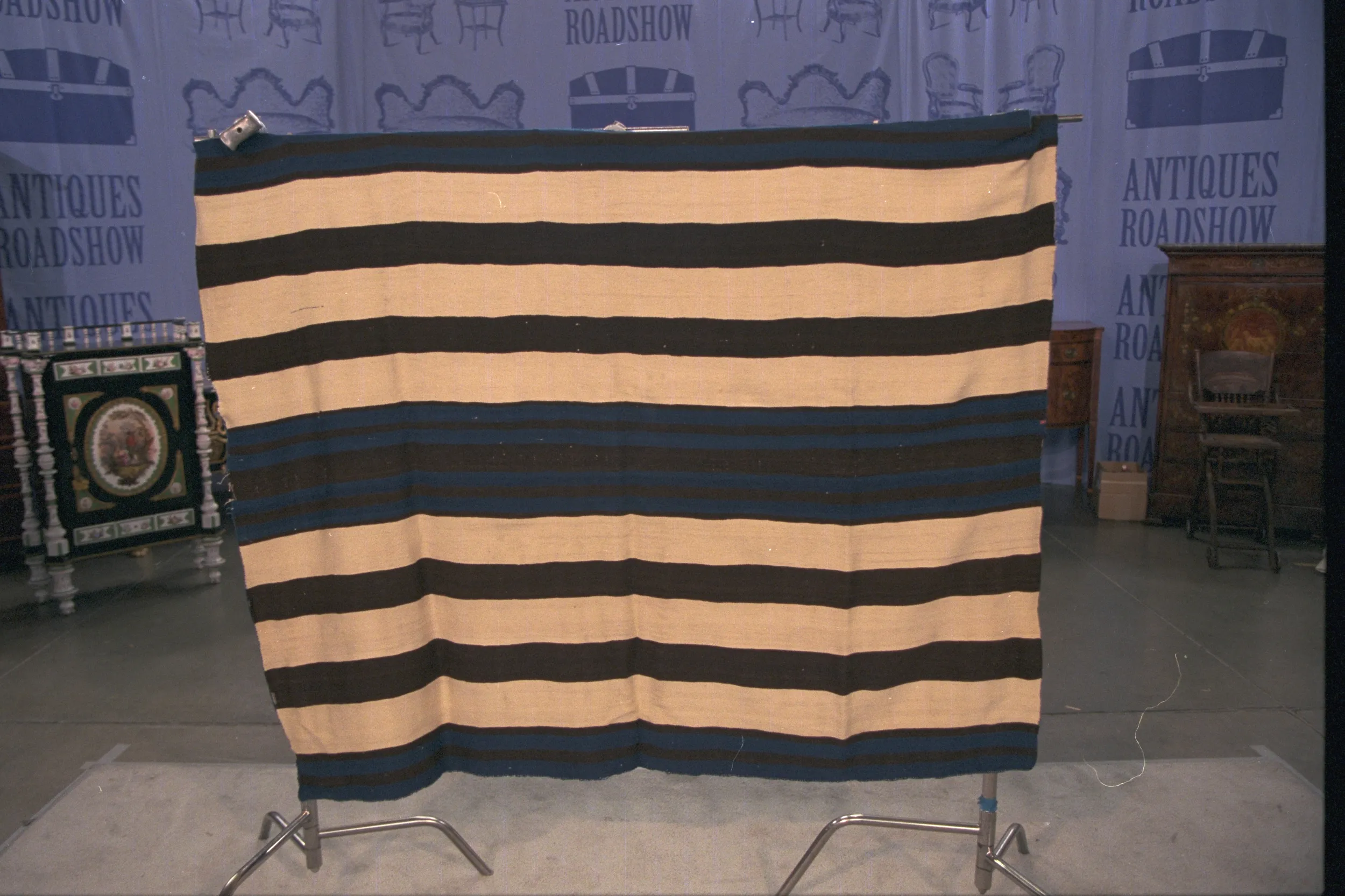
Navajo Ute First Phase Blanket, ca. 1850
appraisal

appraisal
appraisal
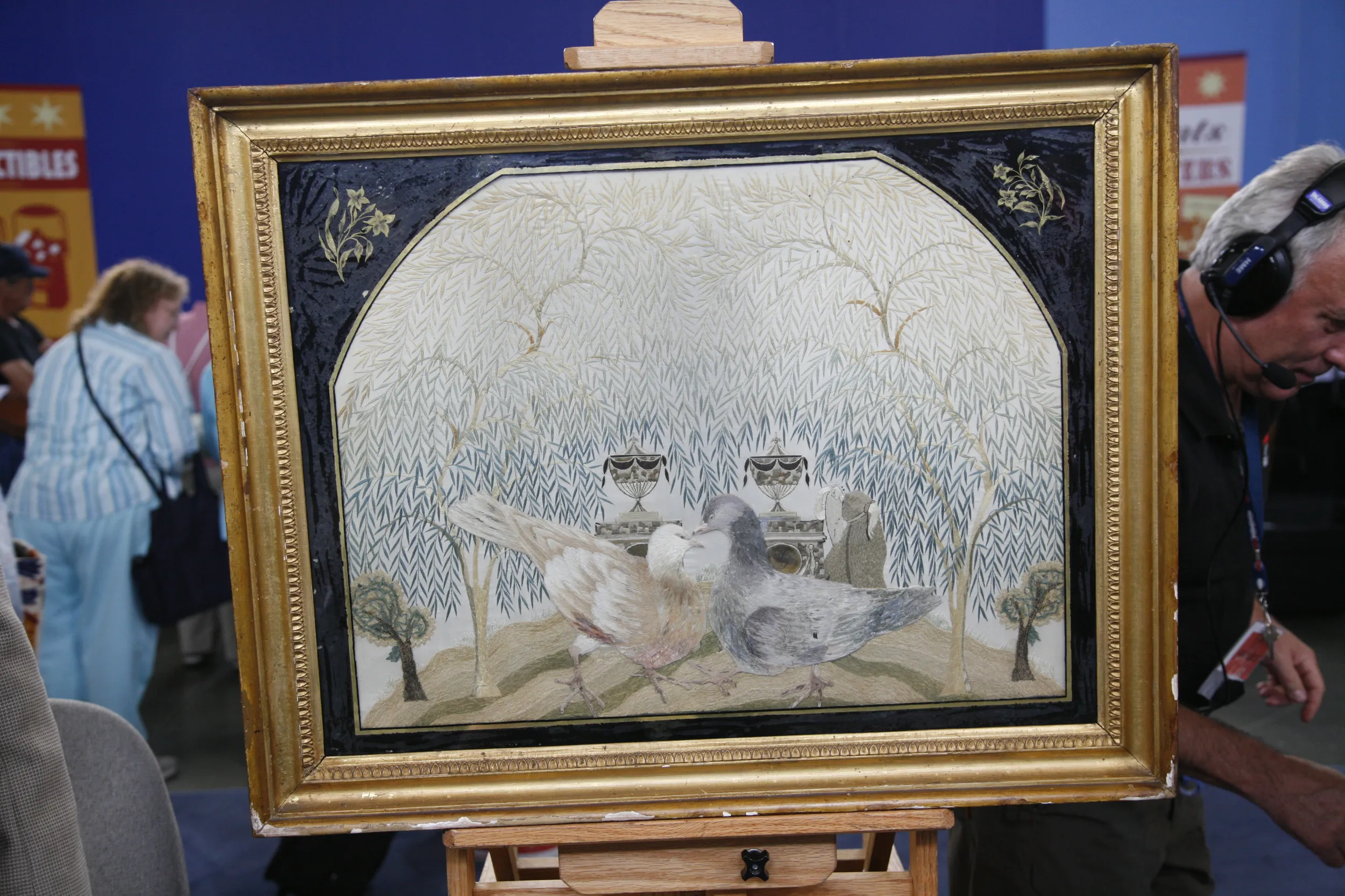
Mary Balch School Mourning Picture, ca. 1805
Understanding Our Appraisals
Executive producer Marsha Bemko shares her tips for getting the most out of ANTIQUES ROADSHOW.
Value can change: The value of an item is dependent upon many things, including the condition of the object itself, trends in the market for that kind of object, and the location where the item will be sold. These are just some of the reasons why the answer to the question "What's it worth?" is so often "It depends."
Note the date: Take note of the date the appraisal was recorded. This information appears in the upper left corner of the page, with the label "Appraised On." Values change over time according to market forces, so the current value of the item could be higher, lower, or the same as when our expert first appraised it.
Context is key: Listen carefully. Most of our experts will give appraisal values in context. For example, you'll often hear them say what an item is worth "at auction," or "retail," or "for insurance purposes" (replacement value). Retail prices are different from wholesale prices. Often an auctioneer will talk about what she knows best: the auction market. A shop owner will usually talk about what he knows best: the retail price he'd place on the object in his shop. And though there are no hard and fast rules, an object's auction price can often be half its retail value; yet for other objects, an auction price could be higher than retail. As a rule, however, retail and insurance/replacement values are about the same.
Verbal approximations: The values given by the experts on ANTIQUES ROADSHOW are considered "verbal approximations of value." Technically, an "appraisal" is a legal document, generally for insurance purposes, written by a qualified expert and paid for by the owner of the item. An appraisal usually involves an extensive amount of research to establish authenticity, provenance, composition, method of construction, and other important attributes of a particular object.
Opinion of value: As with all appraisals, the verbal approximations of value given at ROADSHOW events are our experts' opinions formed from their knowledge of antiques and collectibles, market trends, and other factors. Although our valuations are based on research and experience, opinions can, and sometimes do, vary among experts.
Appraiser affiliations: Finally, the affiliation of the appraiser may have changed since the appraisal was recorded. To see current contact information for an appraiser in the ROADSHOW Archive, click on the link below the appraiser's picture. Our Appraiser Index also contains a complete list of active ROADSHOW appraisers and their contact details and biographies.


