Chinese Gilt Bronze Daoist Figure, ca. 1635
GUEST: It's been handed down through my husband's side of the family since the 1800s.
APPRAISER: Mm-hmm.
GUEST: When a relative went over to China for three months to do shopping for antiques, with the purpose to come back and open an antique shop.
APPRAISER: Mm-hmm.
GUEST: And this piece, I don't know if it just never made it to the antique shop, or they liked it so much, they just always kept it on the fireplace mantle.
APPRAISER: Now, antique dealers have a history or a habit of keeping one of two objects.
GUEST: Oh.
APPRAISER: Ob-objects that are either very good, the best they've bought, or their mistake.
GUEST: Oh!
APPRAISER: What-what they thought was real, which is actually incorrect.
GUEST: You're making me nervous.
APPRAISER: I'm sorry.
APPRAISER: Do you know the material it's made from?
GUEST: I guessed it was brass.
APPRAISER: It's bronze.
GUEST: Oh.
APPRAISER: And it's a gilded bronze figure. And then there's some polychrome. They're colored highlights. Do you happen to know who the figure is-is modeled after?
GUEST: Not at all.
APPRAISER: Mm.
GUEST: Well, they've always called it in our family, the ancestor.
APPRAISER: That's often what these are referred to. They're either immortal figures, ancestral figures.
GUEST: Mm.
APPRAISER: This may represent a figure known as the Jade Emperor. And the Jade Emperor is a Daoist figure that rules the celestial realm, or heaven realm. This is from the Daoist religion or spiritual philosophy. It's an earth-based philosophy on moral conduct and ethics. It's in harmony with the natural world. And these figures really reached an apex of production or appreciation or devotion, during the late Ming Period. So about 1615, 1620.
GUEST: Wow.
APPRAISER: These seated immortal devotional figures on the bracket base. This is a very typical form, really nice example. It's robust, the proportions are good. The work on the robe is really good work. These celestial clouds are really beautifully incised. And this beaded edge, one thing you'll notice with Chinese bronzes, the beaded edges, the higher the beading, the crisper the beading, the more work done to the beading, the better the object is. The gilding, the remnants of the gilding. It's softened with age and is worn in the right spots. There's a little firing crack here. That's not a big deal, but it is an imperfection. It's a weakness in the original firing. And then as you notice, there's a plug implant here in the shoulder. During the firing process, this split, not a big deal, common. They cut a plug, put a plug in, fortified the instability, and then it's been fine for 350 years. 400 years.
GUEST: That's amazing.
APPRAISER: Now I'm just going to tip it so we can have a look at the interior, which is the telltale sign of it being old. This is a really lovely patina for a casting. This polychrome counter is often in the recesses of Ming bronzes. It's a heavy, well-cast figure. These are faked, these are reproduced. This is not a fake, this is not a reproduction. Great provenance, it's 100 years old. The reproductions have really only started in the last 30, 40 years and they're prolific now.
GUEST: Okay.
APPRAISER: Clearly your antique dealer relative kept this because it's one of the better objects he owned.
GUEST: Mm.
APPRAISER: In a retail setting, it would demand a value of $20,000.
GUEST: (chuckling): I brought it in a roller cooler today with snacks on top of it.
(laughs) Oh, my goodness... Go ahead and keep talking, Robert, because I think I lost my ability of speech right now. I had no idea. None. That's amazing.
(chuckles) Wow! That's, how-- I cannot believe it.
APPRAISER: It's a great object.
GUEST: Oh, thank you so much.

$20,000 Retail
Featured In

episode
Living History Farms, Hour 2
Watch remarkable finds from ROADSHOW’s stop in Iowa including a $70,000 to $90,000 item!
Gilded
appraisal
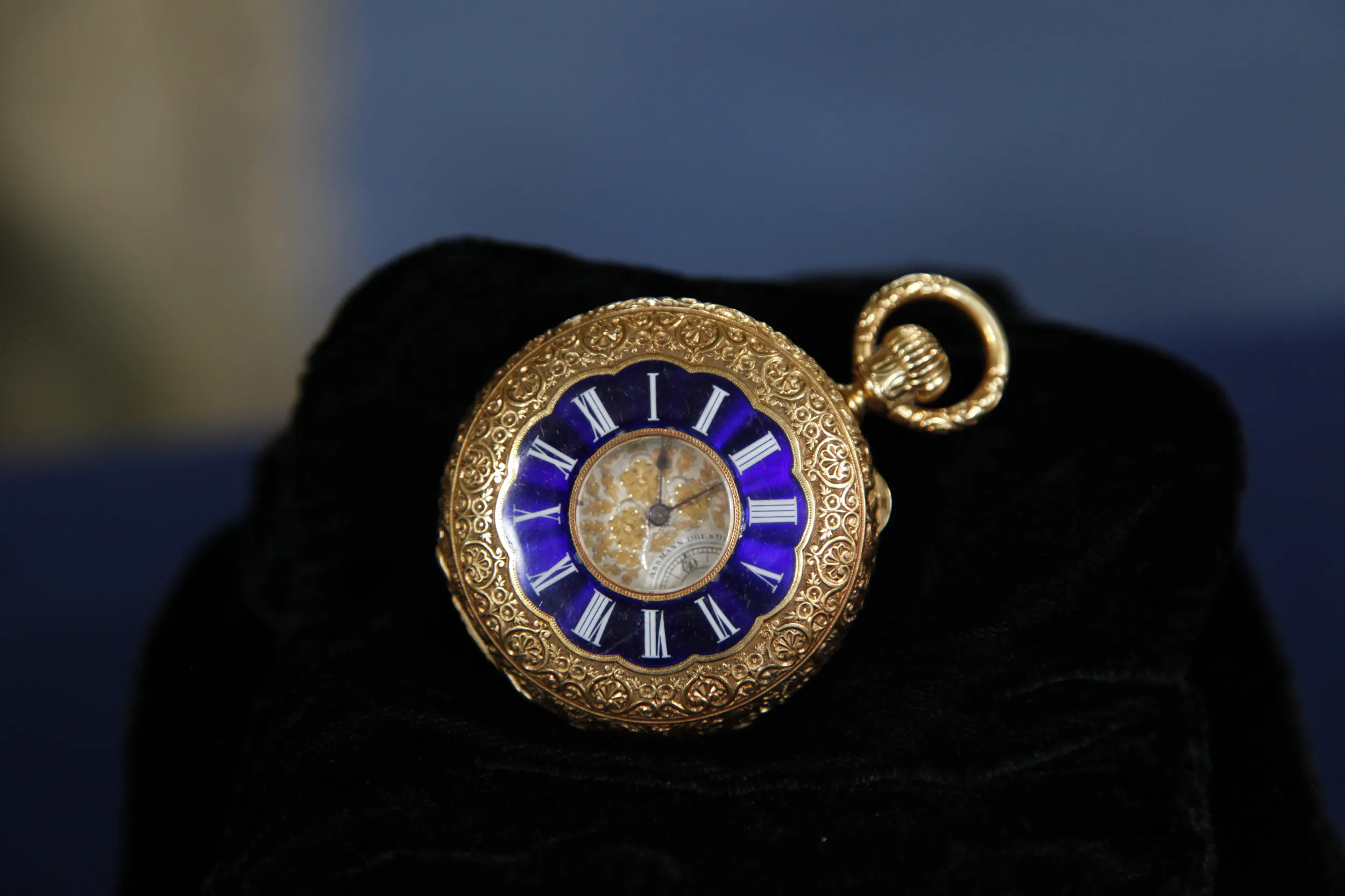
Julius Assmann Gold Half-Hunter Watch, ca. 1880
appraisal
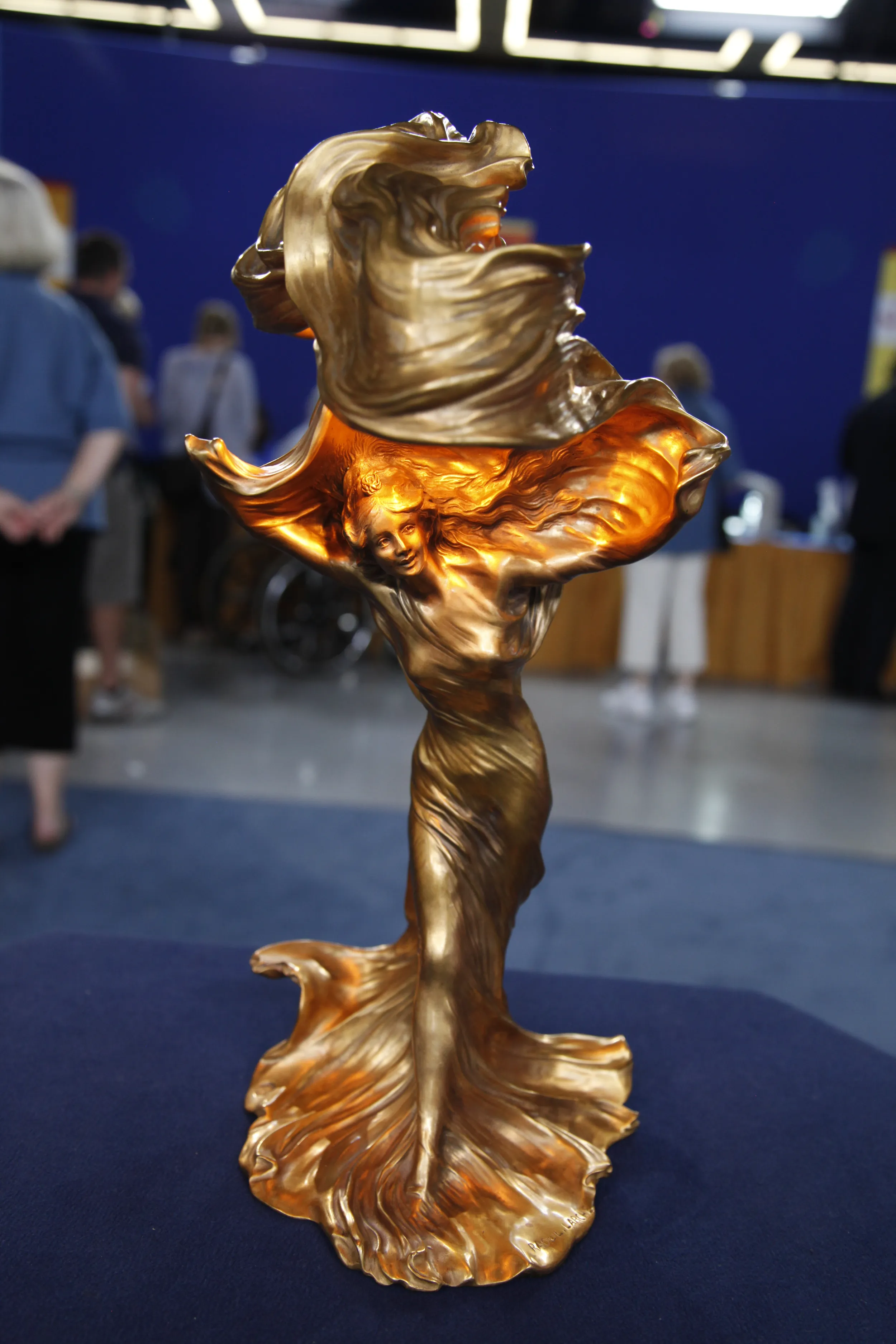
Raoul Larche Loie Fuller Lamp, ca. 1900

appraisal
Chinese Stucco Figure

appraisal
Chinese Famille Rose Bowls, ca. 1840
Understanding Our Appraisals
Executive producer Marsha Bemko shares her tips for getting the most out of ANTIQUES ROADSHOW.
Value can change: The value of an item is dependent upon many things, including the condition of the object itself, trends in the market for that kind of object, and the location where the item will be sold. These are just some of the reasons why the answer to the question "What's it worth?" is so often "It depends."
Note the date: Take note of the date the appraisal was recorded. This information appears in the upper left corner of the page, with the label "Appraised On." Values change over time according to market forces, so the current value of the item could be higher, lower, or the same as when our expert first appraised it.
Context is key: Listen carefully. Most of our experts will give appraisal values in context. For example, you'll often hear them say what an item is worth "at auction," or "retail," or "for insurance purposes" (replacement value). Retail prices are different from wholesale prices. Often an auctioneer will talk about what she knows best: the auction market. A shop owner will usually talk about what he knows best: the retail price he'd place on the object in his shop. And though there are no hard and fast rules, an object's auction price can often be half its retail value; yet for other objects, an auction price could be higher than retail. As a rule, however, retail and insurance/replacement values are about the same.
Verbal approximations: The values given by the experts on ANTIQUES ROADSHOW are considered "verbal approximations of value." Technically, an "appraisal" is a legal document, generally for insurance purposes, written by a qualified expert and paid for by the owner of the item. An appraisal usually involves an extensive amount of research to establish authenticity, provenance, composition, method of construction, and other important attributes of a particular object.
Opinion of value: As with all appraisals, the verbal approximations of value given at ROADSHOW events are our experts' opinions formed from their knowledge of antiques and collectibles, market trends, and other factors. Although our valuations are based on research and experience, opinions can, and sometimes do, vary among experts.
Appraiser affiliations: Finally, the affiliation of the appraiser may have changed since the appraisal was recorded. To see current contact information for an appraiser in the ROADSHOW Archive, click on the link below the appraiser's picture. Our Appraiser Index also contains a complete list of active ROADSHOW appraisers and their contact details and biographies.


