Chinese Bronze Ding Vessel, ca. 1843
GUEST: This Chinese urn, I-- it's been in our family for over 110 years. It was given to my great-grandfather, he was a prominent figure in Chicago, by a missionary. Inside the bowl here, there's a pi-- there's a piece of paper in there. And it says "Old Ming Dynasty, 300 years old." And it's dated on the back of it 1910.
APPRAISER: We can find on the inside...
GUEST: Uh-huh.
APPRAISER: ...this is the label, as you mentioned. "Old Bronze, 300 years old, Ming Dynasty." This doesn't date from the Ming Dynasty, though. The mark is here on the base. "Yi Mao." And it turns out that in the 19th century, 1843, exactly, there was a very famous vessel, famous at its time...
GUEST: Hm.
APPRAISER: ...unearthed and discovered in China, that was attributable to a famous duke during a period that goes all the way back to the Western Zhou dynasty.
GUEST: Okay.
APPRAISER: And so this was a very celebrated, rare find in its day. What this bronze is, I believe, a... an 1843, circa, copy in the style of that ancient bronze.
GUEST: I see.
APPRAISER: It's called a ding vessel. Back in ancient China, this was used for ritual purpose.
GUEST: Okay.
APPRAISER: They would put food offerings, wine offering. When this was made during the Qing Dynasty, it would have been used, if used at all, to burn incense. It would have been used as a censer.
GUEST: Probably why it's a little charred in there or whatever.
APPRAISER: They would put sand in here...
GUEST: Uh-huh. Oh, I see.
APPRAISER: and then put incense sticks in it.
GUEST: Oh.
APPRAISER: This was combined with the base and the cover that we see. Now, how do I know the cover is later?
GUEST: Okay.
APPRAISER: Well, as a censer, a cover like this would have never been made for something that needs to be vented. There's no vent in this cover at all.
GUEST: Oh, I see, I see.
APPRAISER: So it was made...
GUEST: Huh.
APPRAISER: ...it was sort of converted into a purely decorative object. I would say that in terms of what this would have cost at the time, the bronze is of, is of high quality. It's hefty, I think it would have been outside the means of anyone but a very high ranking scholar or official...
GUEST: Okay.
APPRAISER: ...to be able to afford something of this type.
GUEST: Is this jade or is it, uh...?
APPRAISER: This is carnelian.
GUEST: Carnelian. Oh, oh okay.
APPRAISER: This is a variety of agate called carnelian.
GUEST: Ooh. I thought it was teakwood. Is-is any idea what the wood is?
APPRAISER: This is a variety of rosewood.
GUEST: Rosewood
APPRAISER: And this rosewood is-is what we call hongmu. And hongmu is a, is a tree that grows in southern China.
GUEST: Mm-hmm.
APPRAISER: Do you have any idea of its value?
GUEST: I would just put something like $3,000, $4,000 on it.
APPRAISER: I think you're a little on the conservative side.
GUEST: Yeah?
APPRAISER: If this were from the Ming Dynasty, it would not be substantially more money.
GUEST: Oh, okay.
APPRAISER: I think it's more interesting historically, culturally, and I think even value-wise that it evokes that specific period...
GUEST: Uh-huh.
APPRAISER: ...when a-a great discovery was made. I think if this were to come to auction today, I'm on the conservative side, go in with an estimate of $5,000 to $8,000.
GUEST: Okay. All right.
APPRAISER: I think it's a terrific bronze. Very desirable in the market right now.
GUEST: All right, well, sounds pretty good. I always wondered about it. I've been looking after it 35 years.

$5,000 - $8,000 Auction
Featured In

episode
Springs Preserve, Hour 3
ROADSHOW heads to the Mojave Desert in search of marvels at Springs Preserve in Las Vegas.
19th Century
appraisal
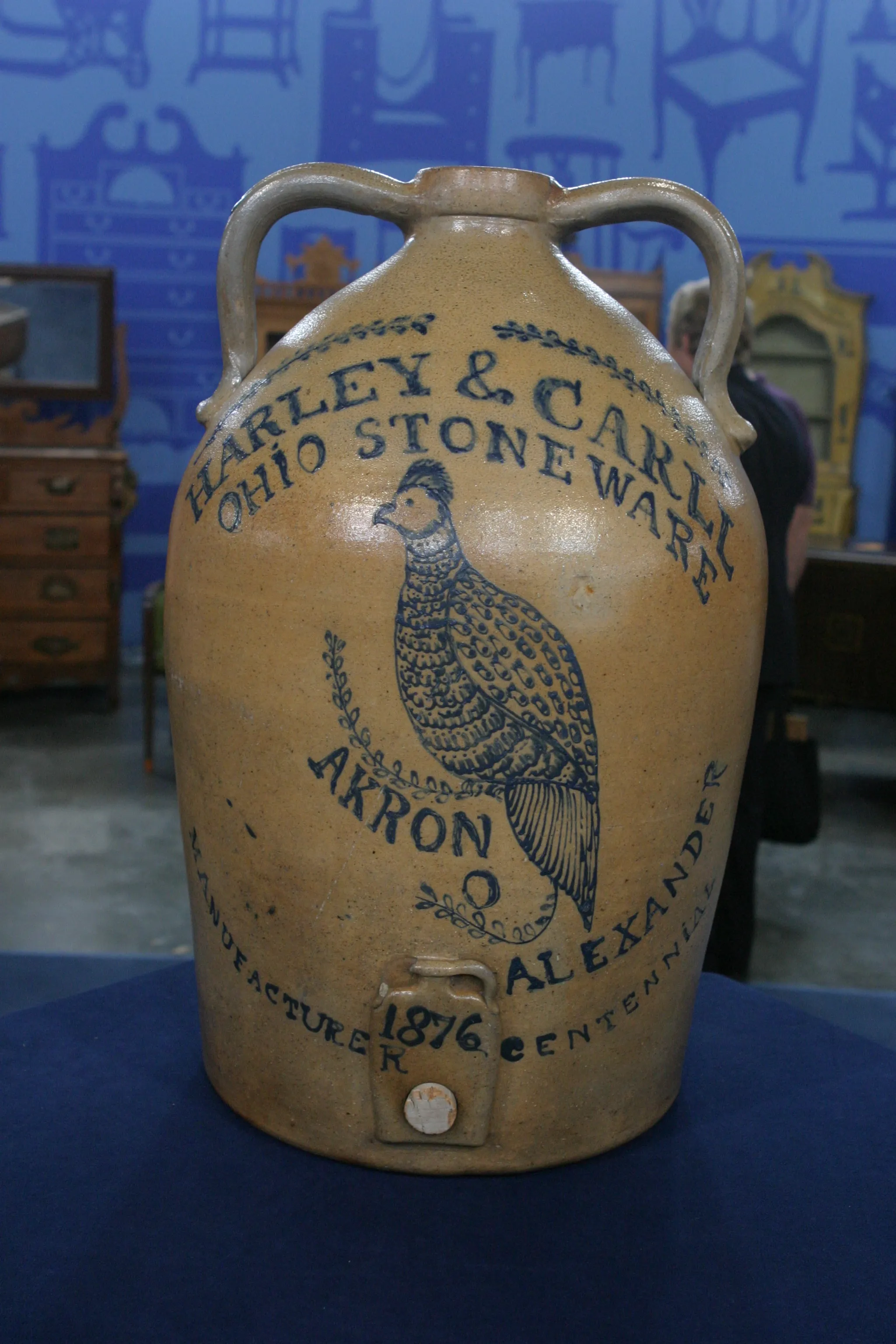
1876 John Alexander Stoneware Cooler
appraisal
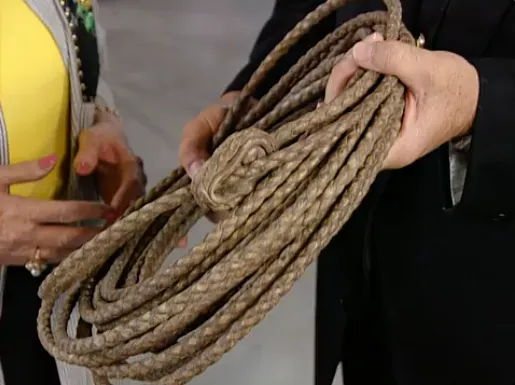
Braided Rawhide Lariat, ca. 1850
appraisal
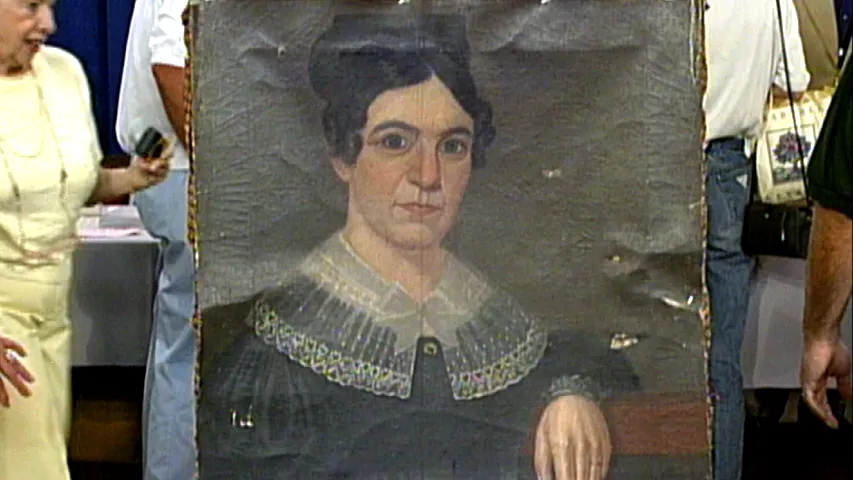
American School Portrait, ca. 1820
appraisal
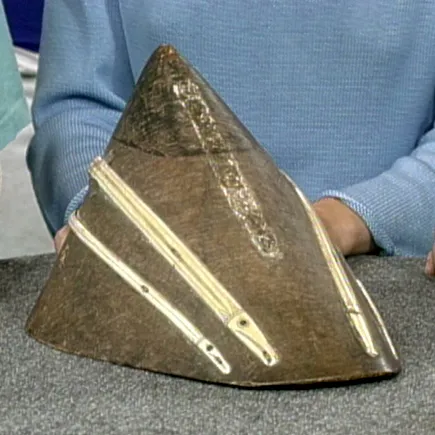
Eskimo Hunting Helmet, ca. 1820
Understanding Our Appraisals
Executive producer Marsha Bemko shares her tips for getting the most out of ANTIQUES ROADSHOW.
Value can change: The value of an item is dependent upon many things, including the condition of the object itself, trends in the market for that kind of object, and the location where the item will be sold. These are just some of the reasons why the answer to the question "What's it worth?" is so often "It depends."
Note the date: Take note of the date the appraisal was recorded. This information appears in the upper left corner of the page, with the label "Appraised On." Values change over time according to market forces, so the current value of the item could be higher, lower, or the same as when our expert first appraised it.
Context is key: Listen carefully. Most of our experts will give appraisal values in context. For example, you'll often hear them say what an item is worth "at auction," or "retail," or "for insurance purposes" (replacement value). Retail prices are different from wholesale prices. Often an auctioneer will talk about what she knows best: the auction market. A shop owner will usually talk about what he knows best: the retail price he'd place on the object in his shop. And though there are no hard and fast rules, an object's auction price can often be half its retail value; yet for other objects, an auction price could be higher than retail. As a rule, however, retail and insurance/replacement values are about the same.
Verbal approximations: The values given by the experts on ANTIQUES ROADSHOW are considered "verbal approximations of value." Technically, an "appraisal" is a legal document, generally for insurance purposes, written by a qualified expert and paid for by the owner of the item. An appraisal usually involves an extensive amount of research to establish authenticity, provenance, composition, method of construction, and other important attributes of a particular object.
Opinion of value: As with all appraisals, the verbal approximations of value given at ROADSHOW events are our experts' opinions formed from their knowledge of antiques and collectibles, market trends, and other factors. Although our valuations are based on research and experience, opinions can, and sometimes do, vary among experts.
Appraiser affiliations: Finally, the affiliation of the appraiser may have changed since the appraisal was recorded. To see current contact information for an appraiser in the ROADSHOW Archive, click on the link below the appraiser's picture. Our Appraiser Index also contains a complete list of active ROADSHOW appraisers and their contact details and biographies.


