Chelsea Ship's Clock, ca. 1900
GUEST: My husband got it at a garage sale in Michigan before 1983, and, uh, he paid, at the most, $50 for it. It runs, except you have to wind it every day, and it has a bell to it.
APPRAISER: It probably runs for seven to eight days. Probably needs a cleaning.
GUEST: Oh, okay.
APPRAISER: But this clock was retailed by the Star Brass Manufacturing Company in Boston.
GUEST: Oh.
APPRAISER: And they were a company that made steam gauges for a number of years.
GUEST: Mm-hmm.
APPRAISER: They had their name, uh, engraved on the dial, and it served as an advertisement for them. And they would sell these clocks to their clients, who invested in their steam gauges and pressure gauges, and this sort of looked a lot like them.
They would buy these clocks from companies like the Seth Thomas Clock Company, the E. Howard clock company, and the Chelsea Clock Company, which is a really famous clock for nautical clocks.
GUEST: Oh.
APPRAISER: And this clock was made by the Chelsea Clock Company circa 1900. It's time only, meaning it does not strike. And you have this wonderful subsidiary dial here, with the seconds. And then you have this additional arbor here that is a slow/fast adjustment.
GUEST: Oh, okay.
APPRAISER: It's got an incredible heavy brass case, and you have a push-button latch right here, on the side.
GUEST: Right.
APPRAISER: If you push that in, the bezel swings open on this beautiful hinge on this side. Just really, extremely well made. It's a really sexy clock. It's clean, simple lines, and it's really a clock that's becoming responsible for really drawing in the younger generations of interest. It fits in a newer home or an older home, and it's just simple. And any time that you can add information to a clock and place it to where it might have gone...
GUEST: Mm-hmm.
APPRAISER: ...it's a really nice thing to have, and it drives the price. This says "Detroit Shipbuilding Company, Ship Engine Builders of Detroit, Michigan." That's so great that you're from Michigan. And that's probably what drew the interest of your husband...
GUEST: Yes, I'm sure.
APPRAISER: ...to this clock. Do you have any idea of what the value is today on a clock like this?
GUEST: None-- $100?
APPRAISER: No, it's better than that. It's a, it's a clock that would retail for about $1,500.
GUEST: Oh, my God, you're kidding me!
APPRAISER: No, I'm not kidding you.
(both laugh)
GUEST: I guess my husband had a good eye.
APPRAISER: He had a good eye. I like things that younger people are gravitating towards...
GUEST: Mm-hmm.
APPRAISER: ...because they're the ones that are responsible for keeping this market going.
GUEST: Yes.

$1,500 - $1,500 Retail
Featured In

episode
Springs Preserve, Hour 1
Las Vegas treasures hit the jackpot with ROADSHOW’s top $650,000 find of Season 29!
20th Century
appraisal
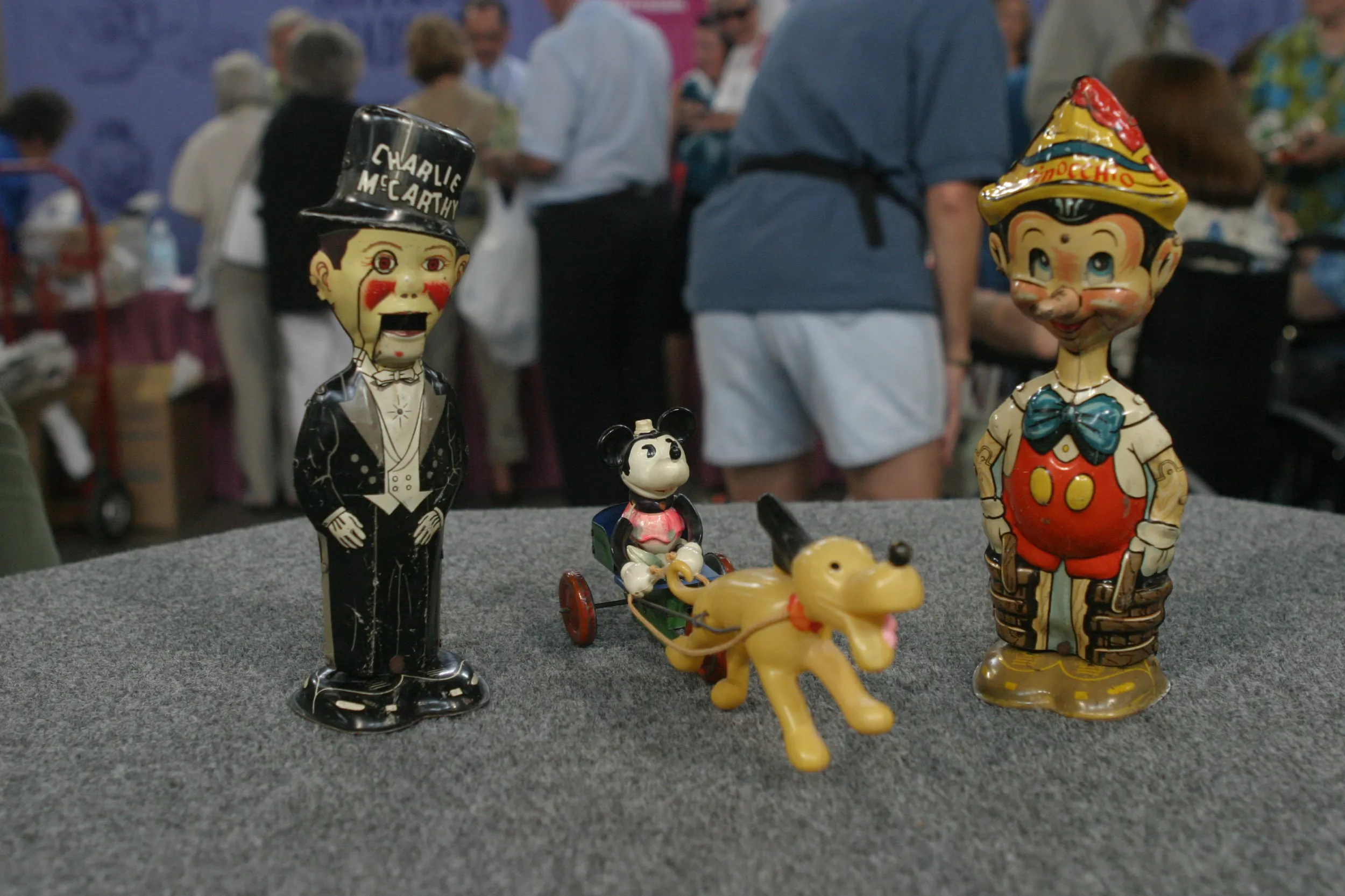
Comic Wind-up Toys, ca. 1930

appraisal
Barbie Accessories & Case, ca. 1960
appraisal
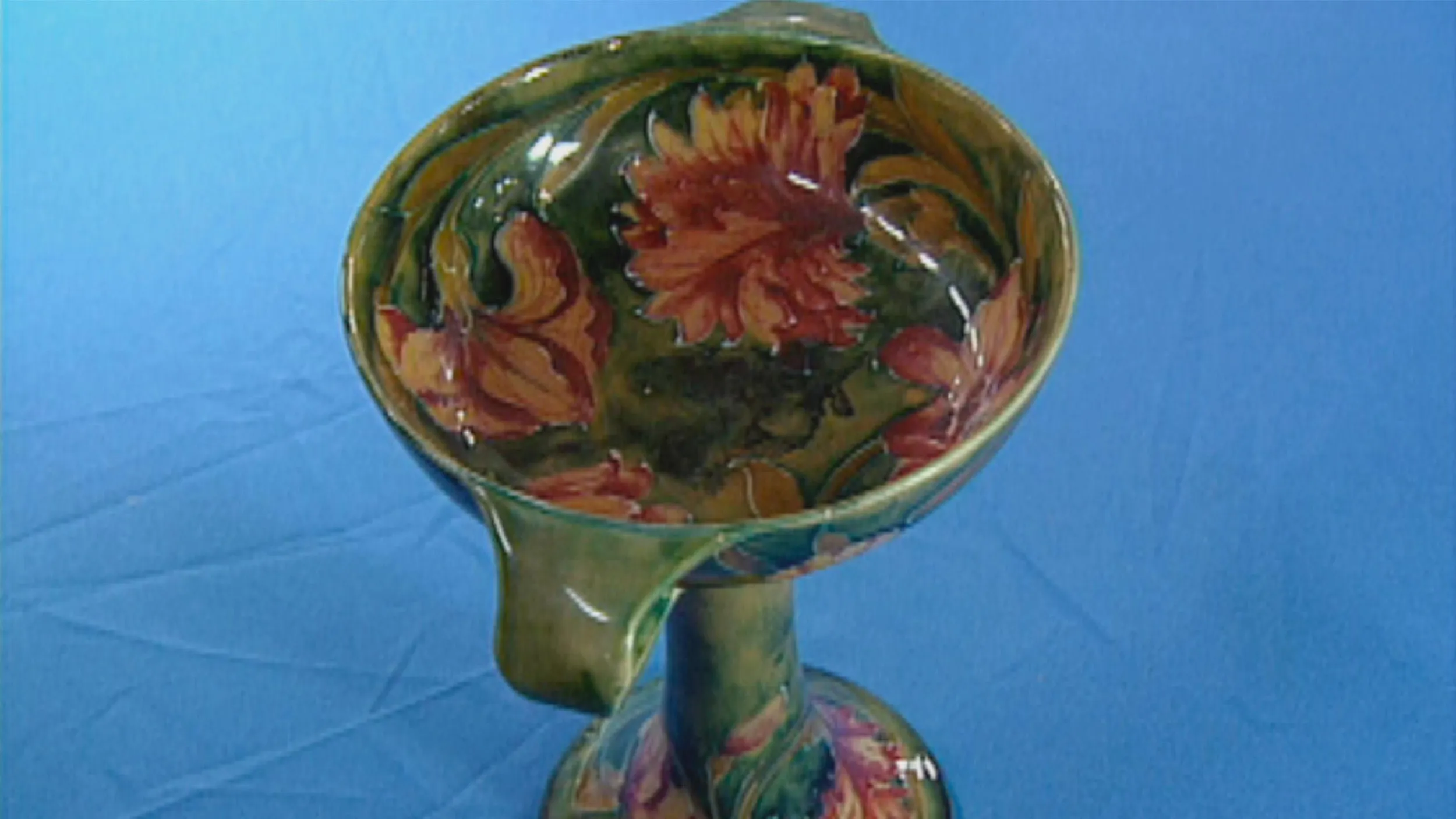
William Moorcroft Pottery, ca. 1910
appraisal
Understanding Our Appraisals
Executive producer Marsha Bemko shares her tips for getting the most out of ANTIQUES ROADSHOW.
Value can change: The value of an item is dependent upon many things, including the condition of the object itself, trends in the market for that kind of object, and the location where the item will be sold. These are just some of the reasons why the answer to the question "What's it worth?" is so often "It depends."
Note the date: Take note of the date the appraisal was recorded. This information appears in the upper left corner of the page, with the label "Appraised On." Values change over time according to market forces, so the current value of the item could be higher, lower, or the same as when our expert first appraised it.
Context is key: Listen carefully. Most of our experts will give appraisal values in context. For example, you'll often hear them say what an item is worth "at auction," or "retail," or "for insurance purposes" (replacement value). Retail prices are different from wholesale prices. Often an auctioneer will talk about what she knows best: the auction market. A shop owner will usually talk about what he knows best: the retail price he'd place on the object in his shop. And though there are no hard and fast rules, an object's auction price can often be half its retail value; yet for other objects, an auction price could be higher than retail. As a rule, however, retail and insurance/replacement values are about the same.
Verbal approximations: The values given by the experts on ANTIQUES ROADSHOW are considered "verbal approximations of value." Technically, an "appraisal" is a legal document, generally for insurance purposes, written by a qualified expert and paid for by the owner of the item. An appraisal usually involves an extensive amount of research to establish authenticity, provenance, composition, method of construction, and other important attributes of a particular object.
Opinion of value: As with all appraisals, the verbal approximations of value given at ROADSHOW events are our experts' opinions formed from their knowledge of antiques and collectibles, market trends, and other factors. Although our valuations are based on research and experience, opinions can, and sometimes do, vary among experts.
Appraiser affiliations: Finally, the affiliation of the appraiser may have changed since the appraisal was recorded. To see current contact information for an appraiser in the ROADSHOW Archive, click on the link below the appraiser's picture. Our Appraiser Index also contains a complete list of active ROADSHOW appraisers and their contact details and biographies.


