Charles & Ray Eames Child's Nested Chair, ca. 1945
GUEST: My husband and I inherited this from his grandmother. She bought it for her first daughter in the early '50s. And it was played with and used. I was told it was an Eames chair.
APPRAISER: It is a chair that was designed by Charles and Ray Eames in 1945.
GUEST: Okay.
APPRAISER: For the Evans Products Company out of Venice, California. The Eames's got started in plywood manufacturing initially because they were contracted by the U.S. government to work with the Evans Plywood Company to create leg splints for the wartime effort.
GUEST: Wow.
APPRAISER: And they created that leg splint around 1942. They had had some previous experience doing molded plywood designs, but this little chair ends up being the first one that they create with Evans between 1945 and 1947.
GUEST: Okay.
APPRAISER: Now, production got taken over by Herman Miller in the early '50s. But we believe that there were no more than 5,000 of these little chairs ever produced. And they were available in a series of colors: red, black, yellow, blue and magenta. Yours is sort of unfinished, raw birch plywood.
GUEST: There are one or two people that remember it being red and that it had been stripped.
APPRAISER: When you first brought it to the table, that was also my first thought, that it might originally have been a red aniline dye. That condition issue doesn't affect it tremendously.
GUEST: Okay.
APPRAISER: It's made of two pieces of molded five-ply plywood that is joined on the underside-- the back joins the seat with these three rivets in a triangular position. And that's how we know it's one of the early examples of this chair.
GUEST: Okay.
APPRAISER: The Eameses were really interested in traditional folk art and symbolism. And so they an-- they-they put that heart there, kind of as a nod to the sweetness of childhood. But it also has a practical role. It's meant so that little fingers can lift the chair...
GUEST: Oh...
APPRAISER: ...and move it around. Collectors of Eames know this chair as the Child's Nested Chair, also known as the Heart Chair. And the idea was that children could stack these, and as a result of them being child's pieces...
GUEST: Mm-hmm.
APPRAISER: ...not a lot of them survive. In the past 20 years, I think we've seen maybe 30 come up to auction.
GUEST: Okay.
APPRAISER: So they really are an absolute prize for Eames collectors. So in today's market, at auction, we would estimate this chair between $3,000 and $5,000.
GUEST: Wow, okay. (laughs) That's great news, thank you.

Featured In

episode
Maryland Zoo, Hour 2
ROADSHOW finds rare treasures at Maryland Zoo including one worth $180,000!
Birch

appraisal
New England Gentleman's Chest, ca. 1830

appraisal
Heywood Wakefield Desk, ca. 1940
appraisal
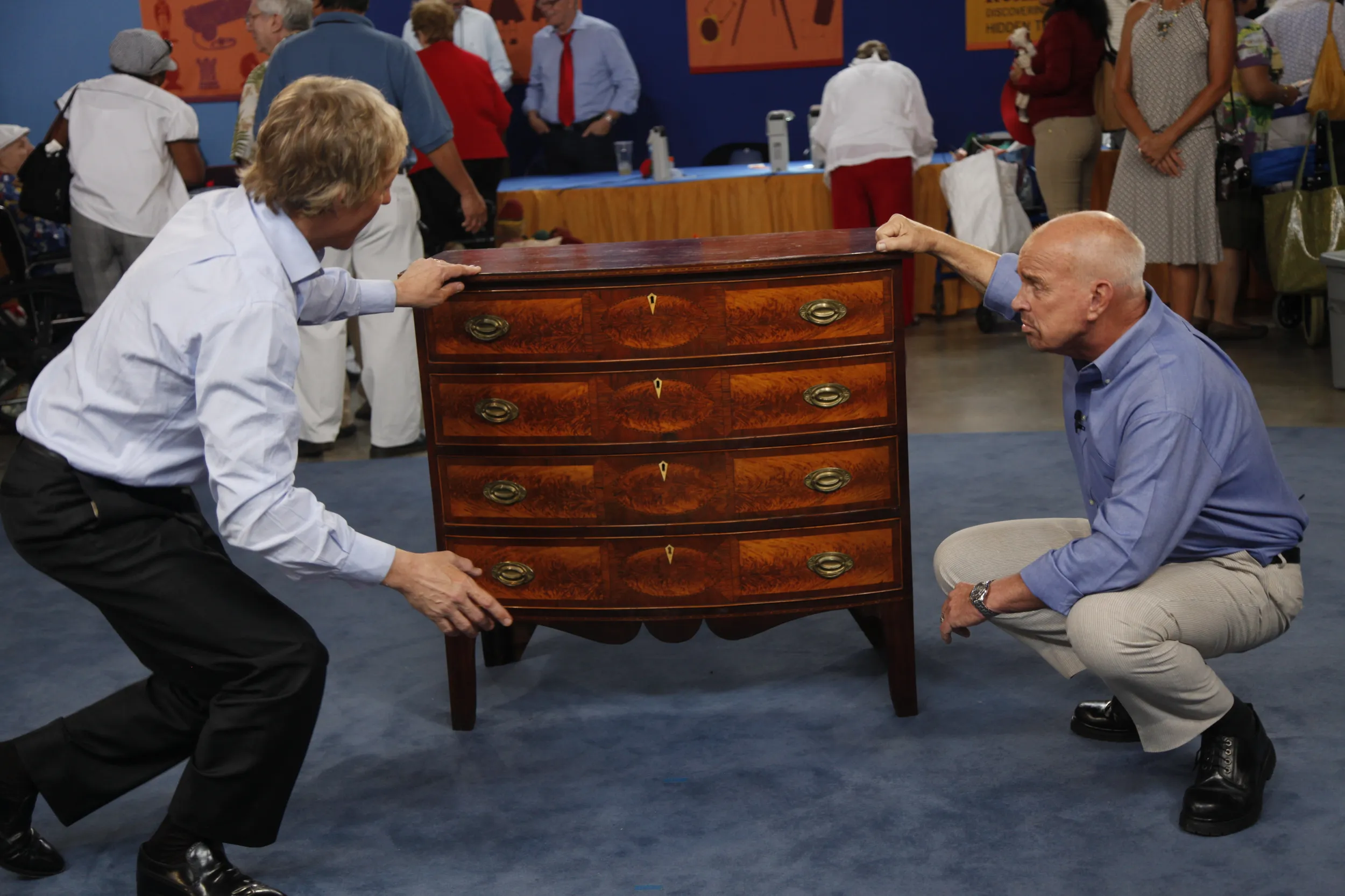
Federal Bow Front Chest of Drawers, ca. 1805

appraisal
Vernacular Armchair, ca. 1830
Understanding Our Appraisals
Executive producer Marsha Bemko shares her tips for getting the most out of ANTIQUES ROADSHOW.
Value can change: The value of an item is dependent upon many things, including the condition of the object itself, trends in the market for that kind of object, and the location where the item will be sold. These are just some of the reasons why the answer to the question "What's it worth?" is so often "It depends."
Note the date: Take note of the date the appraisal was recorded. This information appears in the upper left corner of the page, with the label "Appraised On." Values change over time according to market forces, so the current value of the item could be higher, lower, or the same as when our expert first appraised it.
Context is key: Listen carefully. Most of our experts will give appraisal values in context. For example, you'll often hear them say what an item is worth "at auction," or "retail," or "for insurance purposes" (replacement value). Retail prices are different from wholesale prices. Often an auctioneer will talk about what she knows best: the auction market. A shop owner will usually talk about what he knows best: the retail price he'd place on the object in his shop. And though there are no hard and fast rules, an object's auction price can often be half its retail value; yet for other objects, an auction price could be higher than retail. As a rule, however, retail and insurance/replacement values are about the same.
Verbal approximations: The values given by the experts on ANTIQUES ROADSHOW are considered "verbal approximations of value." Technically, an "appraisal" is a legal document, generally for insurance purposes, written by a qualified expert and paid for by the owner of the item. An appraisal usually involves an extensive amount of research to establish authenticity, provenance, composition, method of construction, and other important attributes of a particular object.
Opinion of value: As with all appraisals, the verbal approximations of value given at ROADSHOW events are our experts' opinions formed from their knowledge of antiques and collectibles, market trends, and other factors. Although our valuations are based on research and experience, opinions can, and sometimes do, vary among experts.
Appraiser affiliations: Finally, the affiliation of the appraiser may have changed since the appraisal was recorded. To see current contact information for an appraiser in the ROADSHOW Archive, click on the link below the appraiser's picture. Our Appraiser Index also contains a complete list of active ROADSHOW appraisers and their contact details and biographies.


