Charles McGee Charcoal Drawing, ca. 1965
GUEST: Well, I'm an avid believer of an artist named Charles McGee. And one weekend, I went to an estate sale, and I found this one here, and I thought it was a print. The person who sold it to me sold it to me for over $1,000. And I said to myself, "Since it's a print, that's a lot of money." But I wanted it so bad, so I bought it for $1,000. I gave it to him. Then I found out later on it wasn't a print. It was an original piece of art made out of graphite and charcoal. And I don't know more than that about it.
APPRAISER: So Charles McGee was born in 1924 in South Carolina. And at the age of ten, he came to Detroit, which would be a city that would become very important for him, and likewise, he became very important for the city. In 1969, he put together a, an exhibition called "Seven Black Artists," which was very important in terms of the history of African American art in Detroit. It was a seminal exhibition with a lot of important artists, including himself. After that, he even went on to start his own gallery. And in 1995, he had a one-man show dedicated to him at the Detroit Institute of Arts. So he really became a fixture in Detroit. He's still alive.
GUEST: Yes.
APPRAISER: Right now, he's 90 years old.
GUEST: Right.
APPRAISER: And is still working-- when we look at this, what we see is something that has a lot of emotion to it. What do you think the value might be today?
GUEST: I have really no idea at all. I have no clue. I couldn't even begin to think about what the value would be.
APPRAISER: Okay.
GUEST: Because I'm not even sure when it was really drawn, so...
APPRAISER: Right, well, it does look like it's probably from his '60s-'70s period.
GUEST: Okay.
APPRAISER: The value that I would put on it today for an auction estimate-- it's a large work-- would be $4,000 to $6,000.
GUEST: Okay, all right. Wow. Well, that's an improvement. (laughs)

$6,000 - $8,000 Auction
$4,000 - $6,000 Auction
Featured In
episode
Cleveland, Hour 2 (2016)
An Ohio stoneware match stand, Civil War grave markers, and a Manoucher Yektai oil.
episode
American Stories
Celebrate the history of our country through personal accounts behind standout treasures.
Fine Art
appraisal
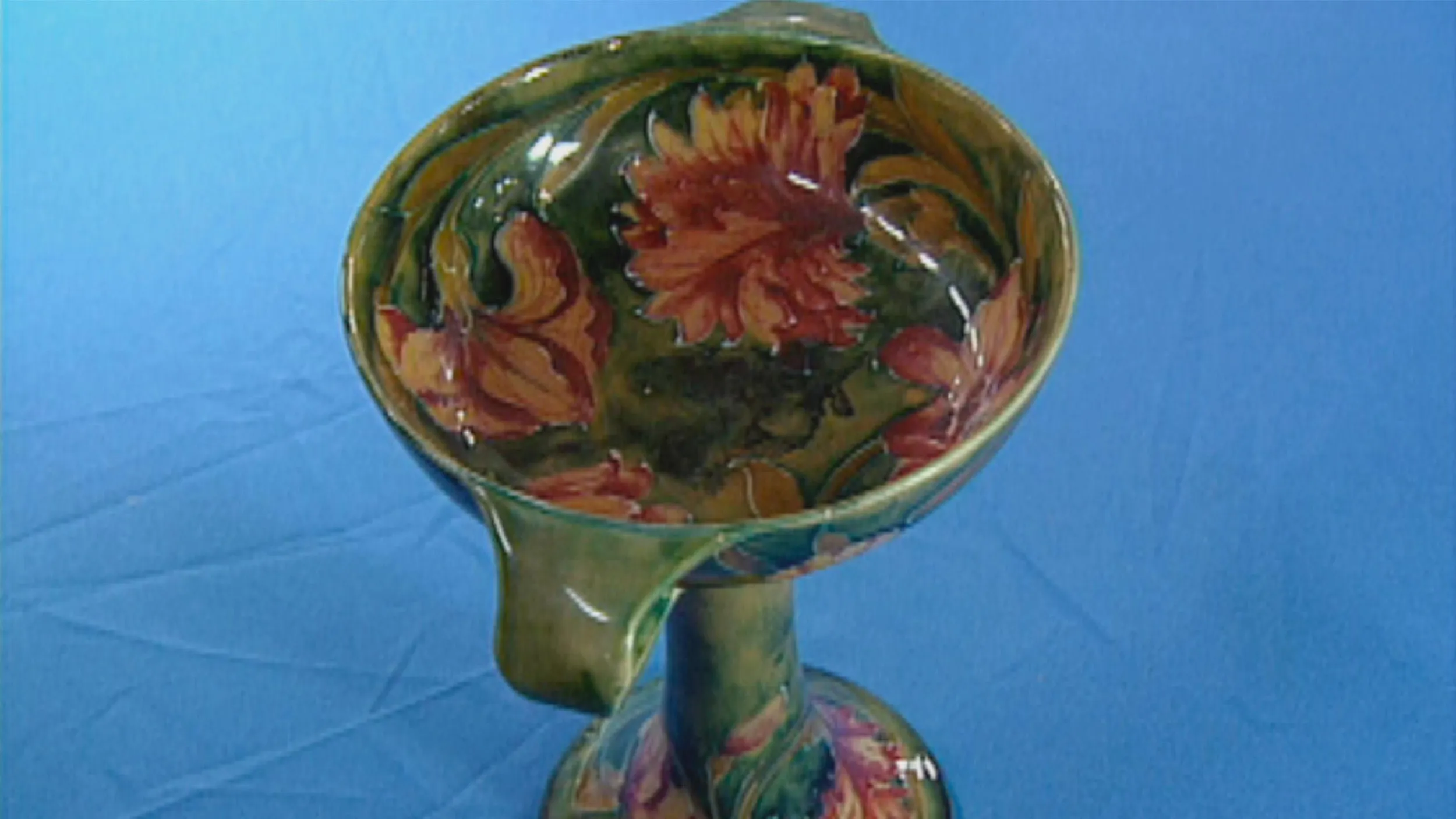
William Moorcroft Pottery, ca. 1910
appraisal
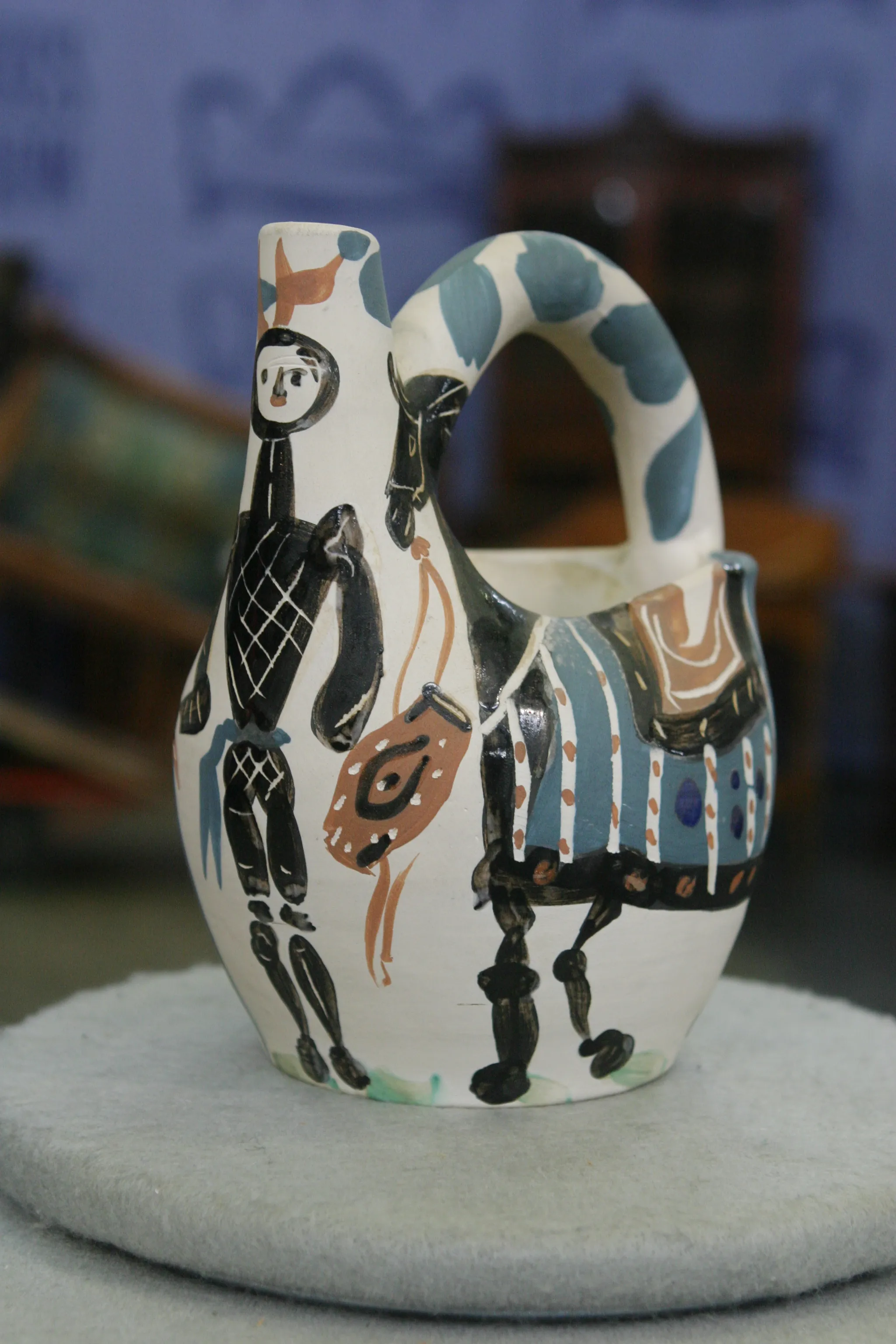
1952 Picasso Madoura Ceramic Jug

appraisal
Edgar Alwin Payne Painting, ca. 1925
appraisal
American School Portrait, ca. 1820
Understanding Our Appraisals
Executive producer Marsha Bemko shares her tips for getting the most out of ANTIQUES ROADSHOW.
Value can change: The value of an item is dependent upon many things, including the condition of the object itself, trends in the market for that kind of object, and the location where the item will be sold. These are just some of the reasons why the answer to the question "What's it worth?" is so often "It depends."
Note the date: Take note of the date the appraisal was recorded. This information appears in the upper left corner of the page, with the label "Appraised On." Values change over time according to market forces, so the current value of the item could be higher, lower, or the same as when our expert first appraised it.
Context is key: Listen carefully. Most of our experts will give appraisal values in context. For example, you'll often hear them say what an item is worth "at auction," or "retail," or "for insurance purposes" (replacement value). Retail prices are different from wholesale prices. Often an auctioneer will talk about what she knows best: the auction market. A shop owner will usually talk about what he knows best: the retail price he'd place on the object in his shop. And though there are no hard and fast rules, an object's auction price can often be half its retail value; yet for other objects, an auction price could be higher than retail. As a rule, however, retail and insurance/replacement values are about the same.
Verbal approximations: The values given by the experts on ANTIQUES ROADSHOW are considered "verbal approximations of value." Technically, an "appraisal" is a legal document, generally for insurance purposes, written by a qualified expert and paid for by the owner of the item. An appraisal usually involves an extensive amount of research to establish authenticity, provenance, composition, method of construction, and other important attributes of a particular object.
Opinion of value: As with all appraisals, the verbal approximations of value given at ROADSHOW events are our experts' opinions formed from their knowledge of antiques and collectibles, market trends, and other factors. Although our valuations are based on research and experience, opinions can, and sometimes do, vary among experts.
Appraiser affiliations: Finally, the affiliation of the appraiser may have changed since the appraisal was recorded. To see current contact information for an appraiser in the ROADSHOW Archive, click on the link below the appraiser's picture. Our Appraiser Index also contains a complete list of active ROADSHOW appraisers and their contact details and biographies.


