GUEST: This was my dad's ukulele. When he was a young guy in his 20s, he was a amateur vaudevillian. He tap-danced, and he played the ukulele. He died young, he died in 1967, and I've had it ever since. In fact, the strings on it have never been replaced.
APPRAISER: So, you don't play it yourself?
GUEST: I don't play it myself.
APPRAISER: But you've kept it in your family, and...
GUEST: I've kept it. Yeah, I'm an only child, and it just naturally came to me. I figured it's from the '30, '20s or the '30s. It's a Martin.
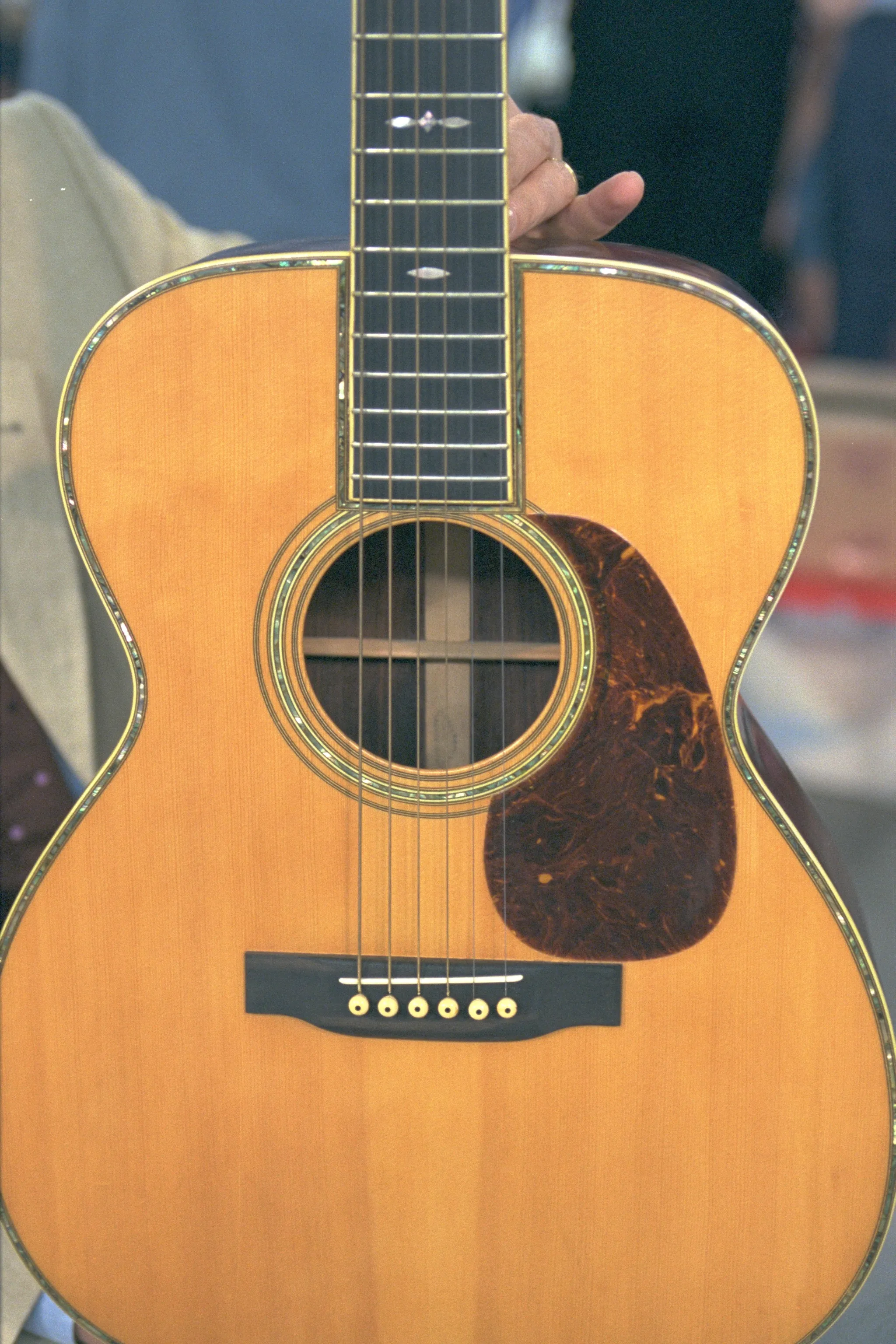
APPRAISER: I'm so glad you brought it when you brought it. It's, the case isn't here, but the case is completely falling apart. And so, when I see a case like that, I go, "Oh, I can't wait to see what's inside." When I looked inside, it just made me smile, 'cause not only is it... you're correct, the date. This is... this model was made between 1920 and the early '30s, but it's also in fabulous condition. What it is is a C.F. Martin 3K soprano uke made by the C.F. Martin Guitar Company in Nazareth, Pennsylvania. And it's kind of special, because in the ukulele line, Martin went from style zero to style five. This is a style three, and that's because of the decoration. They didn't make a style four, and so this is next to the top-of-the-line instrument. But what really makes it special is that it's made out of Hawaiian koa wood rather than mahogany. Not only is it beautiful Hawaiian koa wood, but as you move it in the light, this has a lot of flame to it.
GUEST: Yeah.
APPRAISER: It's the same with the back. Very pretty. What almost always happens to these instruments is, eventually, they get a crack in them or are damaged. And this instrument has been maintained in wonderful condition all these years. Very minor nicks and scratches, little dings, what we call honest play wear. No repairs to the instrument of any kind of all. No damage of significance. The style three has the fancier inlays in the fingerboard.
GUEST: Right.
APPRAISER: It has this little wedge piece inlaid in here, which looks like it's ivory, but it's actually ivoroid plastic. Even back then. The only thing that's on, on the instrument that's made of ivory-- which could be a problem nowadays-- is this thing called the nut. They've been changing regulations with the sale of ivory. The sale of ivory, less than 200 grams on a musical instrument is not an issue unless you were shipping it international, and then you just have to figure out what the regulations were at the time.
GUEST: Right.
APPRAISER: The market in these have changed significantly. 20 years ago, they were worth very little. Ten or 15 years ago, they would spike through the roof. And then they've leveled off a little bit. 'Cause when they spiked through the roof, they came out of the woodwork, and people wanted to sell them.
GUEST: Right.
APPRAISER: I would say, in the current marketplace, that this instrument, in this condition it's in, would sell in a retail market for about $3,500.
GUEST: Wow, that's great.
APPRAISER: It would have sold in the highest of the market, maybe for $5,000.
GUEST: Right.
APPRAISER: But that was then, and this is now. It's still a significant number, and, and a, and it's a beautiful instrument. What do you think your dad would think about this value?
GUEST: (chuckles): Oh, I... I think right now he's laughing his head off in heaven. He would love it. He would be... he'd be amazed.