Cartier Pendant Watch & Case, ca. 1915
GUEST: I brought a necklace that was given to me as a wedding gift. It belonged to my great-grandmother. I believe it was actually a gift for her 18th birthday. So I imagine it would be the 1910s is when she received this. It was given to me from my aunt,and with it, she sent a note that said that it was given to my great-grandmother, grandmother, aunt, and now me.
APPRAISER: What year did you receive the watch?
GUEST: 2016 was the year we got married. It's kind of fun, because today happens to be my wedding anniversary, too.
APPRAISER: Oh, congratulations.
GUEST: (laughing) Thank you.
APPRAISER: It's Cartier ladies pendant watch. Cartier, it's a Paris firm. They were founded in 1847. The time period. You are right about on the money. 1910, 1915, Edwardian period. Also, Belle Époque. Belle Époque is not just a time period, it's also a style. This has pearls, it has diamonds, it has enamel work, the blue enamel throughout. It's set in platinum, it's set in yellow gold.
GUEST: Oh.
APPRAISER: The diamonds in here are rose cut diamonds. The pearls are all natural. The back here, it's blue guilloché enamel, which is hard-fired enamel on top of the metal. There's diamond-set initials. Are those Grandma's initials?
GUEST: E.S. was her initials. It's flowery letters, so I wasn't sure if it was just a design or if it was in fact initials. If that looks like an E.S. to you, (chuckling) then I'll trust your judgment on it.
APPRAISER: It's an E.S., and that was a custom order. Everywhere on here are jewels. There's something a little extra special, there's something a little fancy. The quality of an object like this, it-it's absolutely phenomenal. Second to none. Cartier had special movements made. This was a collaboration with Cartier with another famous company, Jaeger-LeCoultre. You have the original box.
GUEST: Yes.
APPRAISER: Or presentation case. You open the double door, there's a beautiful treasure inside. And Cartier made that famous. Retail price on this watch is gonna be $25,000 to $30,000.
GUEST: (chuckling) Holy smokes. That's... that's wild. (laughs) Well, I better keep care of it. Safety deposit box, here we come. (chuckles)
APPRAISER: Unbelievable condition, and unbelievable to find it in the original box. It's awesome.

$25,000 - $30,000 Retail
Featured In

episode
Coastal Maine Botanical Gardens, Hour 3
ANTIQUES ROADSHOW wraps up our visit to Boothbay! — Mon, March 23, 2026
Timepieces

appraisal
Elgin Student Watch & Papers, ca. 1924

appraisal
Seth Thomas Wall Gallery Clock, ca. 1922

appraisal
Patek Philippe Pocket Watch, ca. 1900
appraisal
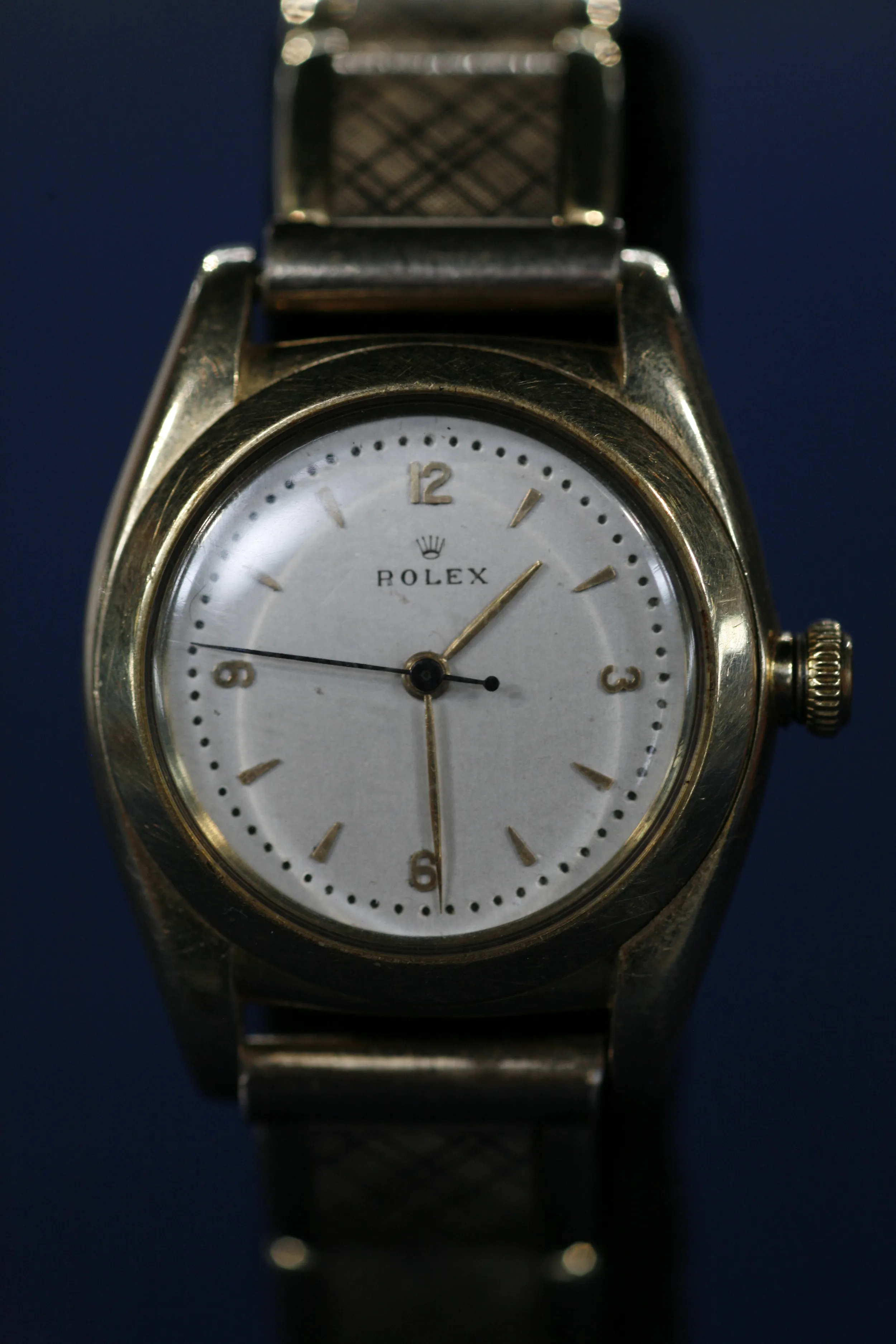
Rolex "Bubbleback" Watch, ca. 1940
Understanding Our Appraisals
Executive producer Marsha Bemko shares her tips for getting the most out of ANTIQUES ROADSHOW.
Value can change: The value of an item is dependent upon many things, including the condition of the object itself, trends in the market for that kind of object, and the location where the item will be sold. These are just some of the reasons why the answer to the question "What's it worth?" is so often "It depends."
Note the date: Take note of the date the appraisal was recorded. This information appears in the upper left corner of the page, with the label "Appraised On." Values change over time according to market forces, so the current value of the item could be higher, lower, or the same as when our expert first appraised it.
Context is key: Listen carefully. Most of our experts will give appraisal values in context. For example, you'll often hear them say what an item is worth "at auction," or "retail," or "for insurance purposes" (replacement value). Retail prices are different from wholesale prices. Often an auctioneer will talk about what she knows best: the auction market. A shop owner will usually talk about what he knows best: the retail price he'd place on the object in his shop. And though there are no hard and fast rules, an object's auction price can often be half its retail value; yet for other objects, an auction price could be higher than retail. As a rule, however, retail and insurance/replacement values are about the same.
Verbal approximations: The values given by the experts on ANTIQUES ROADSHOW are considered "verbal approximations of value." Technically, an "appraisal" is a legal document, generally for insurance purposes, written by a qualified expert and paid for by the owner of the item. An appraisal usually involves an extensive amount of research to establish authenticity, provenance, composition, method of construction, and other important attributes of a particular object.
Opinion of value: As with all appraisals, the verbal approximations of value given at ROADSHOW events are our experts' opinions formed from their knowledge of antiques and collectibles, market trends, and other factors. Although our valuations are based on research and experience, opinions can, and sometimes do, vary among experts.
Appraiser affiliations: Finally, the affiliation of the appraiser may have changed since the appraisal was recorded. To see current contact information for an appraiser in the ROADSHOW Archive, click on the link below the appraiser's picture. Our Appraiser Index also contains a complete list of active ROADSHOW appraisers and their contact details and biographies.


