Cartier Diamond Dress Clips, ca. 1930
GUEST: I brought a pair of Cartier diamond and platinum dress clips that belonged to my mother. My mother got them from my father, who bought them from a family friend and jeweler out in New London, probably in the early '70s. She loved them, and she wore them every Saturday night. She was six-feet-tall.
APPRAISER: Oh, wow. (chuckles)
GUEST: Dark hair, dark eyes, red lips, red fingernails, and she was always dressed in black.
APPRAISER: Oh...
GUEST: And so, she wore them one on each side...
APPRAISER: Beautiful.
GUEST: ...of her dinner jacket. So, they, to me, mean good times. They're really special, and when she died, about ten years ago, my father gave them to me. When he was a little boy, he went to work really early, and, um...
APPRAISER: Wow.
GUEST: one of the places he worked was a jewelry store in New London called Mallove's.
APPRAISER: Wow.
GUEST: Harvey Mallove was the owner, and he took my father under his wing. And when my dad was married, Harvey would call my father whenever he got something good, and he got a bunch of jewelry that was deaccessioned from a museum in New London, and these clips were part of that lot that my father bought.
APPRAISER: Harvey must've really loved your dad. (laughs)
GUEST: He did. (laughs)
APPRAISER: Yeah, you know, in a special way because these are incredible clips. They are platinum, diamond Cartier clips. They could've been worn as your mother wore them, on, on a lapel, clipped onto a bag. What's great about jewelry from this period-- and I would date these to around about 1930.
GUEST: Okay.
APPRAISER: So sort of mid-Art Deco period-- is that they were multipurpose. Cartier was the first to really manipulate platinum. At the end of the 19th century, they really turned platinum into a precious metal and something that was used in jewelry, which it previously had not been. These are signed Cartier. Uh, they also have a serial number.
GUEST: Mm.
APPRAISER: And they're signed on both clips.
GUEST: Yeah, I see.
APPRAISER: Originally, they would've been together on an armature, so you could wear them like a double-clip broach, like this.
GUEST: Oh, wow. Yeah.
APPRAISER: Cartier was founded in 1847 by Louis-François Cartier, and it would really be his grandsons, Pierre, Jacques, and Louis who would make the brand worldwide. Altogether, you have about 20 carats of diamonds.
GUEST: (gasps)
APPRAISER: The two large center stones are each about two carats.
GUEST: Oh, wow.
APPRAISER: Uh, there's baguette-cut diamonds that flank them on either side, and then a mix of old European-cut and old mine-cut diamonds...
GUEST: Mm.
APPRAISER: ...throughout the rest of the clips.
GUEST: Mm-hmm.
APPRAISER: They are the height of quality. They're incredibly luscious, and sparkly, and well-matched. Do you know what your father purchased them for?
GUEST: I know that he paid $7,000 for the lot.
APPRAISER: Okay.
GUEST: I don't know what was in the lot, and he doesn't remember either.
APPRAISER: Okay. Conservatively, I would say an auction estimate on the pair would be in the neighborhood of $30,000 to $50,000.
GUEST: Wow. Wow.
APPRAISER: They truly are museum pieces.
GUEST: That surprises me. (chuckles) I never-- you know, when you love something, you don't really ascribe a value to it.
APPRAISER: Yeah.
GUEST: So, it's a bonus. I'm just happy to see them out.
APPRAISER: Yeah.
GUEST: (laughs) Out in the daylight, sparkling. And my father will be so thrilled.
APPRAISER: Oh, I'm so happy.
GUEST: They meant a lot to him and a lot to my mom.
APPRAISER: Well, they're beautiful, he had incredible taste, and...
GUEST: Thank you, Katherine.
APPRAISER: It's the best of the best.
GUEST: I'm gonna cry! (both laughing) (laughing): It's really hard--
APPRAISER: Don't cry, I'll cry! (laughing)
GUEST: It's really hard to believe--you have no idea how special these were.

$30,000 - $50,000 Auction
Featured In

episode
Maryland Zoo, Hour 3
ROADSHOW searches for hidden treasures in Maryland including one $150,000 - $200,000 find!
Gems and Minerals
appraisal
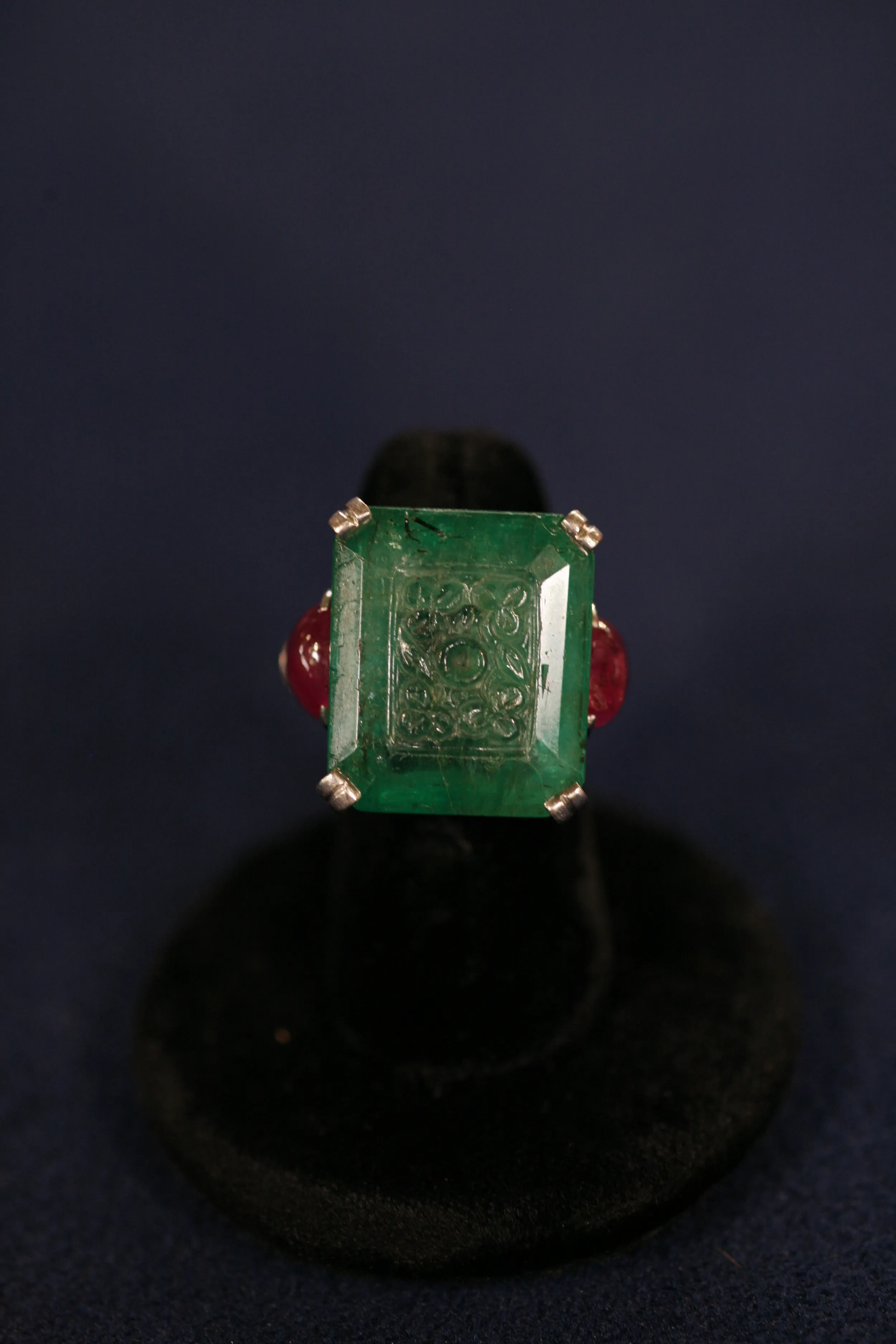
Carved Emerald & Ruby Ring, ca. 1925
appraisal
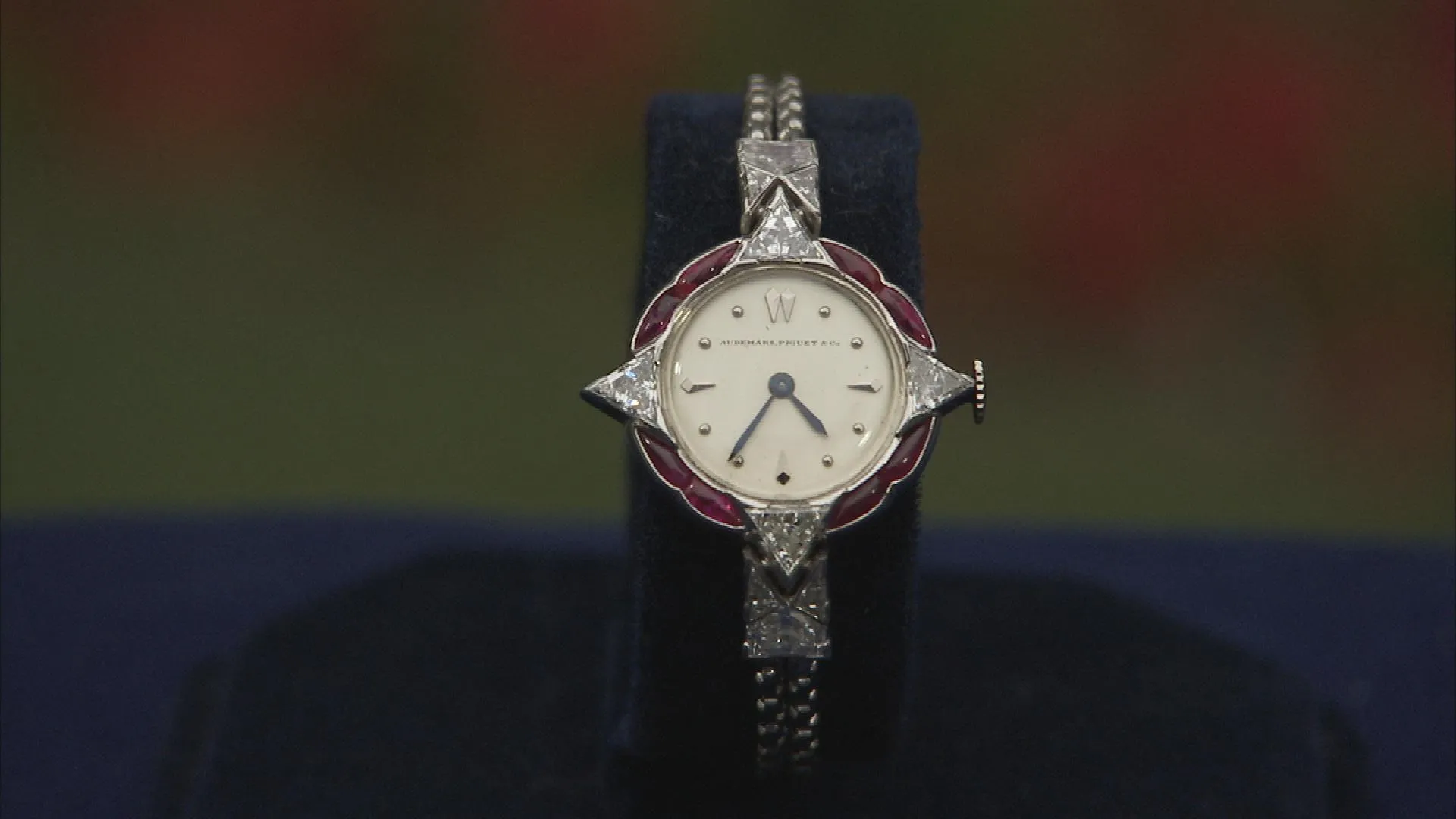
Audemars Piguet Watch, ca. 1940
appraisal
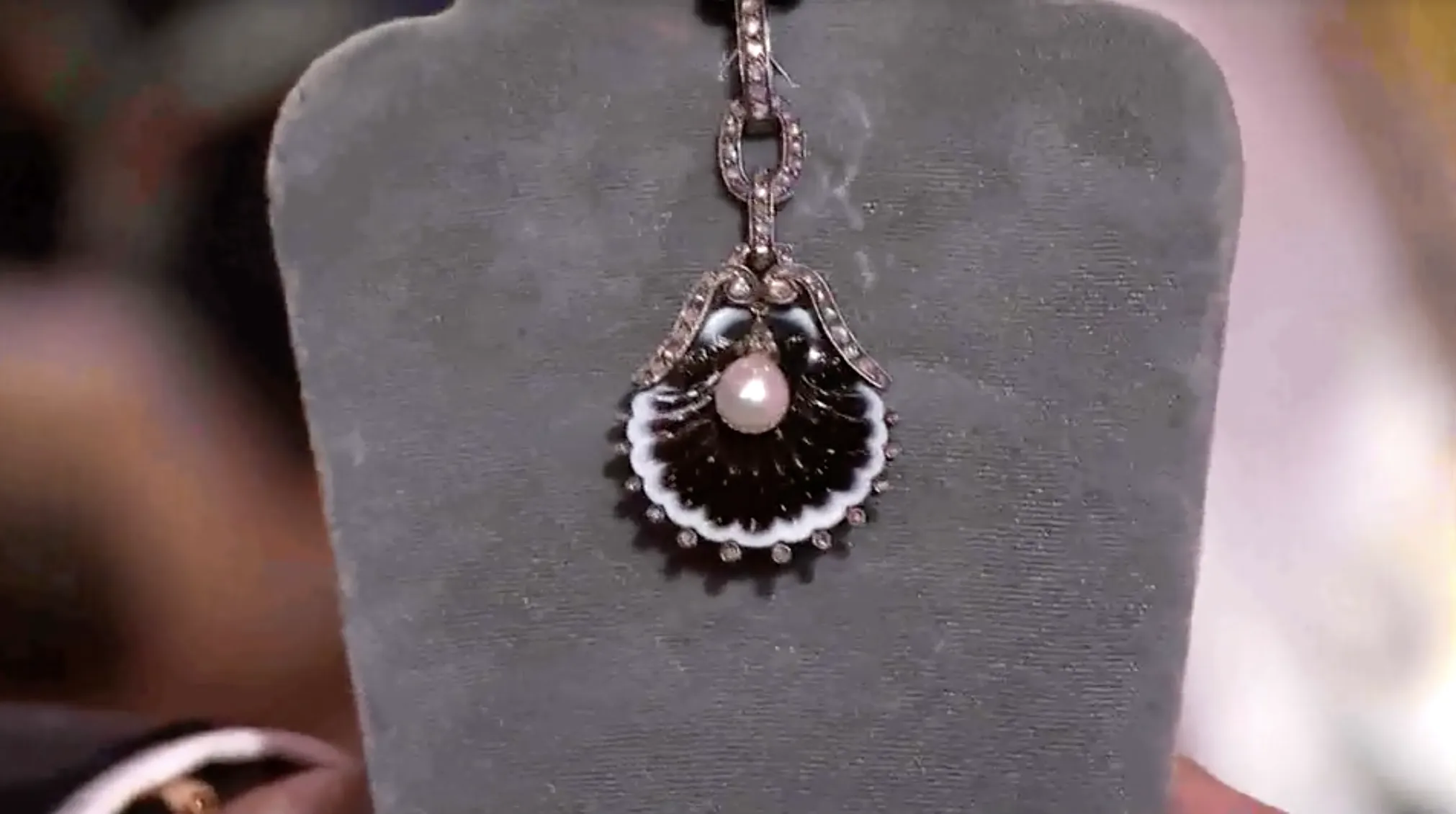
Pendant Jewelry by Faberge from 1880
appraisal
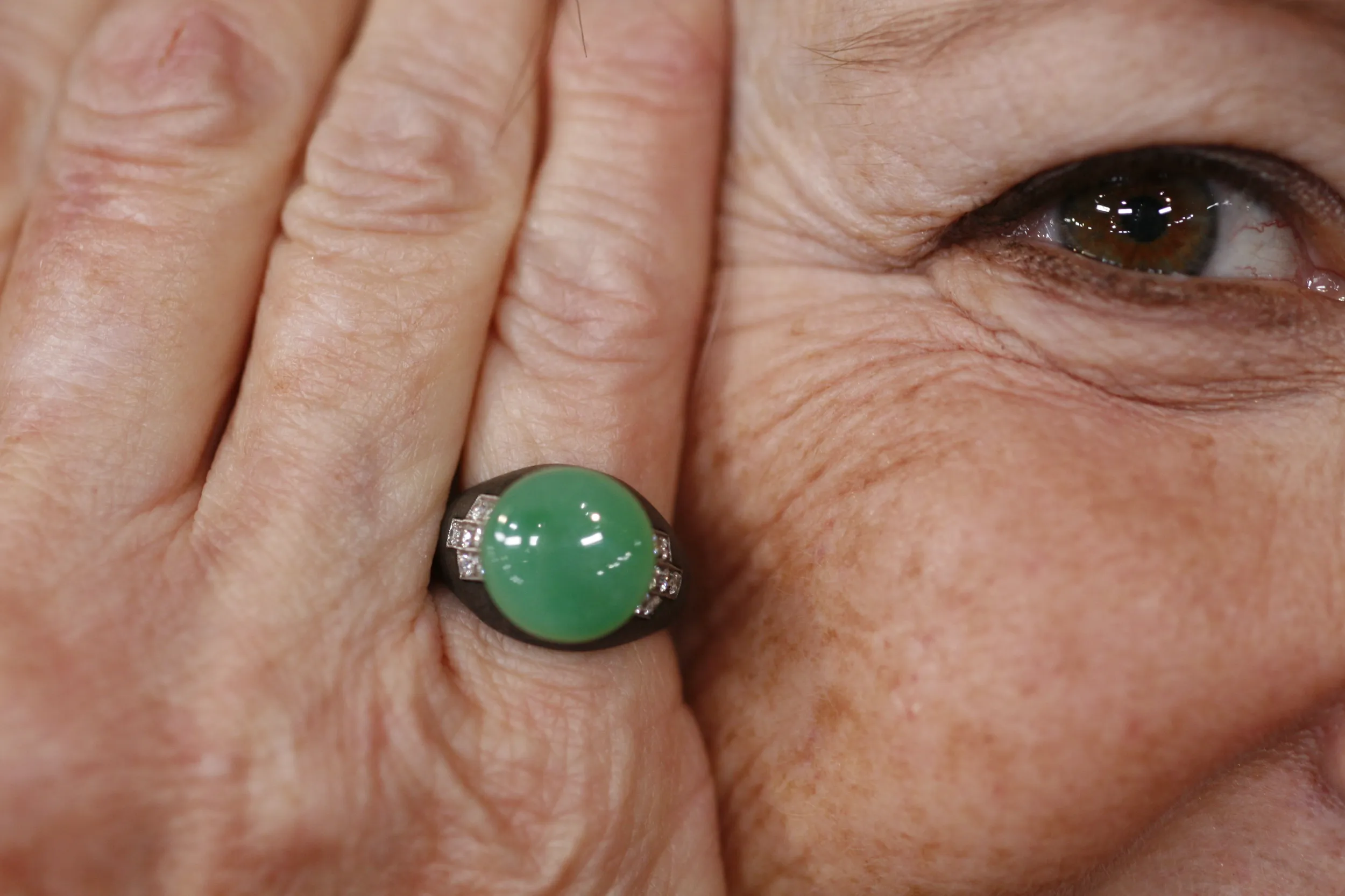
Marsh Steel, Jade & Diamond Ring, ca. 1950
Understanding Our Appraisals
Executive producer Marsha Bemko shares her tips for getting the most out of ANTIQUES ROADSHOW.
Value can change: The value of an item is dependent upon many things, including the condition of the object itself, trends in the market for that kind of object, and the location where the item will be sold. These are just some of the reasons why the answer to the question "What's it worth?" is so often "It depends."
Note the date: Take note of the date the appraisal was recorded. This information appears in the upper left corner of the page, with the label "Appraised On." Values change over time according to market forces, so the current value of the item could be higher, lower, or the same as when our expert first appraised it.
Context is key: Listen carefully. Most of our experts will give appraisal values in context. For example, you'll often hear them say what an item is worth "at auction," or "retail," or "for insurance purposes" (replacement value). Retail prices are different from wholesale prices. Often an auctioneer will talk about what she knows best: the auction market. A shop owner will usually talk about what he knows best: the retail price he'd place on the object in his shop. And though there are no hard and fast rules, an object's auction price can often be half its retail value; yet for other objects, an auction price could be higher than retail. As a rule, however, retail and insurance/replacement values are about the same.
Verbal approximations: The values given by the experts on ANTIQUES ROADSHOW are considered "verbal approximations of value." Technically, an "appraisal" is a legal document, generally for insurance purposes, written by a qualified expert and paid for by the owner of the item. An appraisal usually involves an extensive amount of research to establish authenticity, provenance, composition, method of construction, and other important attributes of a particular object.
Opinion of value: As with all appraisals, the verbal approximations of value given at ROADSHOW events are our experts' opinions formed from their knowledge of antiques and collectibles, market trends, and other factors. Although our valuations are based on research and experience, opinions can, and sometimes do, vary among experts.
Appraiser affiliations: Finally, the affiliation of the appraiser may have changed since the appraisal was recorded. To see current contact information for an appraiser in the ROADSHOW Archive, click on the link below the appraiser's picture. Our Appraiser Index also contains a complete list of active ROADSHOW appraisers and their contact details and biographies.


