GUEST: My dad was a collector. This is one of the pieces that he purchased. And about 30 years ago, he began to pass them on to me and my wife. We have great pride in what he has passed on to us and our family. The only thing I know about it is that it does have the Capodimonte mark on the back, at least I think it is, anyway.
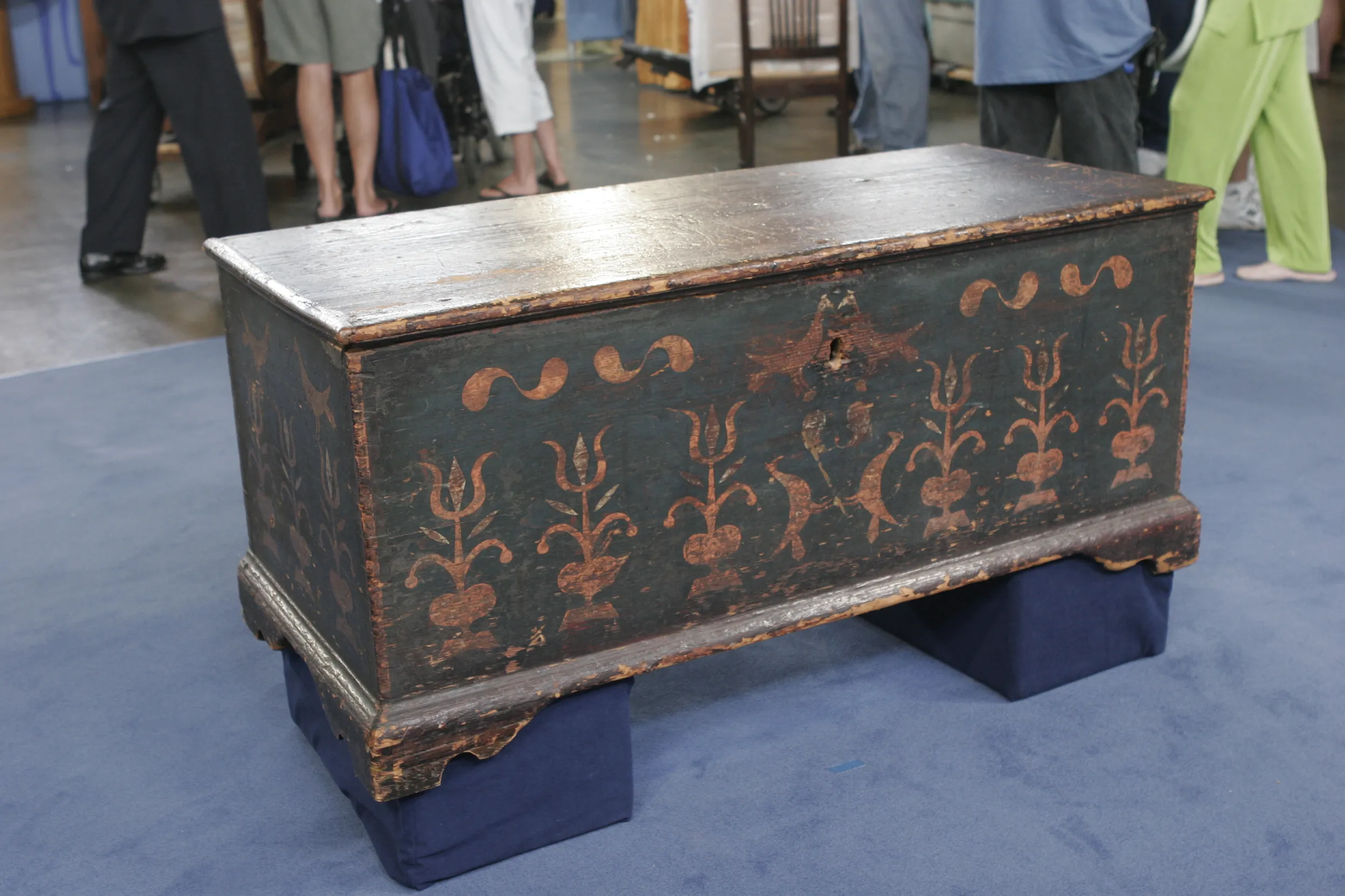
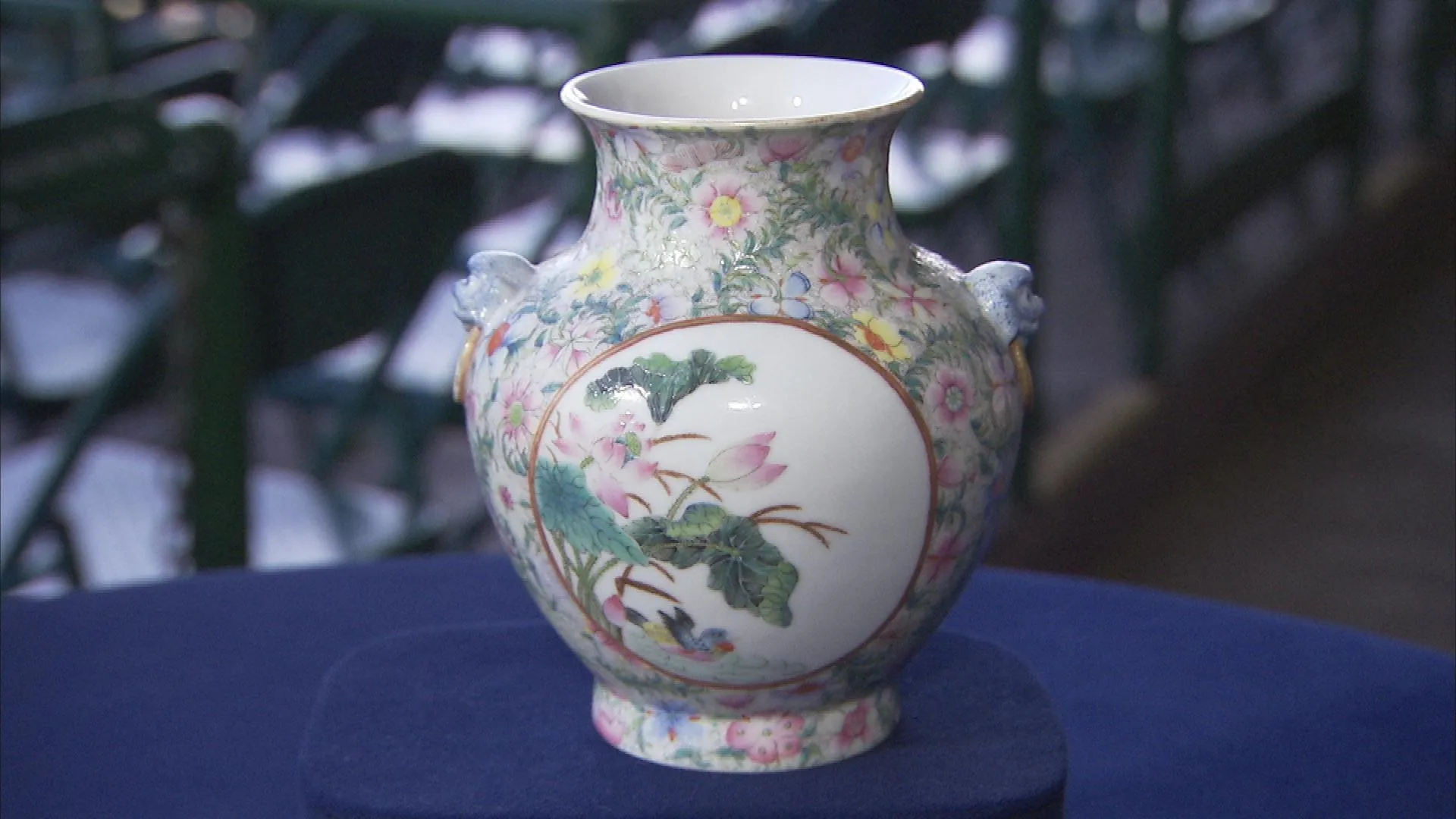
APPRAISER: Capodimonte is the name of a famous Italian porcelain factory near Naples that existed about 250 years ago in the middle of the 18th century. And the mark was a capital "N" with a crown above it. The crowned N mark today is perhaps the most common mark we see at Antiques Roadshow. On porcelain, we see it on porcelain made just about everywhere except the original Capodimonte Factory, which only lasted for a short time and produced a relatively small number of products, most of which are tucked away in museums or private collections. It's a prestige mark which we would see if we turned this thing over, which I'm not going to because it's kind of heavy, and has largely been used through its lifetime for deception. When we see the mark, we almost always assume that it was made at the very best at the end of the 19th century. But there are some pieces bearing the mark that are a little bit earlier than that and a little bit more special, and I think this may be one of them. I suspect it was made as early as the 1850s or 1860s. Certainly the quality of the production, the color scheme and other features of it would indicate that. The corner panels are rather exquisitely molded, as all of it. Detail-painted by hand very well. The panels, too, have this relief molded figural pattern that's often associated with the name "Capodimonte" and certainly has its origins in Italian 18th century porcelain. The modeling of the figure that forms the surman, he's a figure which may be translated as Poseidon, the god of the oceans, but I suspect he's more a kind of representation of water more than he is a god figure. But he's beautifully modeled, and if we look carefully at his facial features, there's something uniquely Italian about the manner in which this is done. The crowned N mark appears mostly on German porcelain. It also appears on some French porcelain and it appears on Japanese porcelain, but I think this is an Italian piece. I think it was probably made by the Ginori Factory, and the Ginori Factory kind of kept the flame alive of 18th century Italian porcelain, and they had a line of porcelain that they actually called Capodimonte, and I believe this is an example of that. Certainly the quality, the color scheme, the modeling and the painting and so on are all characteristic of that. It's good enough to have been exhibited at the time, perhaps at an exhibition, perhaps an international show that Ginori would have participated in, and some evidence of that is this original ebonized wood stand, which would not appear on just an ordinary object. It is what we would call, I think, a coffre: a large box. It's really a decorative object designed to be admired as such. Did your father ever give an idea of how much he paid for it?
GUEST: He never told us anything about any piece that he bought as far as the value.
APPRAISER: In his day, you could have bought this kind of thing quite well at auction. It's certainly something that, when it was originally brought to this country, would have belonged to a very wealthy family. And it's the kind of thing that if two or three people really want to own, it could, as we say, ring a bell at auction. We would place an estimate on it between $3,000 and $5,000. Is it possible it could double or even triple that? Yes, it is because of its uniqueness.