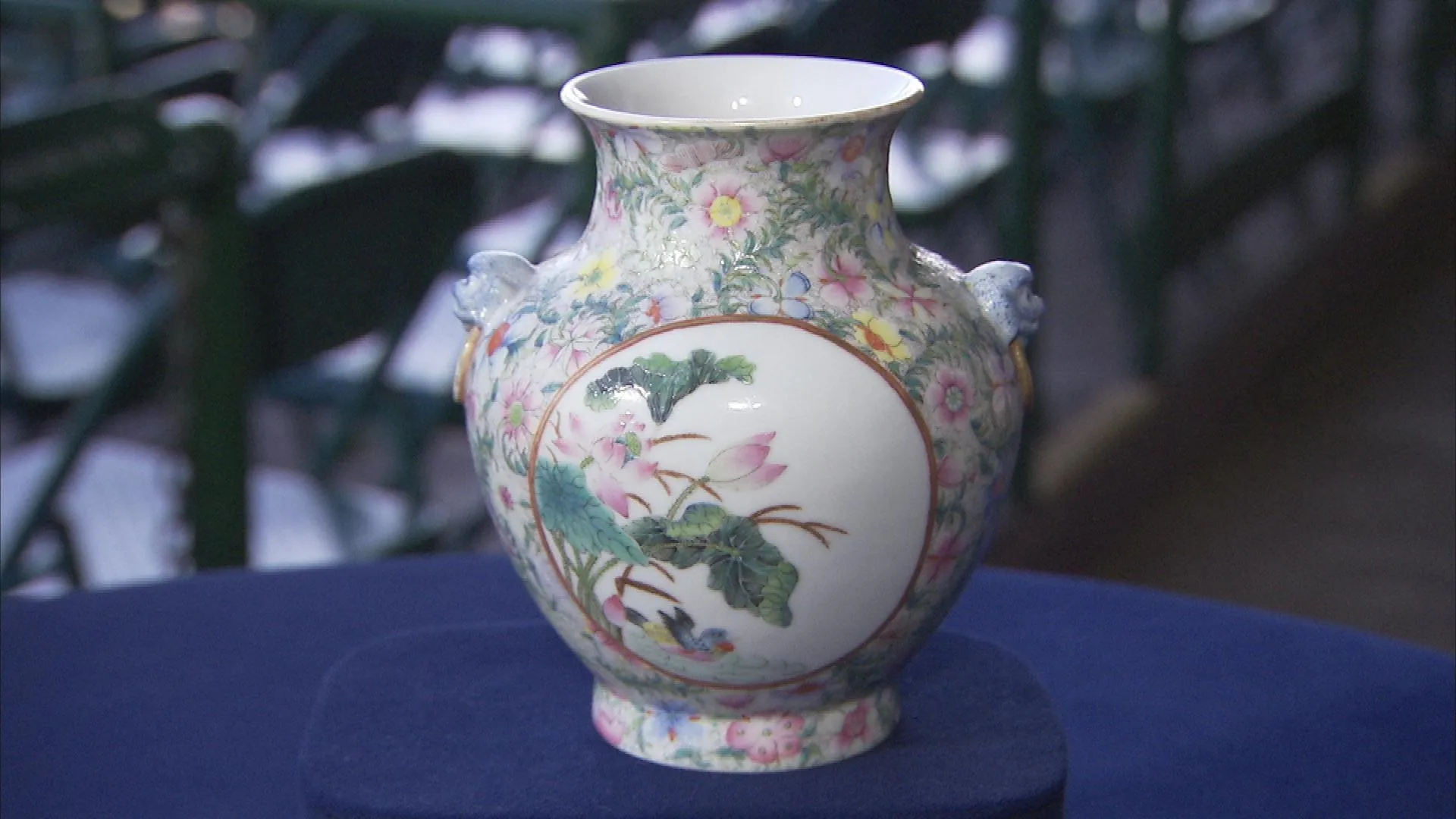
GUEST: My mom acquired it about 50 years ago at an estate sale at our small town in Nebraska. It was the estate sale of the law partner of my grandfather, who had done a lot of traveling, and we picked up a couple things, and I was about five years old.
APPRAISER: Do you know what she paid for it?
GUEST: I have no idea. She was young and married and had three little kids, so it couldn't have been much.
APPRAISER: What you have is a piece of California Faience pottery. It's a very nice example of California pottery, or California Arts and Crafts. Now, the Arts and Crafts movement came to this country from several sources, but a lot of it being from England, and it moved from east to west, gathering different trends as it was moving from New York to the West Coast. By the time it got to California, in the teens and then going through the '20s and early '30s, it had become this interesting mix of the Arts and Crafts movement, Spanish Mission, and Art Deco. And you have a little bit of some of that in here-- Arts and Crafts movement being very organic, natural, Spanish Mission, the bright colors, and Art Deco, when it starts being a little bit more Machine Age. The people who were in charge of this company, Chauncey Thomas and William Bragdon, were friends for a long time and built this little company together, and it became California Faience in about 1922, and that was in northern California, in Berkeley. It was always small; I think they had maybe four people working with them. They made tiles and they made pottery. They're a little better known for their tiles. So when they're doing their pottery, the pottery here I believe is molded-- I don't think this is hand thrown-- but the quality of the pottery is just as good as the tiles. This, as you see, is a very nice vegetal shape, a big gourd with this lovely pod in the front.
GUEST: Yeah, I always liked the shape and the color.
APPRAISER: We have the nice mark on the bottom, "California Faience." Now, sometimes you see pottery from California Faience that is actually marked "California Porcelain," same script, and they did that for one year only. The rest is California Faience. This was probably done in the '20s or '30s. In a fine shop that sells American art pottery and specializes in California pottery, this might bring from $1,000 to $1,500.
GUEST: That's great, that's great. My mom will be thrilled.