British Invasion Concert Scrapbook, ca. 1965
GUEST: Well, in 1964 and 1965, my sister Jan and myself joined the Ed Pazdur Teen Club in Chicago. We had to buy the most expensive tickets to these concerts and everything; a whole season full. And then we got to meet the groups in person. And there was a card that usually was sent in the mail a few days before we were supposed to meet them. It was like a big secret, because they didn't want...
APPRAISER: Right.
GUEST: ...all the groupies coming. We did get to see many of the groups, and they all sat at these big, long tables, and then we could get their autographs and everything. And my sister took some pictures, too, so it was a lot of fun. (chuckle)
APPRAISER: The first band here is the Yardbirds, who are an English band. One of the most recognized guitarists of all time, Jeff Beck, who sadly passed recently. He was a member of the band. We have... another British band, The Kinks. Fantastic-- what I would say-- are probably unpublished photographs of the band taken at the time. All really good, the array and Dave Davies of the Kinks and the rest of the band. And on the following page, we have the Kinks' autographs here. And we come to The Rolling Stones. This is a group of autographs, and they're all, they've all got a common theme; it's the British Invasion. So the British Invasion were a group of bands in the mid-1960s who came over from England. They basically took the U.S. by storm. You've got two ticket stubs here. There's one from 1964, and there's one from 1965. The 1964 tour was not very successful for The Rolling Stones, because they weren't particularly well-known. They didn't have a hit single that was out at the time. So a lot of the American fans didn't really understand who the Stones were. And it wasn't until 1965 that they became really successful. So you got Brian Jones. Bill Wyman. Keith Richards. Mick Jagger. Charlie Watts. I've noticed also you've got a Bill Wyman, an extra Bill Wyman autograph.
GUEST: Afterwards, we went into the ladies bathroom and I saw that on the floor.
APPRAISER: Oh.
GUEST: And I thought, well, I'll pick it up and I think on the reverse side is some kind of a fan club or something like that, so some poor girl lost it. I felt really bad in a way but I picked it up and I kept it.
APPRAISER: So that's a bonus.
GUEST: I figured, that's a nice signature on there.
APPRAISER: If we were to take just, say, The Rolling Stones, a conservative auction estimate just for these pages here-- you've got unpublished photographs, you've got two ticket stubs and you've got the full set of signatures-- conservatively between $2,000 and $4,000.
GUEST: Wow.
APPRAISER: If you were to look at selling the entire package at auction, the whole album would be worth in the region of $6,000 to $8,000.
GUEST: Wow.
APPRAISER: I would certainly insure it for around $15,000.
GUEST: Wow.
APPRAISER: It's a fantastic collection.
GUEST: Oh, that's excellent, yeah, very happy. (chuckles)

$6,000 Auction
$15,000 Insurance
Featured In

episode
Denver Botanic Gardens Chatfield Farms, Hour 3
NEW! ROADSHOW discovers treasures during the third hour from Littleton, CO.
20th Century
appraisal
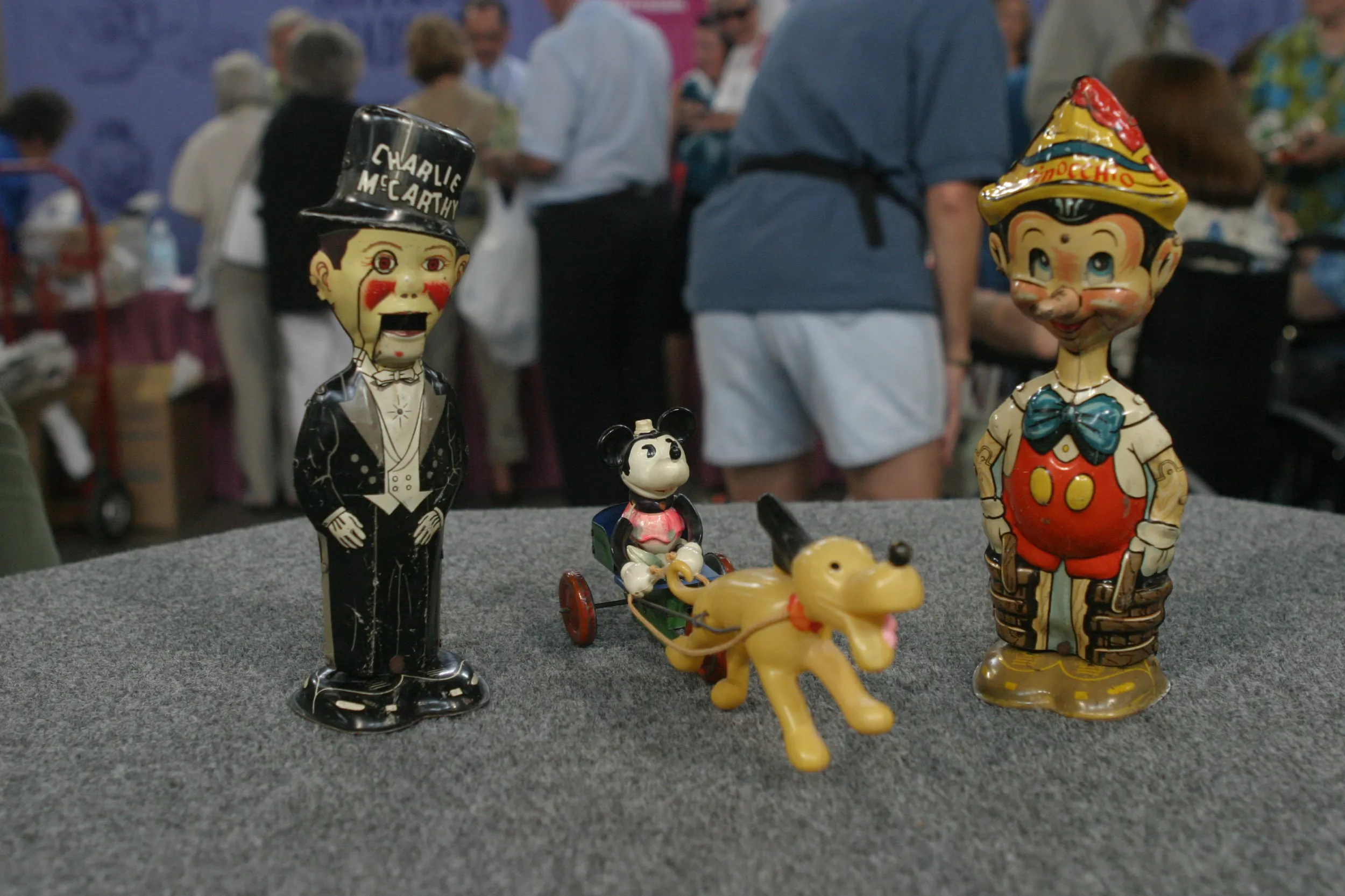
Comic Wind-up Toys, ca. 1930
appraisal
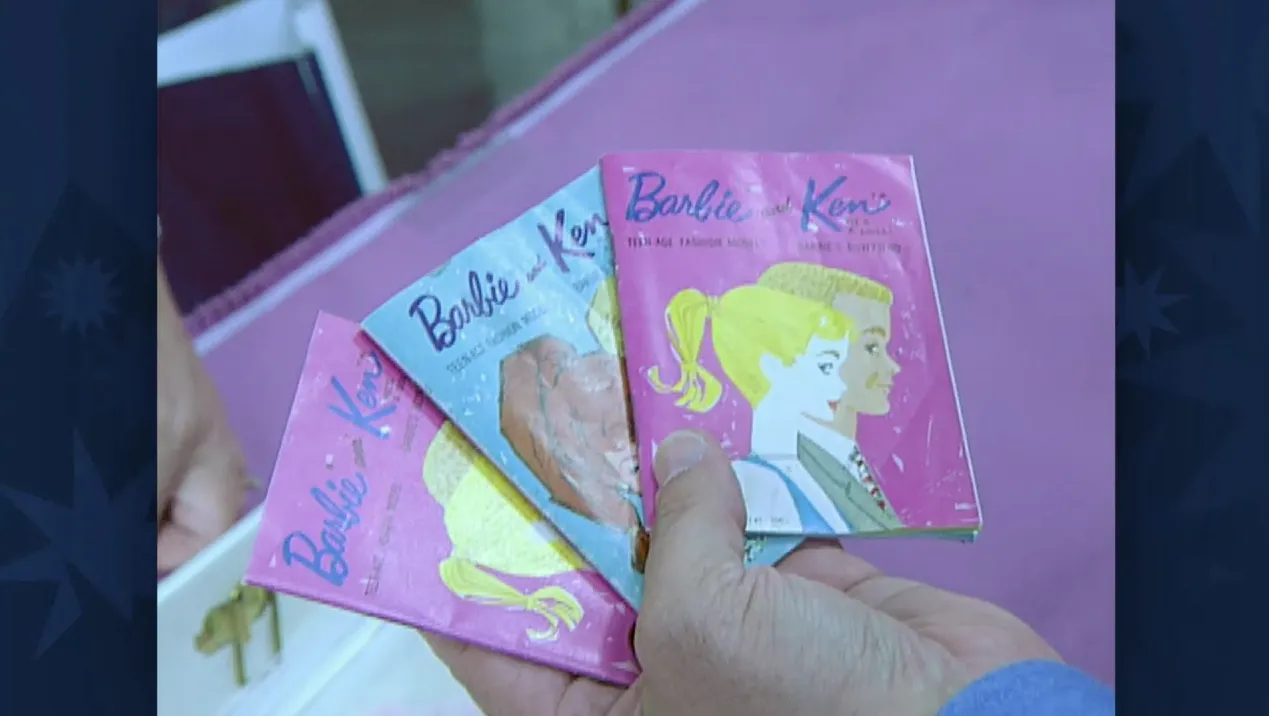
Barbie Accessories & Case, ca. 1960
appraisal
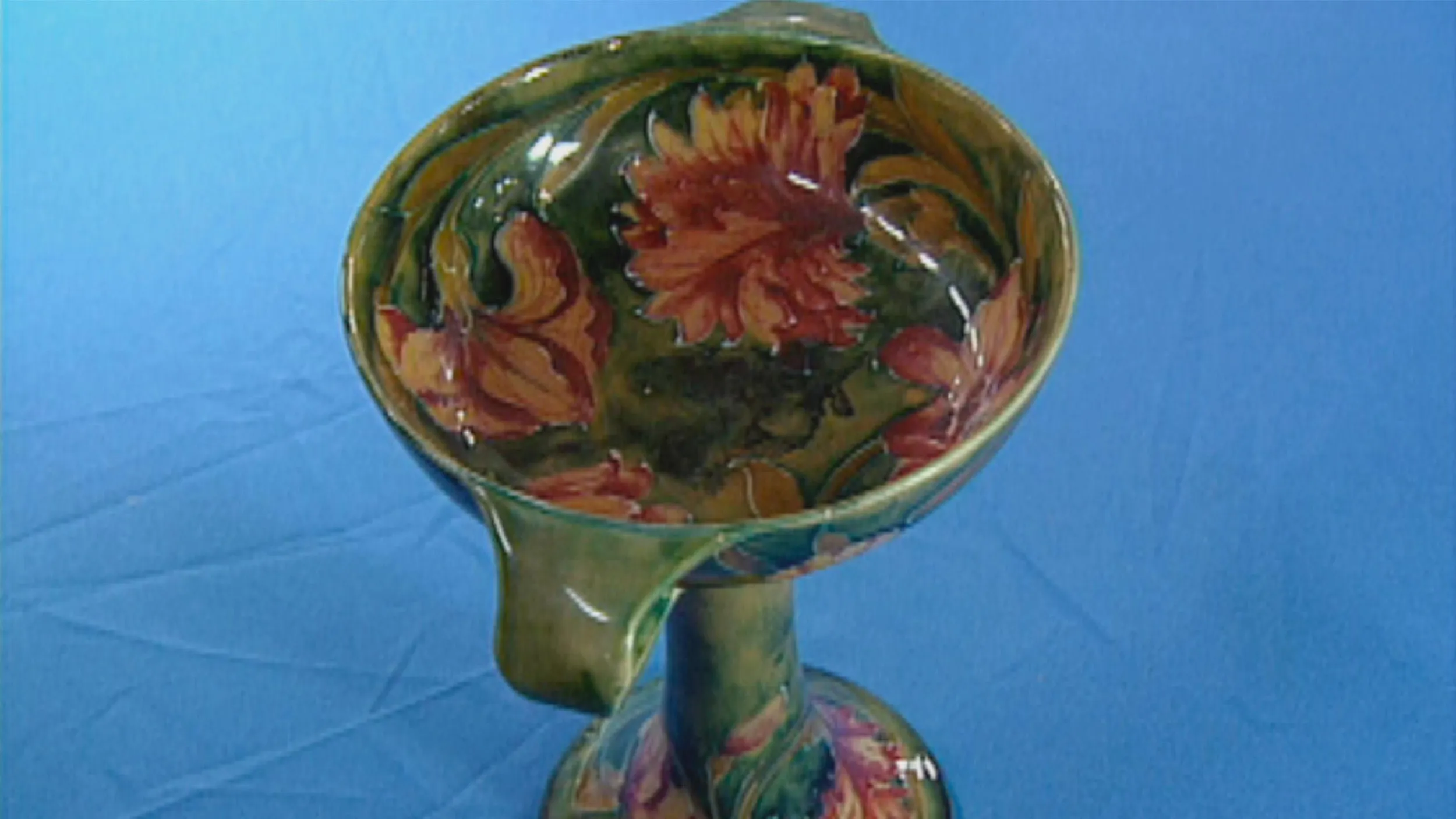
William Moorcroft Pottery, ca. 1910
appraisal
Understanding Our Appraisals
Executive producer Marsha Bemko shares her tips for getting the most out of ANTIQUES ROADSHOW.
Value can change: The value of an item is dependent upon many things, including the condition of the object itself, trends in the market for that kind of object, and the location where the item will be sold. These are just some of the reasons why the answer to the question "What's it worth?" is so often "It depends."
Note the date: Take note of the date the appraisal was recorded. This information appears in the upper left corner of the page, with the label "Appraised On." Values change over time according to market forces, so the current value of the item could be higher, lower, or the same as when our expert first appraised it.
Context is key: Listen carefully. Most of our experts will give appraisal values in context. For example, you'll often hear them say what an item is worth "at auction," or "retail," or "for insurance purposes" (replacement value). Retail prices are different from wholesale prices. Often an auctioneer will talk about what she knows best: the auction market. A shop owner will usually talk about what he knows best: the retail price he'd place on the object in his shop. And though there are no hard and fast rules, an object's auction price can often be half its retail value; yet for other objects, an auction price could be higher than retail. As a rule, however, retail and insurance/replacement values are about the same.
Verbal approximations: The values given by the experts on ANTIQUES ROADSHOW are considered "verbal approximations of value." Technically, an "appraisal" is a legal document, generally for insurance purposes, written by a qualified expert and paid for by the owner of the item. An appraisal usually involves an extensive amount of research to establish authenticity, provenance, composition, method of construction, and other important attributes of a particular object.
Opinion of value: As with all appraisals, the verbal approximations of value given at ROADSHOW events are our experts' opinions formed from their knowledge of antiques and collectibles, market trends, and other factors. Although our valuations are based on research and experience, opinions can, and sometimes do, vary among experts.
Appraiser affiliations: Finally, the affiliation of the appraiser may have changed since the appraisal was recorded. To see current contact information for an appraiser in the ROADSHOW Archive, click on the link below the appraiser's picture. Our Appraiser Index also contains a complete list of active ROADSHOW appraisers and their contact details and biographies.


