Boston Bureau Table, ca. 1770
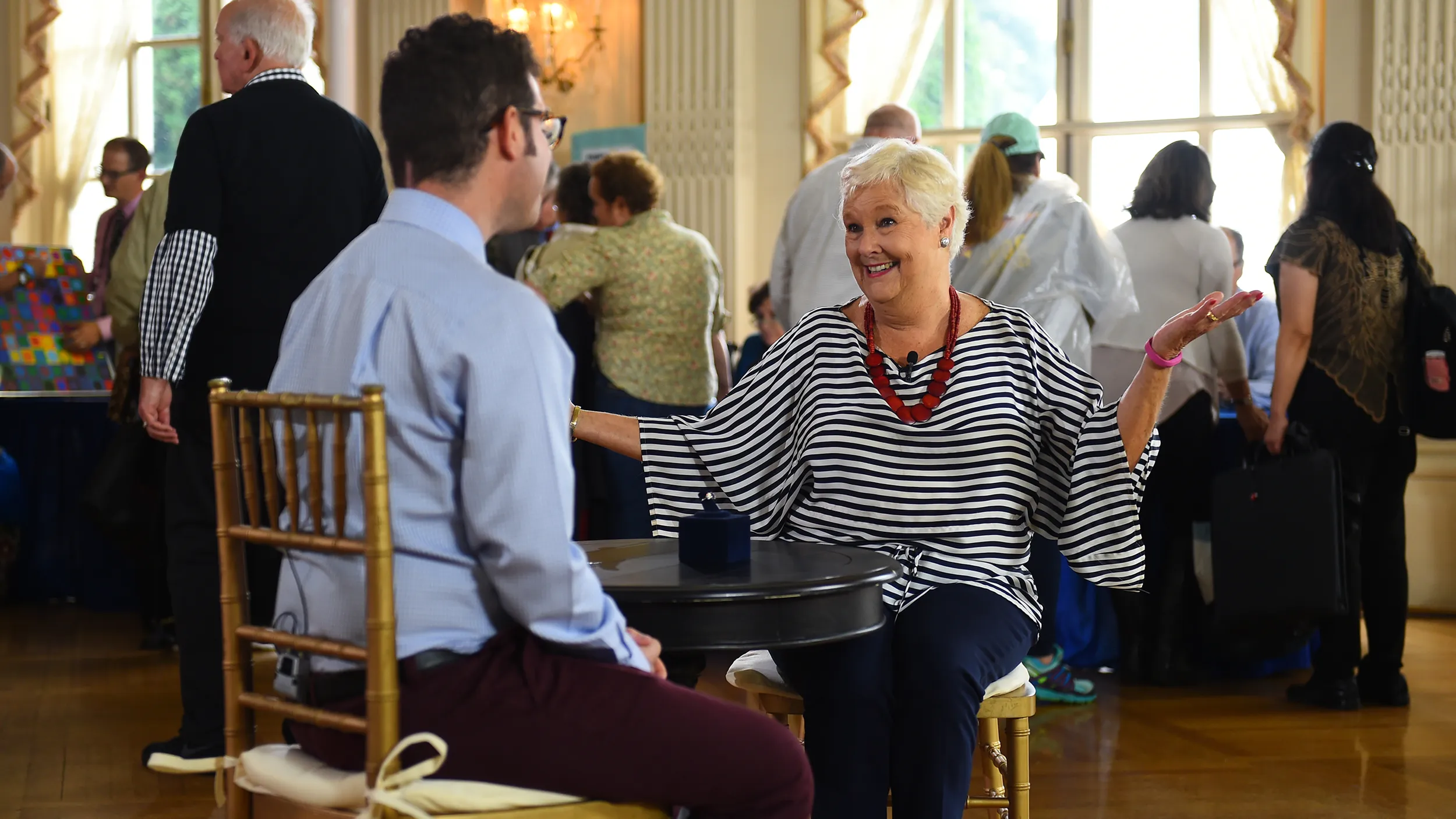
GUEST: This has come down through six generations of my family, from Tiverton, Rhode Island. Our family folklore has always said that it was a Goddard knee-hole desk.
APPRAISER: This is called a bureau table. People often mistakenly refer to them as knee-hole desks. It's not a desk. It was made as a dressing table, and this would have graced the bedroom of an extremely wealthy 18th-century patron. It was made about 1770 to '80, and we can tell that by the construction, by the patina of the wood, and also, it has the original brass hardware, which is helpful. So it is an 18th-century piece. It does have some originality issues. For example, the lobe is broken off of the drawer. Also, the rear feet are replacements-- they're a different form from the front.
GUEST: Right.
APPRAISER: And there's a support that's been added across the entire back. And also, this door, this recessed-cover door, appears to be an old replacement. It's not the same quality as the rest of the piece, the wood is a little bit different, the lock is a replacement, the hinges are not original. In terms of where the piece was made, you mentioned the Goddards of Newport, famous cabinetmakers. This is a block-front piece, the way the drawers are blocked, was popular in Newport. It was also popular in Boston. If we look at the details of the construction, this is not consistent with Newport. For example, Newport block-front bureau tables have a blade here above the top drawer, and then a large molding. This doesn't have that. They have exposed dovetails here. In Boston, they covered it with a strip of wood. And the blocking of the front edge, that's Boston. Newport, they tend to be straight across. The piece is made of mahogany, and the secondary wood is all white pine. If this were made in Newport, we would expect it to have poplar or chestnut secondary woods, so this piece was made in Boston, not in Newport. If it were a Goddard-Townsend piece, that would bring it to a different level. It's still a beautiful piece of furniture, but the value of what's called "brown furniture" in the industry, is way down from where it used to be. Particularly pieces that are not perfect. So I would say, in today's world, at auction, it would probably have a $5,000 to $7,000 estimate.
GUEST: Okay.
APPRAISER: It's a very unusual piece of furniture. These are super-rare. It's just the condition really holds back...
GUEST: The value.
APPRAISER: ...the value. If this were in perfect condition, even in today's market, it would bring at least $40,000 to $50,000 at auction.
GUEST: Wow, great, thank you.

Featured In
episode
Newport, Hour 3
Celebrate as ROADSHOW wraps up its visit to Rosecliff Mansion with a $100,000 find!
Desk
appraisal
Child's Desk-on-Frame
appraisal
1920 Arts & Crafts Desk and Lamp
appraisal
American Desk & Bookcase, ca. 1820

appraisal
Heywood Wakefield Desk, ca. 1940
Understanding Our Appraisals
Executive producer Marsha Bemko shares her tips for getting the most out of ANTIQUES ROADSHOW.
Value can change: The value of an item is dependent upon many things, including the condition of the object itself, trends in the market for that kind of object, and the location where the item will be sold. These are just some of the reasons why the answer to the question "What's it worth?" is so often "It depends."
Note the date: Take note of the date the appraisal was recorded. This information appears in the upper left corner of the page, with the label "Appraised On." Values change over time according to market forces, so the current value of the item could be higher, lower, or the same as when our expert first appraised it.
Context is key: Listen carefully. Most of our experts will give appraisal values in context. For example, you'll often hear them say what an item is worth "at auction," or "retail," or "for insurance purposes" (replacement value). Retail prices are different from wholesale prices. Often an auctioneer will talk about what she knows best: the auction market. A shop owner will usually talk about what he knows best: the retail price he'd place on the object in his shop. And though there are no hard and fast rules, an object's auction price can often be half its retail value; yet for other objects, an auction price could be higher than retail. As a rule, however, retail and insurance/replacement values are about the same.
Verbal approximations: The values given by the experts on ANTIQUES ROADSHOW are considered "verbal approximations of value." Technically, an "appraisal" is a legal document, generally for insurance purposes, written by a qualified expert and paid for by the owner of the item. An appraisal usually involves an extensive amount of research to establish authenticity, provenance, composition, method of construction, and other important attributes of a particular object.
Opinion of value: As with all appraisals, the verbal approximations of value given at ROADSHOW events are our experts' opinions formed from their knowledge of antiques and collectibles, market trends, and other factors. Although our valuations are based on research and experience, opinions can, and sometimes do, vary among experts.
Appraiser affiliations: Finally, the affiliation of the appraiser may have changed since the appraisal was recorded. To see current contact information for an appraiser in the ROADSHOW Archive, click on the link below the appraiser's picture. Our Appraiser Index also contains a complete list of active ROADSHOW appraisers and their contact details and biographies.


