GUEST: I found it at an antique show. I was attracted to it because I collect willow. I thought it was just a very unique item, it being a toaster, and it is in workable condition.
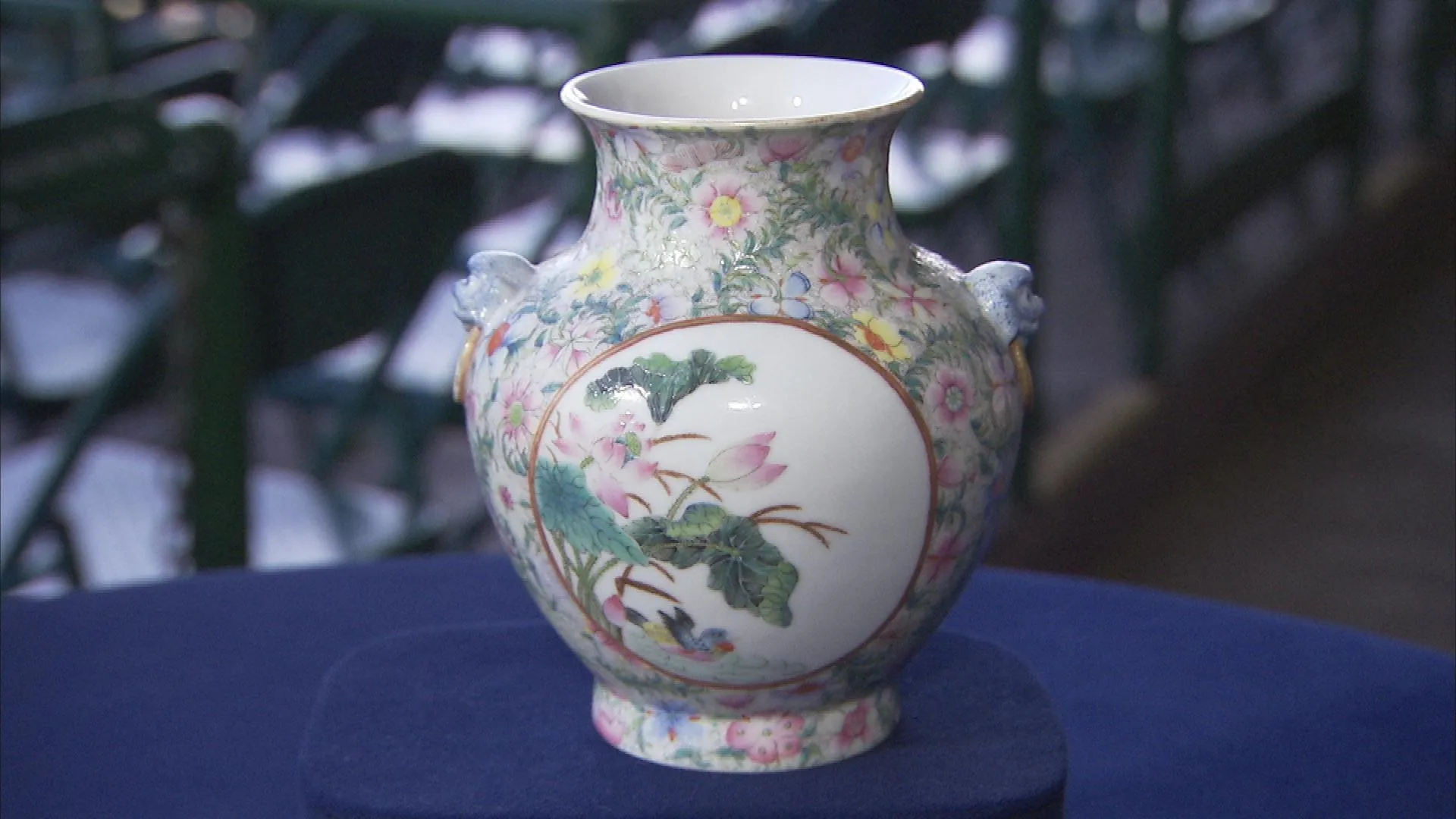
APPRAISER: Well, it looks like the day it was made. I'm just going to turn it over so we can see where it was made. It has a mark on the bottom telling us that it was made by the Toastrite Company, made in Cleveland, Ohio. And made, I would think, around the late 1920s, right at the time when the Great Depression hit America. What I particularly like about it, though, is the condition that it's in. I say it almost looks as if it's never been used, and in fact, you have the original cord with it. I'm going to plug it in and we'll watch it get hot. The willow pattern, which you collect, is perhaps the best-known pattern in the decoration of porcelain and pottery certainly over the last 200 years. It was invented in England by taking different images from imported Chinese porcelain and mixing them up into what we call a chinoiserie, or a Western interpretation of Chinese art and design, and produced this pattern, which was extremely popular when it was introduced in the late 18th century, and it has been perennially popular ever since. Because it's in willow pattern, it appeals to people like yourself who collect the willow pattern. Because it's a toaster, I think it appeals to people who collect toasters, and there are such groups. And because it's such a great piece of Americana, I think it has a wider appeal too. Tell me, if you don't mind, how much did you pay the antiques dealer for it when you purchased it?
GUEST: I paid $800 for it.
APPRAISER: Well, I think you're okay. I feel that it's certainly worth over $1,000 and perhaps as much as $2,000.
GUEST: Well, thank you.