Augustinus de Musis "Skeletons" Etching, ca. 1518
GUEST: So today I brought in what I believe is a 16th-century etching out of Europe, maybe Italy-- I'm not familiar with the artist. I had a client bring it to me one day, uh, out of the blue. She came into my shop and said, "Hey, I heard you, uh, like interesting things and strange things." I said, "Yes, what do you have?" And she showed me this, and I, I, I had an idea of what it was. But I was just, like, "You don't want this?" And she was, like, "No, I feel like you, you, you would take good care of this." And so she just gave it to me. It was out in the open. Uh, and I eventually framed it just to protect it. The client of mine that ga, brought it to me, she had found it several years prior to moving to where I live. And when she was doing a home remodel, it was in the wall. And that was about 25 years ago, when she found it in the wall.
APPRAISER: The stuff of legend.
GUEST: (chuckles): Yeah.
APPRAISER: Well, in fact, it is a 16th-century etching. And it's by Agostino de' Musi. He's also known under his alias Agostino Venezia because he was from Venice.
GUEST: Okay.
APPRAISER: He was a Renaissance artist. Not much is known about him. We believe he trained with Albrecht Dürer, but we have no proof.
(whispering): Oh, wow.
APPRAISER: And he's very much in the Mannerist style. Each figure is exaggerated. That's why we call it Mannerist. And it's unusually large for the 16th century. There's a date on the print. It says 1518. And I believe it is an early edition. But it's very hard to tell without examining it out of the frame. It is in, um, pretty poor condition.
GUEST: Mm-hmm.
APPRAISER: The framer over-matted the print on the edges to hold it down. And I believe it's been trimmed. We know this is image loss here. But what we don't know is what's under the matting that the framer did. How much loss is by his face, for example. These are things that could affect the value. So, yeah, you've got tears, abrasions, surface wear, toning, fading. Nevertheless, he's a great artist, and it's very hard to get anything done by him.
GUEST: Mm-hmm.
APPRAISER: If you look at the skeletons and the wings and the faces, it's still quite a deep, sharp impression, which is good, because, as you know, it was printed on a copper plate. And the plate wears out...
GUEST: Mm-hmm.
APPRAISER: ...the more the prints that were made. So it's a multiple. We don't know how many were printed, but we do know that it's very scarce on the market today. The estimated value for a print in this condition by de' Musi would be anywhere from $800 to $1,200...
GUEST: Oh, wow.
APPRAISER: ...in a retail setting.
GUEST: Okay.
APPRAISER: We may be able to get more if we can see the full print...
GUEST: Mm-hmm.
APPRAISER: ...and see what's going on under there.
GUEST: It's been exciting owning this for the past 12-plus years. I, it's one of my favorite pieces that I own.
APPRAISER: It's a masterpiece.
GUEST: Oh, thank you.
APPRAISER: Everyone loves "Skeletons." (chuckles) So it, it's a fabulous print, and you're very lucky to have it gifted to you.
GUEST: Yeah, thank you.

$800 - $1,200 Auction
Featured In

episode
Springs Preserve, Hour 1
Las Vegas treasures hit the jackpot with ROADSHOW’s top $650,000 find of Season 29!
Etching
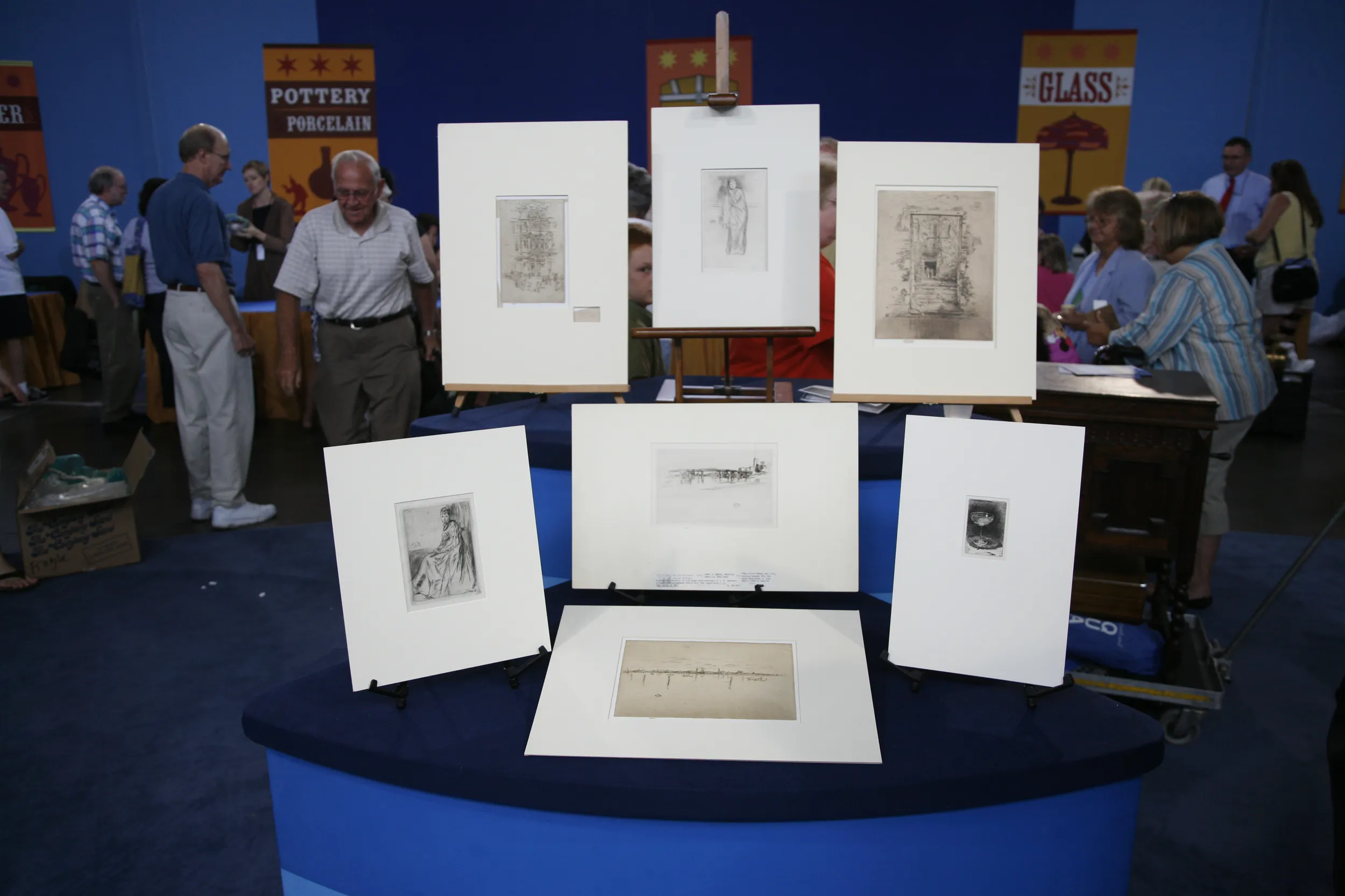
appraisal
James McNeill Whistler Etchings & Drypoints
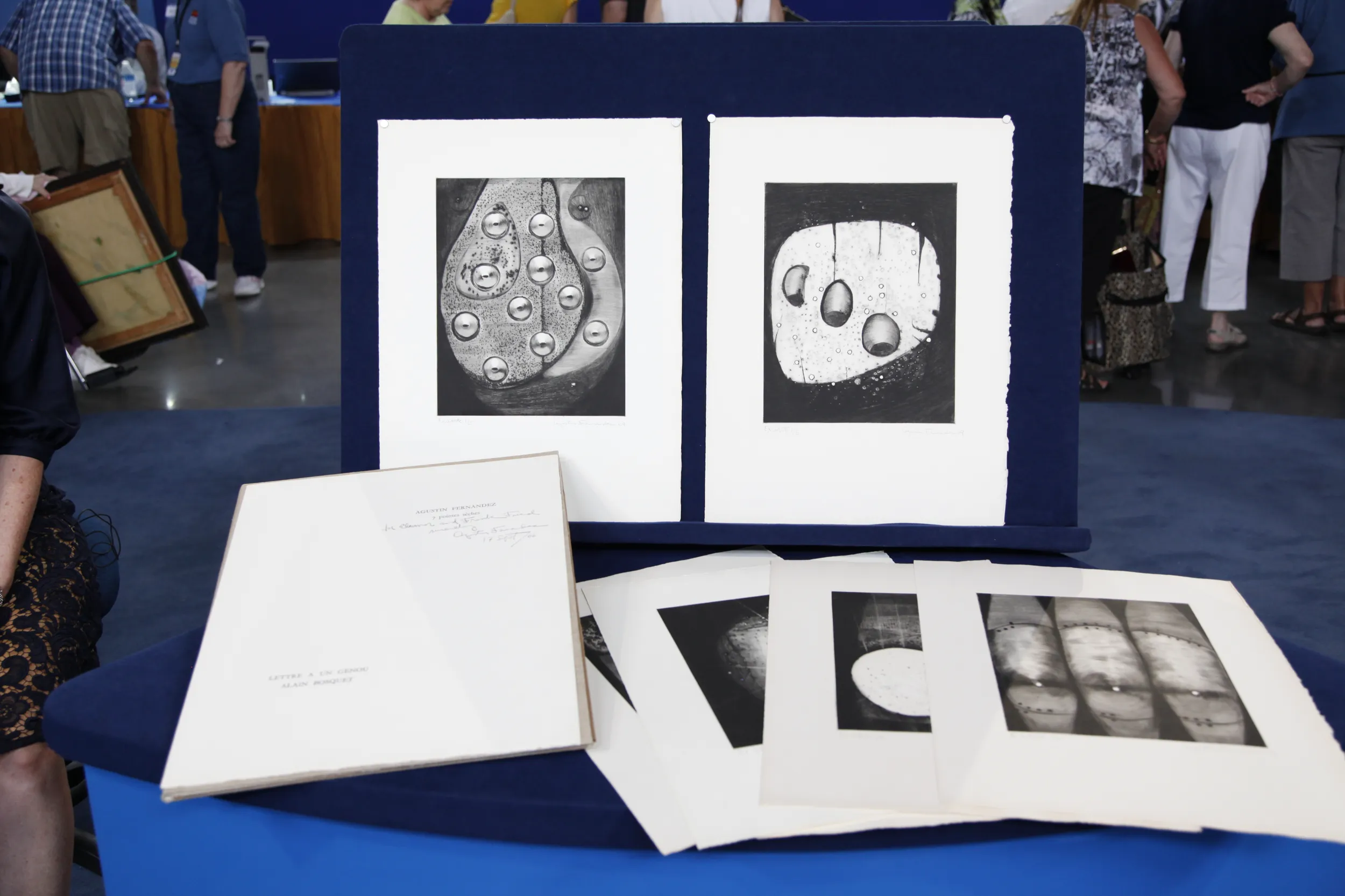
appraisal
1964 Agustín Fernández Etching Portfolio
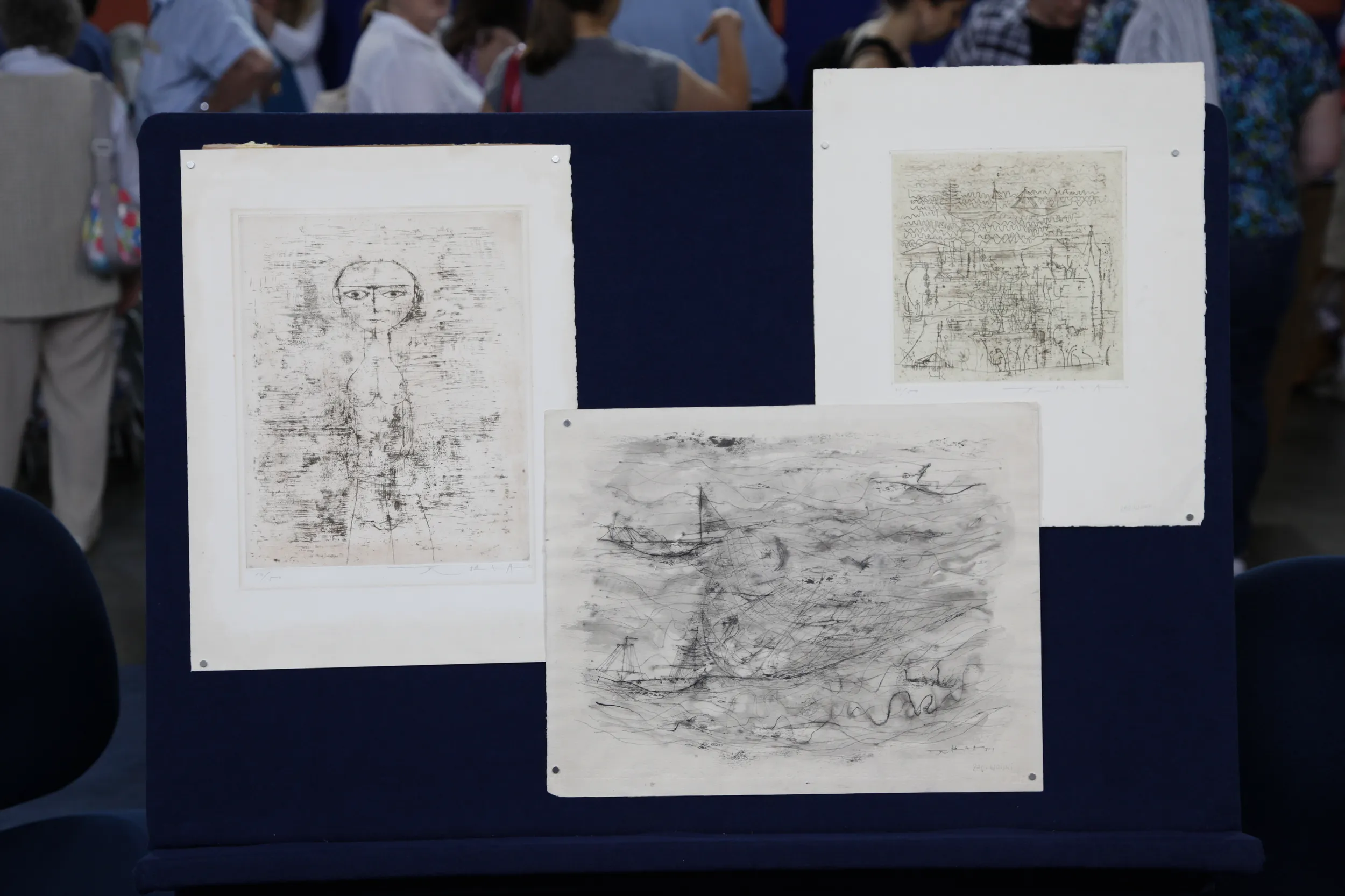
appraisal
Zao Wou-Ki Etchings and Drawing, ca. 1950
appraisal
Understanding Our Appraisals
Executive producer Marsha Bemko shares her tips for getting the most out of ANTIQUES ROADSHOW.
Value can change: The value of an item is dependent upon many things, including the condition of the object itself, trends in the market for that kind of object, and the location where the item will be sold. These are just some of the reasons why the answer to the question "What's it worth?" is so often "It depends."
Note the date: Take note of the date the appraisal was recorded. This information appears in the upper left corner of the page, with the label "Appraised On." Values change over time according to market forces, so the current value of the item could be higher, lower, or the same as when our expert first appraised it.
Context is key: Listen carefully. Most of our experts will give appraisal values in context. For example, you'll often hear them say what an item is worth "at auction," or "retail," or "for insurance purposes" (replacement value). Retail prices are different from wholesale prices. Often an auctioneer will talk about what she knows best: the auction market. A shop owner will usually talk about what he knows best: the retail price he'd place on the object in his shop. And though there are no hard and fast rules, an object's auction price can often be half its retail value; yet for other objects, an auction price could be higher than retail. As a rule, however, retail and insurance/replacement values are about the same.
Verbal approximations: The values given by the experts on ANTIQUES ROADSHOW are considered "verbal approximations of value." Technically, an "appraisal" is a legal document, generally for insurance purposes, written by a qualified expert and paid for by the owner of the item. An appraisal usually involves an extensive amount of research to establish authenticity, provenance, composition, method of construction, and other important attributes of a particular object.
Opinion of value: As with all appraisals, the verbal approximations of value given at ROADSHOW events are our experts' opinions formed from their knowledge of antiques and collectibles, market trends, and other factors. Although our valuations are based on research and experience, opinions can, and sometimes do, vary among experts.
Appraiser affiliations: Finally, the affiliation of the appraiser may have changed since the appraisal was recorded. To see current contact information for an appraiser in the ROADSHOW Archive, click on the link below the appraiser's picture. Our Appraiser Index also contains a complete list of active ROADSHOW appraisers and their contact details and biographies.


