Art Deco Diamond & Sapphire Ring, ca. 1920
GUEST: This ring belonged to my grandmother and she passed away in 1981. Before that time, she was quite a fancy lady. Loved to wear her rings and her blings. Got her hair done every week, got her nails done and put her rings on and went out. So when she passed away, I went through her closet. And in the pockets of her jackets, I found this ring wrapped in a little piece of tissue. She did not have a jewelry box, but she hid her rings and her jewelry in her closet on the clothes.
APPRAISER: This ring was probably made in the 1920s.
GUEST: Mm-hm.
APPRAISER: And it's probably American.
GUEST: Mm, okay.
APPRAISER: Okay, and in the center, that-that nice stone is an old European-cut diamond. The center stone is just under three carats by formula. Around the ring, you have more old European-cut diamonds and some single-cut diamonds.
GUEST: Ah!
APPRAISER: And then you can see there are two lines here...
GUEST: Mm-hm.
APPRAISER: ...of channel-set sapphires.
GUEST: Wow, wow.
APPRAISER: Now you can see someone definitely wore this ring...
GUEST: Mm-hmm.
APPRAISER: ...because some of the sapphires are missing.
GUEST: Yes.
APPRAISER: It's not a difficult repair.
GUEST: Yes. Yes. Yes.
APPRAISER: It really doesn't affect the value of the ring that much. Above the stone on each side are these little tiny cutouts.
GUEST: Yes, yeah, yeah.
APPRAISER: So you're just kind of playing with that as well. It c-- your eye keeps moving, there's all these details. This is an incredible attention to craftsmanship.
GUEST: Wow, wow.
APPRAISER: And it's not marked at all, so we don't know who made it.
GUEST: No.
APPRAISER: I would insure this at $25,000.
GUEST: $25,000, okay, wow. Well, that's a beautiful ring. $25,000, okay, wow. That's-that's a beauty. Yeah. (chuckles) Jenny, gee whiz. Whoo! (laughing): Grandma, thank you! (laughs)

$25,000 Insurance
Featured In

episode
Springs Preserve, Hour 3
ROADSHOW heads to the Mojave Desert in search of marvels at Springs Preserve in Las Vegas.
Art Deco
appraisal
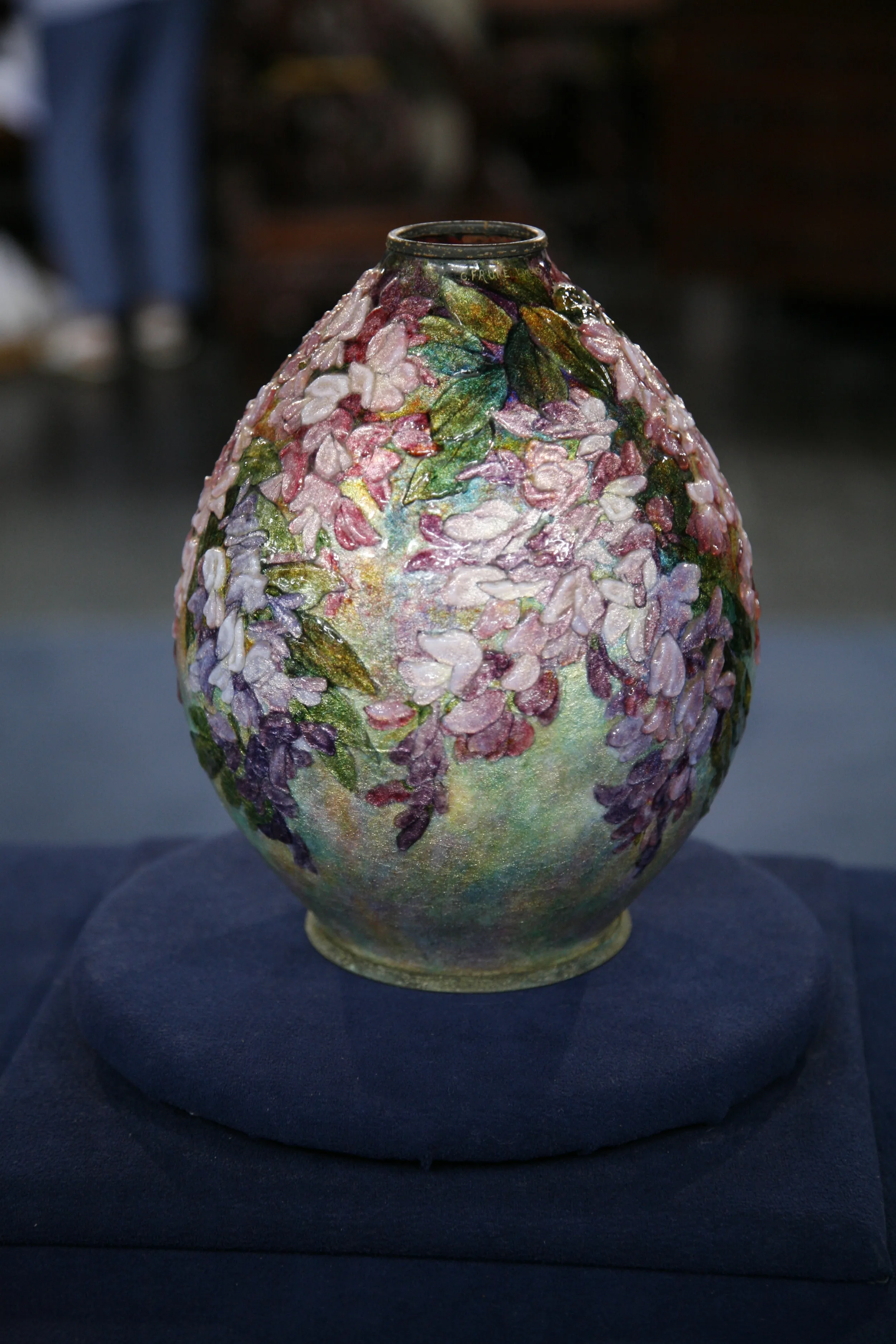
Camille Fauré Enameled Vase, ca. 1925

appraisal
Carved Emerald & Ruby Ring, ca. 1925

appraisal
Tiffany & Co. Ceylon Star Sapphire Ring, ca. 1922

appraisal
1934 Art Deco Travel Posters
Understanding Our Appraisals
Executive producer Marsha Bemko shares her tips for getting the most out of ANTIQUES ROADSHOW.
Value can change: The value of an item is dependent upon many things, including the condition of the object itself, trends in the market for that kind of object, and the location where the item will be sold. These are just some of the reasons why the answer to the question "What's it worth?" is so often "It depends."
Note the date: Take note of the date the appraisal was recorded. This information appears in the upper left corner of the page, with the label "Appraised On." Values change over time according to market forces, so the current value of the item could be higher, lower, or the same as when our expert first appraised it.
Context is key: Listen carefully. Most of our experts will give appraisal values in context. For example, you'll often hear them say what an item is worth "at auction," or "retail," or "for insurance purposes" (replacement value). Retail prices are different from wholesale prices. Often an auctioneer will talk about what she knows best: the auction market. A shop owner will usually talk about what he knows best: the retail price he'd place on the object in his shop. And though there are no hard and fast rules, an object's auction price can often be half its retail value; yet for other objects, an auction price could be higher than retail. As a rule, however, retail and insurance/replacement values are about the same.
Verbal approximations: The values given by the experts on ANTIQUES ROADSHOW are considered "verbal approximations of value." Technically, an "appraisal" is a legal document, generally for insurance purposes, written by a qualified expert and paid for by the owner of the item. An appraisal usually involves an extensive amount of research to establish authenticity, provenance, composition, method of construction, and other important attributes of a particular object.
Opinion of value: As with all appraisals, the verbal approximations of value given at ROADSHOW events are our experts' opinions formed from their knowledge of antiques and collectibles, market trends, and other factors. Although our valuations are based on research and experience, opinions can, and sometimes do, vary among experts.
Appraiser affiliations: Finally, the affiliation of the appraiser may have changed since the appraisal was recorded. To see current contact information for an appraiser in the ROADSHOW Archive, click on the link below the appraiser's picture. Our Appraiser Index also contains a complete list of active ROADSHOW appraisers and their contact details and biographies.


