GUEST: My grandmother was a missionary to Hopi Indians in 1895. And when she left, she purchased these items and brought them back home with her.
APPRAISER: Where was she from?
GUEST: Germantown, which is outside of Philadelphia. She had taken training as a missionary. And this was to pay back the education that she had gotten. So her trip out there was sort of a payback.
APPRAISER: Now, tell me what these little books here represent.
GUEST: Those are translation books that she wrote out. That's her handwriting. And apparently while she was there, she wrote these translations out from the Hopi language.
APPRAISER: And so you remember some of the words that she used?
GUEST: No.
APPRAISER: I saw one was "angry." I saw one was "train." And she also apparently kept a roll call of her students.
GUEST: Yes.
APPRAISER: With this group you have a wonderful collection of photography. Unfortunately, some of the pictures are kind of fugitive. They've lost some of their imagery. This photograph was done in a cyanotype image and it was a new technology in photography. So the blue tone. But it shows her beautifully.
GUEST: Yes.
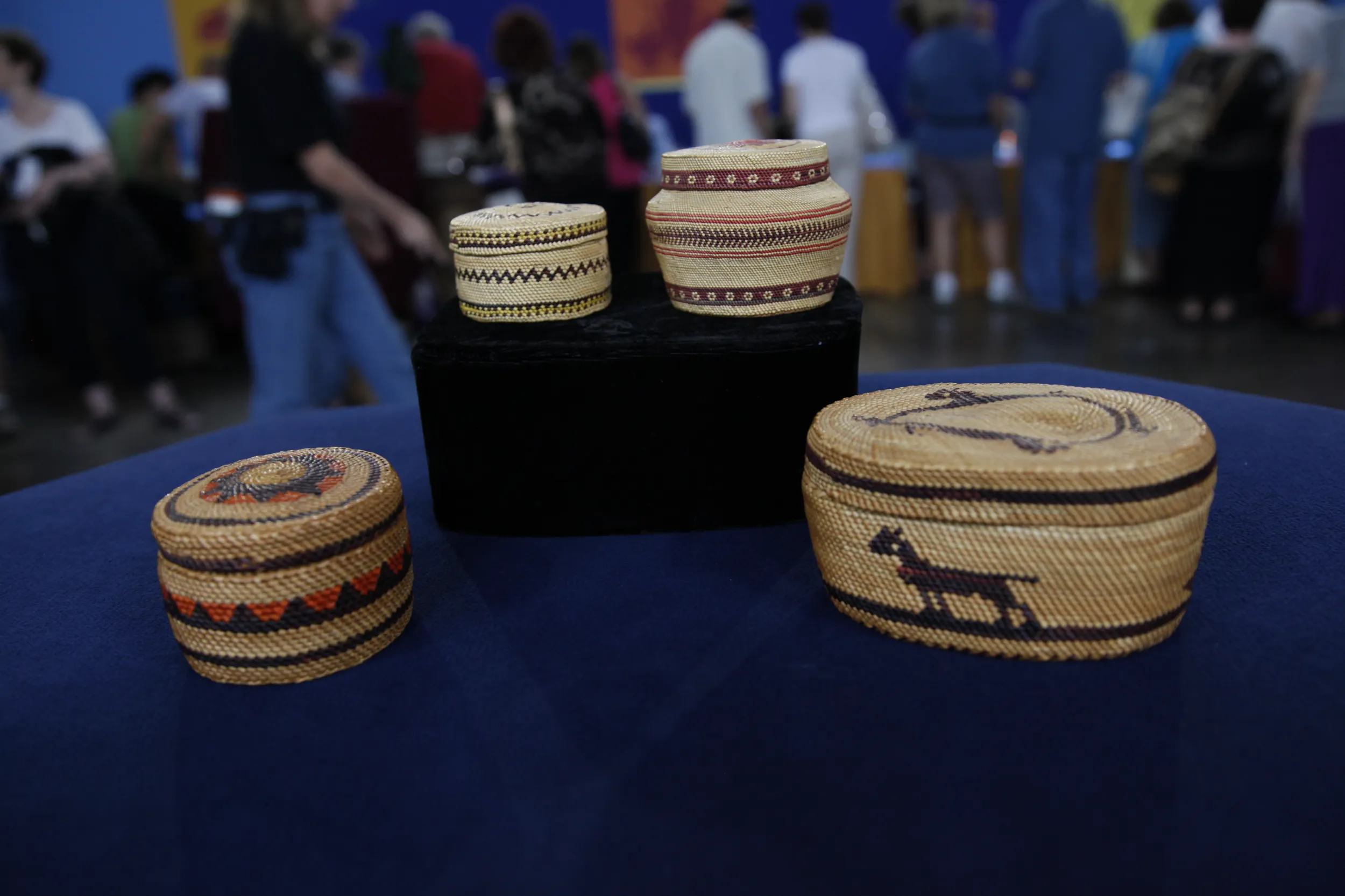
APPRAISER: She dressed traditionally in Eastern style. Now, this is a really wonderful example of the Hopi kachina doll. It has great, great form, great legs. He's missing a few attributes, so I'm not really sure what he represents, but they usually represented things around the growing seasons. The basket that you have here is an Apache basket. So it's from a different region. But it beautifully represents the late 1800s, and it has a value of about $1,500. And then this pot has great design on it. And the other renaissance that was going on is there was a revival of pottery making started by a family by the name of Nampeyo. So if this is indeed a piece by Nampeyo, its value would be about $4,000.
GUEST: Ooh.
APPRAISER: If it's not Nampeyo, just a pottery piece from the 1890s, it would carry a price of $2,000. And that would be a fair market value. Now the doll-- he's absolutely wonderful. He's everything that you'd want him to be. He has some paint loss and some image loss, but he would have a retail value of $10,000.
GUEST: Oh, my goodness.
APPRAISER: It's hard to believe a little chunk of wood, huh?
GUEST: Oh, my goodness.
APPRAISER: But he's really beautifully done.
GUEST: I'm speechless.
APPRAISER: Thank you for bringing them in today.
GUEST: Well, thank you very much.