GUEST: My mother told me that my great-grandmother told her that this piece and the dining room table and chairs that I have came over from England on the same shipment that George Washington had some furniture come to Mount Vernon. And my mother's also been told by an appraiser at one point a long, long time ago that it was American, not English. So we're not really sure what the true story is. We know it is old because it's been in our family as long as I can remember.
APPRAISER: When do you think it came into your family?
GUEST: I was thinking in the early 1800s, because that's when my family originally came to Florida. They were a pioneering family before it became a state.
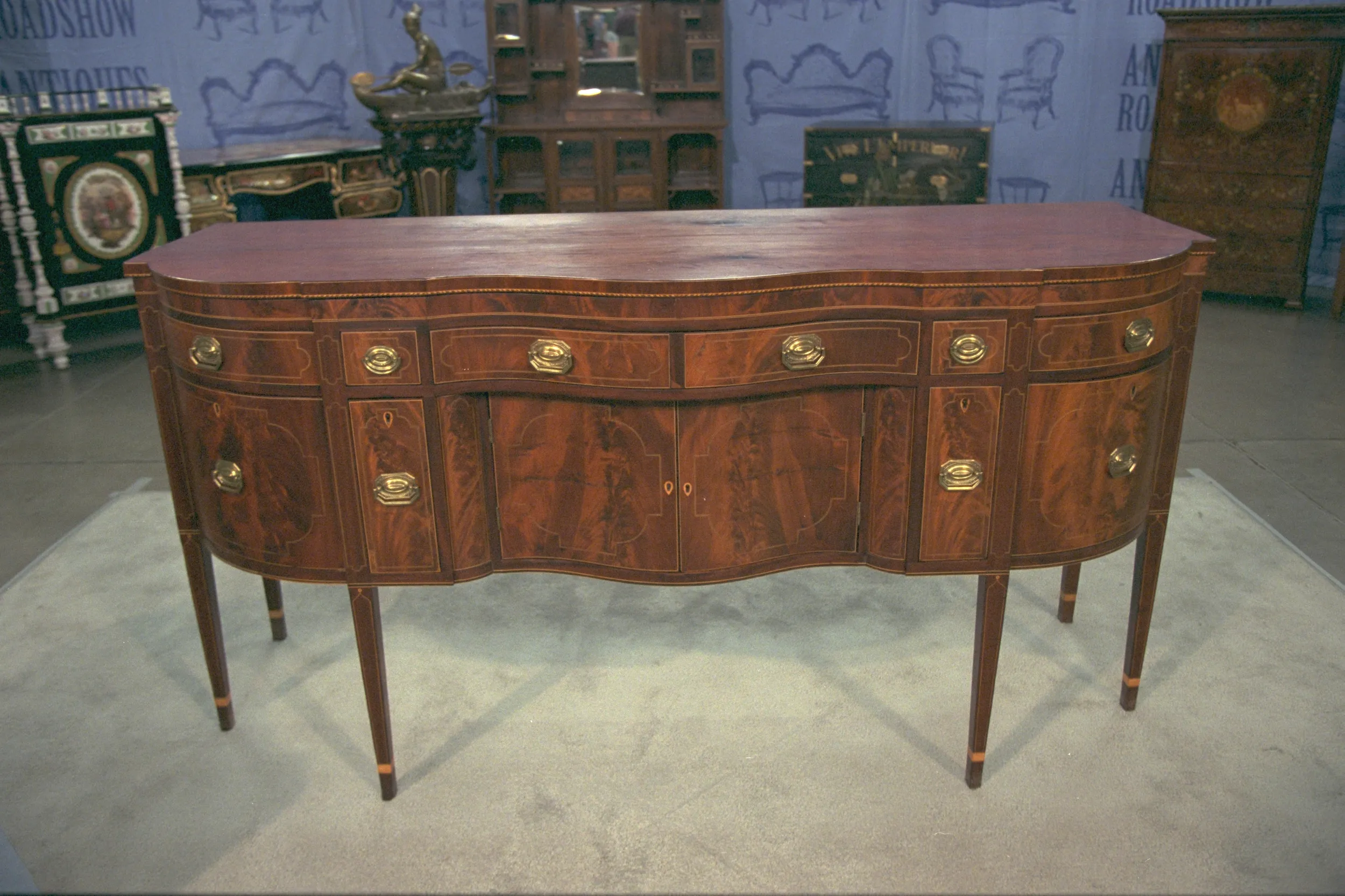
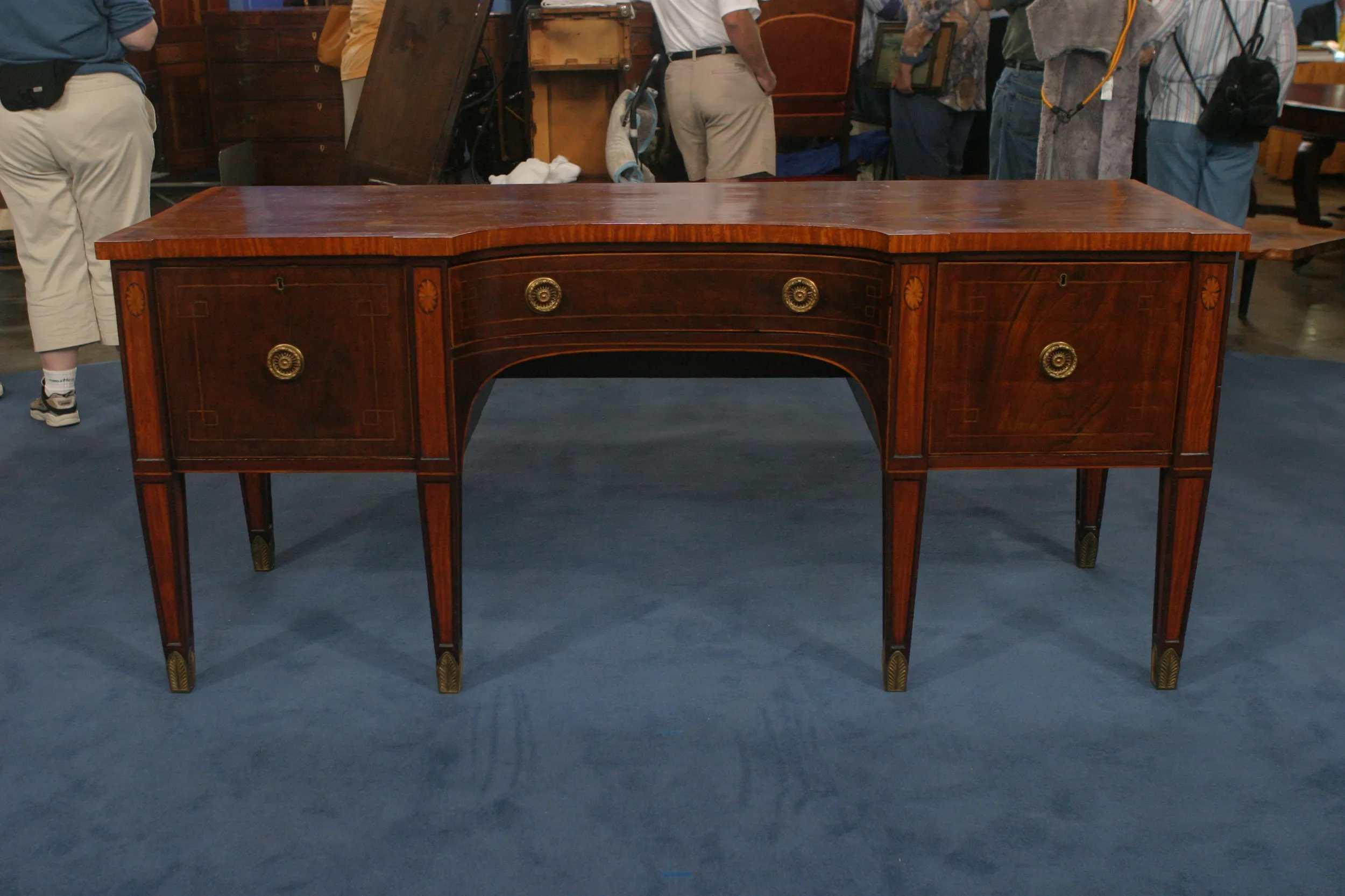
APPRAISER: Well, you know, the George Washington history is something that a lot of people talk about. Most of George Washington's furniture was American made, which your sideboard is also. He did import a lot of small things from England. A sideboard took a lot of room. Your sideboard was probably made in New York City, possibly in New Brunswick, New Jersey. Now, another feature to know that this is definitely New York or New Jersey is you look at the side and it is made of tulip poplar. In New England, you would find it made out of white pine. We have beautiful dovetailing. It's the typical shape of a New York sideboard with a serpentine front and then the blocked-off ends. One of the most interesting things about this sideboard is this patch here on the top. The original ones always have splits in the top. This is one of the first things we want to look for, because most of the sideboards that we see as appraisers are fakes that were made in the 1920s to deceive people, but they made them narrower because the houses were not as large. Now, this sideboard is a pure, original sideboard from 1800 to 1810. Another very interesting thing about your sideboard is that it's very plain. Many of these sideboards were elaborately inlaid with bellflowers and various other designs on the front legs. That cost a lot of money and a lot of people did not spend the extra money. It's a perfectly fine period American Hepplewhite sideboard. It's worth $5,000 to $8,000. The $5,000 would be what it would bring at auction. The $8,000 is what an antiques dealer would charge you for it. Now, if it had the fancy inlay, it could be worth $20,000 or $30,000.
GUEST: Wow.