American Satsuma Box, ca. 1910
GUEST: I found this in an antique store in Santa Cruz, New Mexico. And it was right at the pandemic. And I make ceramics myself, and I teach ceramics. So I knew at the time that it was very hard (chuckles) and took a lot of time to make something like this. And then when I saw a-after looking closer, that it was probably all handmade and then wasn't signed, I became really intrigued, because, usually I know a lot about these things and I had no idea where this came from.
APPRAISER: What did you pay for it? Do you remember?
GUEST: (sighs) It was under $20.
APPRAISER: On ANTIQUES ROADSHOW, we see a lot of what we refer to as China painting. So China painting goes like this. Around the late 1880s until about the 1920s, people would often purchase porcelain blanks, mostly coming from France or Germany...
GUEST: Mm-hmm.
APPRAISER: ...and either as amateur decorators, which most of the works that we see here were done by...
GUEST: Mm-hmm.
APPRAISER:...or sometimes as professional artists. We see the work that is done and it's often signed by the artist.
GUEST: Mm-hmm.
APPRAISER: So this is a covered box done in a technique called American satsuma. It is satsuma, like the Japanese, but it was done in this country on Japanese porcelain blanks that would have been procured from Japan at a time when it was impossible to get them from Germany...
GUEST: Mm-hmm.
APPRAISER: ...during the First World War and possibly from France.
GUEST: Okay.
APPRAISER: The type of decoration...is usually very elaborate. It is, unfortunately not signed by the decorator, which is too bad, because it is such a fine example of this technique. This is very strong Art Nouveau, and very much in the Arts and Crafts Movement.
GUEST: Okay.
APPRAISER: It is an enamel painting. The way this is painted, all those black lines would have most likely been delineated with a mix of wax...and manganese.
GUEST: Okay. Wow.
APPRAISER: And in the firing, the wax will burn off...and just leave that black line. I would think that the initials in the medallion are most likely for the-the person who would be receiving this, as opposed to the artist. It's, it would be so very elaborate. So you paid... (places lid back) little for this lovely piece. And I was discussing this with my colleagues at the pottery and porcelain table, and we were agreeing that at auction, probably at $400 to $600.
GUEST: Okay. Okay.
APPRAISER: So you did well.
GUEST: Thank you.(chuckles) I just wish the artist who made it could get the credit, because I'm always in awe of it. (chuckles) It's just kind of amazing.

$400 - $600 Auction
Featured In

episode
Crystal Bridges Museum of American Art, Hour 3
Head to bustling Bentonville for ROADSHOW finds at Crystal Bridges Museum of American Art!
Porcelain
appraisal
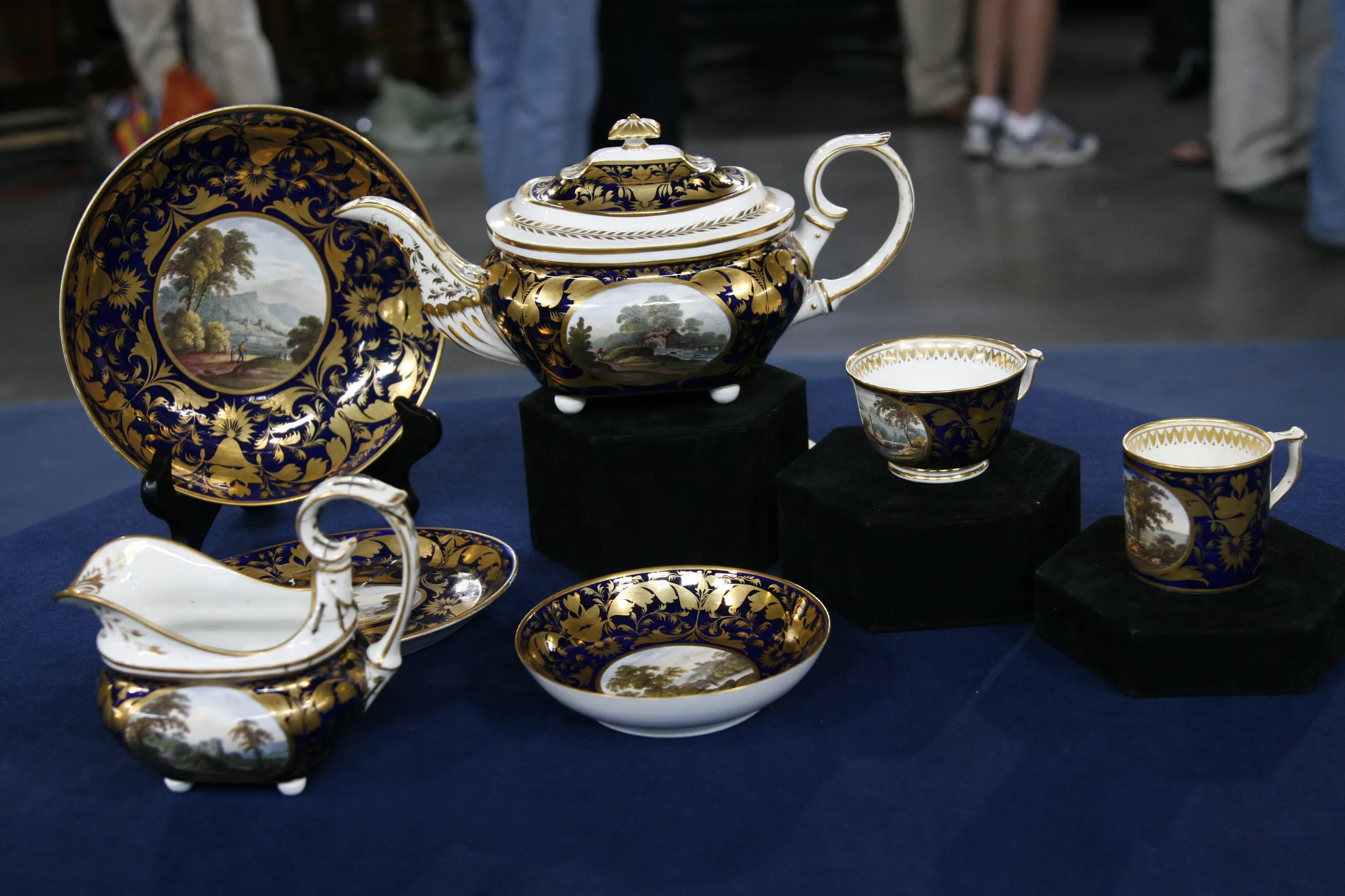
Royal Crown Derby Teaware, ca. 1815
appraisal
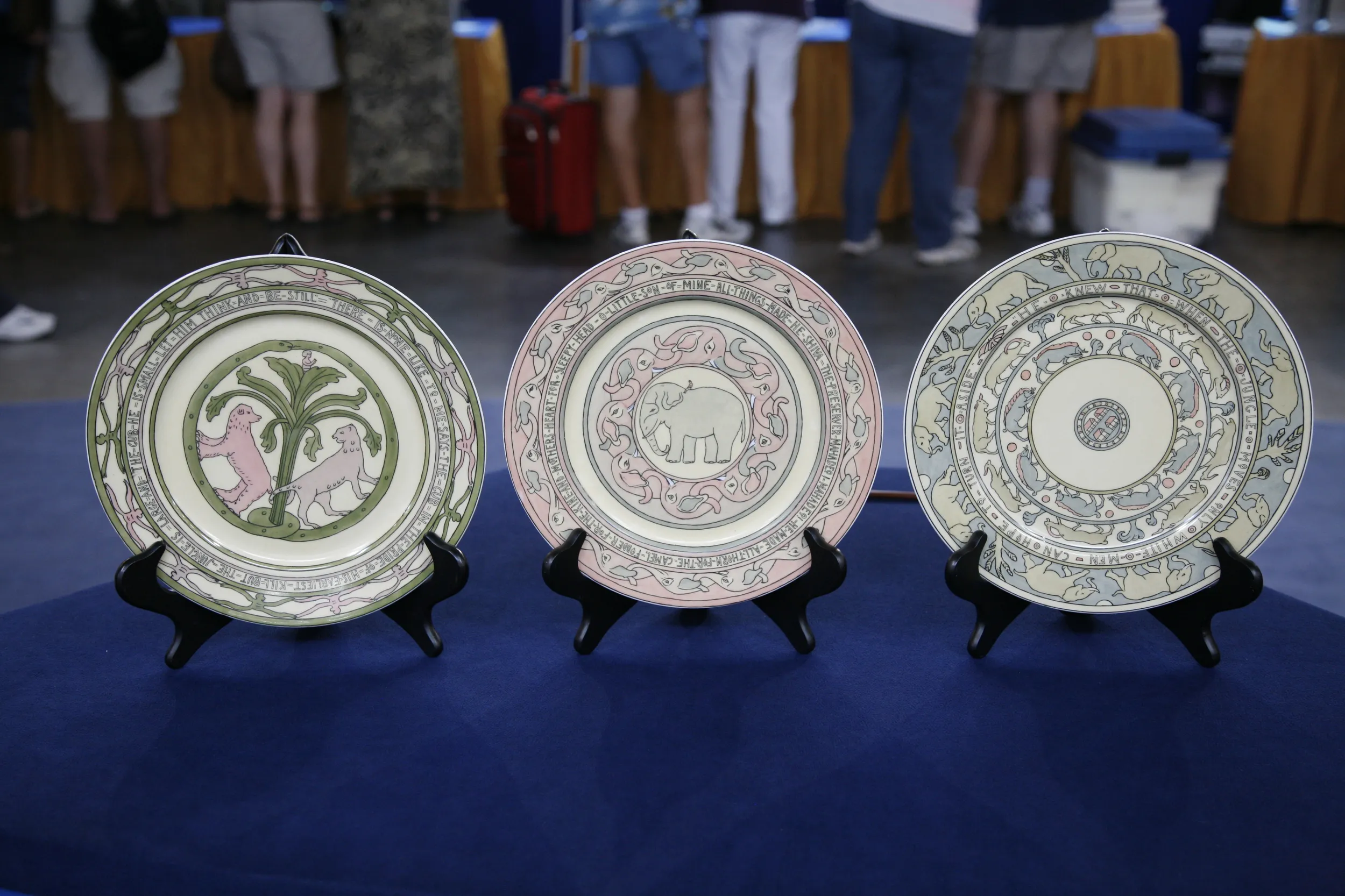
"The Jungle Book" Arts & Crafts Plates, ca. 1905

appraisal
KPM Porcelain Clock, ca. 1890

appraisal
Willets Belleek Pitcher, ca. 1880
Understanding Our Appraisals
Executive producer Marsha Bemko shares her tips for getting the most out of ANTIQUES ROADSHOW.
Value can change: The value of an item is dependent upon many things, including the condition of the object itself, trends in the market for that kind of object, and the location where the item will be sold. These are just some of the reasons why the answer to the question "What's it worth?" is so often "It depends."
Note the date: Take note of the date the appraisal was recorded. This information appears in the upper left corner of the page, with the label "Appraised On." Values change over time according to market forces, so the current value of the item could be higher, lower, or the same as when our expert first appraised it.
Context is key: Listen carefully. Most of our experts will give appraisal values in context. For example, you'll often hear them say what an item is worth "at auction," or "retail," or "for insurance purposes" (replacement value). Retail prices are different from wholesale prices. Often an auctioneer will talk about what she knows best: the auction market. A shop owner will usually talk about what he knows best: the retail price he'd place on the object in his shop. And though there are no hard and fast rules, an object's auction price can often be half its retail value; yet for other objects, an auction price could be higher than retail. As a rule, however, retail and insurance/replacement values are about the same.
Verbal approximations: The values given by the experts on ANTIQUES ROADSHOW are considered "verbal approximations of value." Technically, an "appraisal" is a legal document, generally for insurance purposes, written by a qualified expert and paid for by the owner of the item. An appraisal usually involves an extensive amount of research to establish authenticity, provenance, composition, method of construction, and other important attributes of a particular object.
Opinion of value: As with all appraisals, the verbal approximations of value given at ROADSHOW events are our experts' opinions formed from their knowledge of antiques and collectibles, market trends, and other factors. Although our valuations are based on research and experience, opinions can, and sometimes do, vary among experts.
Appraiser affiliations: Finally, the affiliation of the appraiser may have changed since the appraisal was recorded. To see current contact information for an appraiser in the ROADSHOW Archive, click on the link below the appraiser's picture. Our Appraiser Index also contains a complete list of active ROADSHOW appraisers and their contact details and biographies.


