Amelia Earhart Letter Archive, ca. 1930
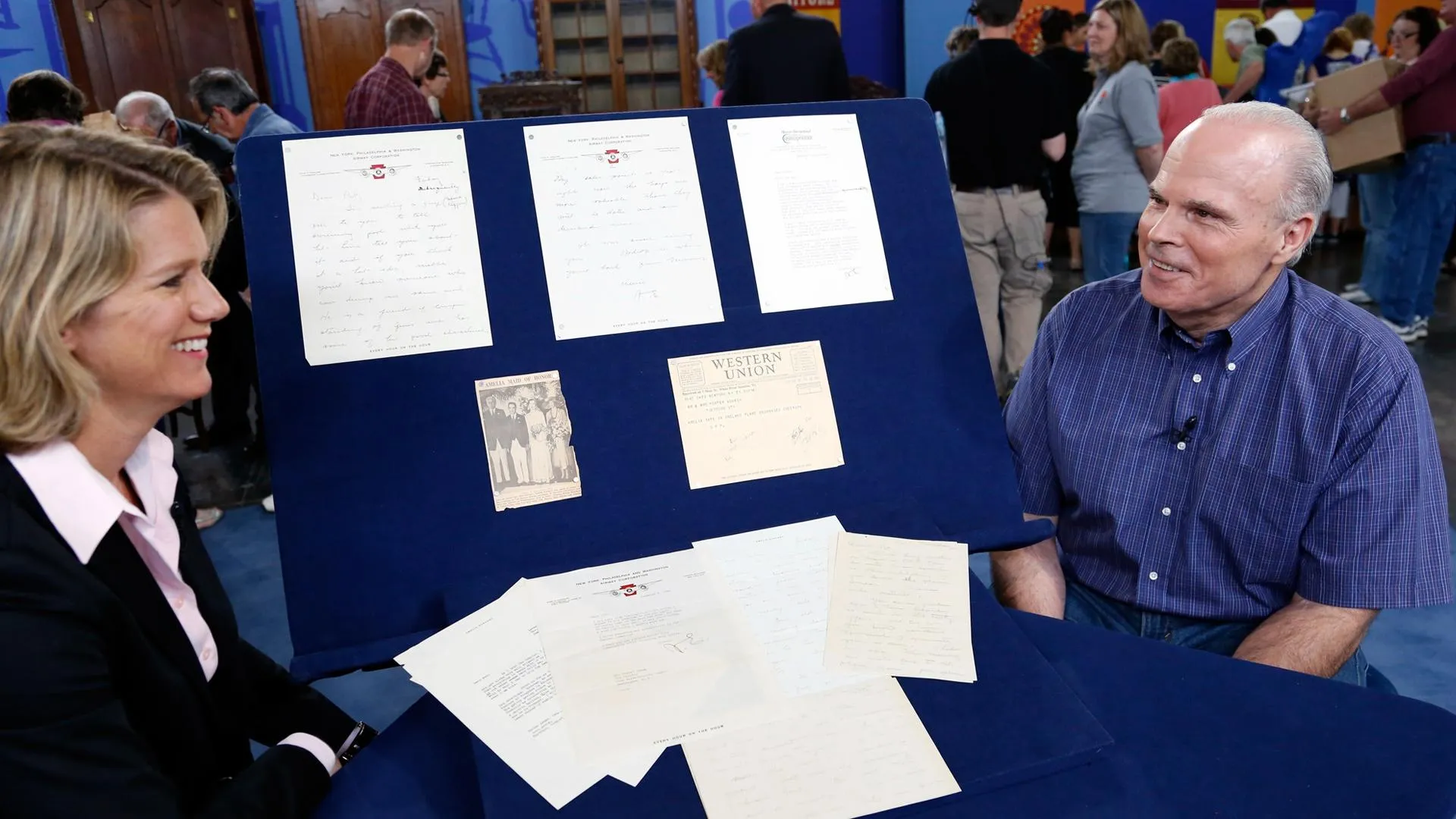
GUEST: I have a collection of letters, personal letters, uh, from Amelia Earhart to my aunt, along with a telegram sent to my aunt and her husband when Amelia landed in England on her solo crossing. When my aunt passed away, she left them to me. My aunt's introduction to the aviation community was through her soon-to-be husband, Porter. Porter Adams was part of the early aviation crowd, and when they started dating, she was included in that group. They were close enough so that Amelia agreed to be her maid of honor.
APPRAISER: And did your aunt tell you any interesting stories about Amelia Earhart?
GUEST: She had a great admiration for her. She'd talk about the last flight she made, which we're, they're-- we're still looking for her. And said that, uh, most of her friends were trying to discourage it because, technically, she wasn't the most proficient pilot. She was just a great adventurer, tremendous courage, and just had that spirit. And they were concerned because this was a very technical flight. The navigators, everybody knows, had some history with, you know, some problems. And the equipment, including the radio, we later found out, wasn't very good. So they were, they were concerned that maybe this was a little bit too risky.
APPRAISER: The great thing about this collection of letters is that it shows us what some of her other talents are. I think one of the things she had a talent for was public relations. She was a great controller of her image, of the message. And the other thing was, she had an incredible entrepreneurial spirit. You have an archive of about eight letters. There are four typed letters, four handwritten letters. This one's written on the letterhead of the New York, Philadelphia, Washington Airway Corporation, which, we learn from a later letter, she had a role as vice president of public relations for this. And in this letter, she's talking to your uncle about trying to get involved in selling swimming pools. "Let me know if you think it's a hot idea, and maybe you'll know someone who can dump in some cash," says the letter.
GUEST (laughs)
APPRAISER: The other letter, over here, this typed letter, is on Hearst International "Cosmopolitan" magazine letterhead, and it reminds us of her role as a journalist. She's the aviation editor at "Cosmopolitan." And the other letters, too, indicate all of the interests and entrepreneurial efforts that she was involved in in promoting aviation. She's a very important figure in aviation history. She's a very important figure in women's history. Letters are more valuable than telegrams, in general. Although that's an interesting telegram on its own. I would value the collection with an auction estimate of $12,000 to $18,000.
GUEST: Very nice. Excellent.

$15,000 - $20,000 Auction
$12,000 - $18,000 Auction
Photos


Featured In
episode
Knoxville, Hour 2 (2014)
ROADSHOW visits the Rhea County Courthouse to learn more about the Scopes Trial.

episode
Appraisal Extras

article
Navigating the Truth Behind Amelia Earhart and Fred Noonan
An examination of Amelia Earhart's life and the factors that led to her becoming one of the world's most famous aviators.
Historical Artifacts
appraisal

appraisal
Frank Zappa Painting, ca. 1960

appraisal
Vermont Militia Coat, ca. 1815

appraisal
Dr. Seuss “Kangaroo Bird," ca. 1938
Understanding Our Appraisals
Executive producer Marsha Bemko shares her tips for getting the most out of ANTIQUES ROADSHOW.
Value can change: The value of an item is dependent upon many things, including the condition of the object itself, trends in the market for that kind of object, and the location where the item will be sold. These are just some of the reasons why the answer to the question "What's it worth?" is so often "It depends."
Note the date: Take note of the date the appraisal was recorded. This information appears in the upper left corner of the page, with the label "Appraised On." Values change over time according to market forces, so the current value of the item could be higher, lower, or the same as when our expert first appraised it.
Context is key: Listen carefully. Most of our experts will give appraisal values in context. For example, you'll often hear them say what an item is worth "at auction," or "retail," or "for insurance purposes" (replacement value). Retail prices are different from wholesale prices. Often an auctioneer will talk about what she knows best: the auction market. A shop owner will usually talk about what he knows best: the retail price he'd place on the object in his shop. And though there are no hard and fast rules, an object's auction price can often be half its retail value; yet for other objects, an auction price could be higher than retail. As a rule, however, retail and insurance/replacement values are about the same.
Verbal approximations: The values given by the experts on ANTIQUES ROADSHOW are considered "verbal approximations of value." Technically, an "appraisal" is a legal document, generally for insurance purposes, written by a qualified expert and paid for by the owner of the item. An appraisal usually involves an extensive amount of research to establish authenticity, provenance, composition, method of construction, and other important attributes of a particular object.
Opinion of value: As with all appraisals, the verbal approximations of value given at ROADSHOW events are our experts' opinions formed from their knowledge of antiques and collectibles, market trends, and other factors. Although our valuations are based on research and experience, opinions can, and sometimes do, vary among experts.
Appraiser affiliations: Finally, the affiliation of the appraiser may have changed since the appraisal was recorded. To see current contact information for an appraiser in the ROADSHOW Archive, click on the link below the appraiser's picture. Our Appraiser Index also contains a complete list of active ROADSHOW appraisers and their contact details and biographies.


