Abraham Lincoln Campaign Button, ca. 1860
GUEST: This is an, I believe, ambrotype political pin from Abraham Lincoln. He's without the beard. I believe it's from 1860. And it's been in my family since my great-great-grandfather, who lived in Searsport, Maine. And it's been passed down through my grandmother's family to me
APPRAISER: And what was his name?
GUEST: Um, Edwin Sargent.
APPRAISER: Okay.
GUEST: He must have purchased it or acquired it during his lifetime.
APPRAISER: Yes. So, it's a campaign pin. It was used for his campaign in 1860. He came to New York to do a lecture at Cooper Union, he had his new $100 suit on...
GUEST: Oh.
APPRAISER: ...which I think is close to $4,000 in today's money.
GUEST: Wow, I see.
APPRAISER: That shows you that he really wanted to... make himself very presentable and be seen in the right light. But, uh, historians said that he still looked very frumpy in his suit.
GUEST: Mm-hmm.
APPRAISER: So I guess maybe it wasn't worth it. He had his photograph taken by a very famous photographer, Mathew Brady, who is known for producing some of the best photographs that we have of Lincoln today.
GUEST: Wow.
APPRAISER: Now, the photograph that was originally taken shows Lincoln from the knees up. So it's a very large, almost full-length portrait...
GUEST: Sure.
APPRAISER: And obviously has been cropped down here to fit this format. This was the first time that photographs were used for a presidential campaign to promote a candidate.
GUEST: Wow.
APPRAISER: And it played a major role...
GUEST: Mm-hmm.
APPRAISER: ...because this image by Mathew Brady was hugely popular.
GUEST: Mm-hmm.
APPRAISER: Made into postcards and put in Harper's Weekly. And, I mean, it was everywhere So, the back paper tells us that even though the photograph was taken by Mathew Brady, the ambrotype itself was made by George Clark.
GUEST: Mm-hmm.
APPRAISER: He's the one that was actually responsible for turning this image into the campaign pins.
GUEST: Okay.
APPRAISER: And unfortunately, that part is ripped. And then, we look at the front, and these photographs were extremely susceptible to flaking...
GUEST: Mm-hmm.
APPRAISER: ...of the emulsion off of that glass plate, which is what makes an ambrotype an ambrotype. So, unfortunately, there is a little bit of loss there. But overall, I think that the saturation of this image is really nice for its age. Okay. The brass mat is in really good condition. These photographs are very rare. We don't see very many of them at all. Definitely under 50.
GUEST: Wow.
APPRAISER: probably under 30. There's one in the collection of the National Portrait Gallery. Really, it's going to come down to how saturated that image is, how punchy it is, and the condition of that information on the back.
GUEST: Right.
APPRAISER: So it's, it's really the full package.
GUEST: Mm-hmm.
APPRAISER: I'd say, at an auction, probably $12,000 to $18,000.
GUEST: Wow. Wow, that's amazing.
APPRAISER: I think it's really special.
GUEST: Nice. Thank you so much. I'm so honored that it was passed down to me.
APPRAISER: I've seen the photographs in the campaign pin format sell for upwards of $30,000.

$12,000 - $18,000 Auction
Featured In

episode
Coastal Maine Botanical Gardens, Hour 1
Premiered Mon, Feb 16, 2026 — See a bounty of Boothbay booty from ROADSHOW’s first-ever visit to the state of Maine.
19th Century
appraisal
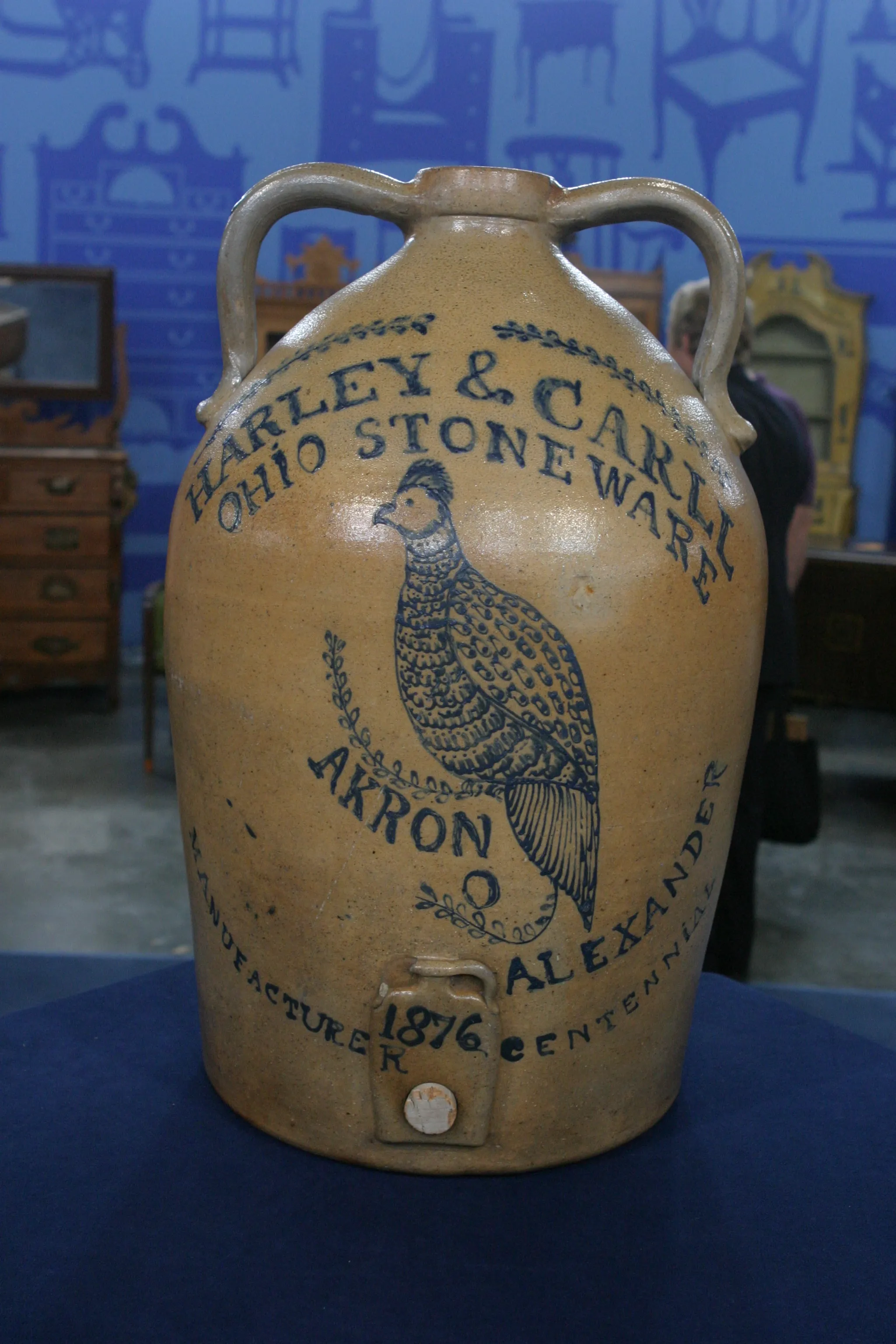
1876 John Alexander Stoneware Cooler
appraisal
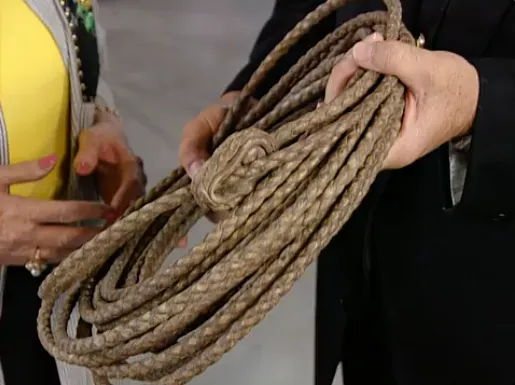
Braided Rawhide Lariat, ca. 1850
appraisal
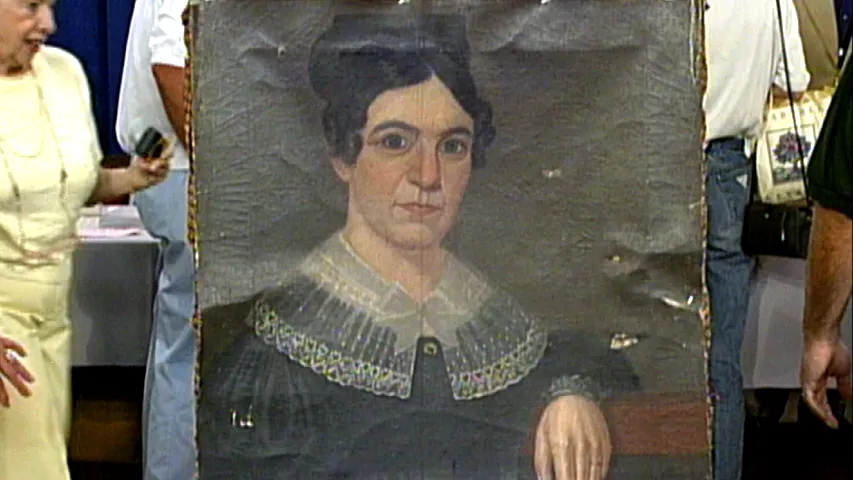
American School Portrait, ca. 1820
appraisal
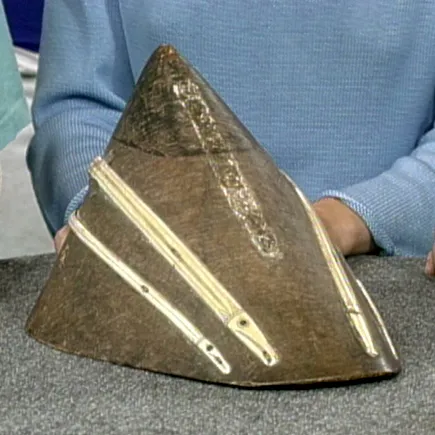
Eskimo Hunting Helmet, ca. 1820
Understanding Our Appraisals
Executive producer Marsha Bemko shares her tips for getting the most out of ANTIQUES ROADSHOW.
Value can change: The value of an item is dependent upon many things, including the condition of the object itself, trends in the market for that kind of object, and the location where the item will be sold. These are just some of the reasons why the answer to the question "What's it worth?" is so often "It depends."
Note the date: Take note of the date the appraisal was recorded. This information appears in the upper left corner of the page, with the label "Appraised On." Values change over time according to market forces, so the current value of the item could be higher, lower, or the same as when our expert first appraised it.
Context is key: Listen carefully. Most of our experts will give appraisal values in context. For example, you'll often hear them say what an item is worth "at auction," or "retail," or "for insurance purposes" (replacement value). Retail prices are different from wholesale prices. Often an auctioneer will talk about what she knows best: the auction market. A shop owner will usually talk about what he knows best: the retail price he'd place on the object in his shop. And though there are no hard and fast rules, an object's auction price can often be half its retail value; yet for other objects, an auction price could be higher than retail. As a rule, however, retail and insurance/replacement values are about the same.
Verbal approximations: The values given by the experts on ANTIQUES ROADSHOW are considered "verbal approximations of value." Technically, an "appraisal" is a legal document, generally for insurance purposes, written by a qualified expert and paid for by the owner of the item. An appraisal usually involves an extensive amount of research to establish authenticity, provenance, composition, method of construction, and other important attributes of a particular object.
Opinion of value: As with all appraisals, the verbal approximations of value given at ROADSHOW events are our experts' opinions formed from their knowledge of antiques and collectibles, market trends, and other factors. Although our valuations are based on research and experience, opinions can, and sometimes do, vary among experts.
Appraiser affiliations: Finally, the affiliation of the appraiser may have changed since the appraisal was recorded. To see current contact information for an appraiser in the ROADSHOW Archive, click on the link below the appraiser's picture. Our Appraiser Index also contains a complete list of active ROADSHOW appraisers and their contact details and biographies.


