19th C. Reproduction Lover's Eye Ring
GUEST: I bought it at an estate tag sale.
APPRAISER: Okay.
GUEST: And I ended up paying full price for it, but I don't remember how much it was.
APPRAISER: Oh darn it, I always like to know what what you paid for something. It's very cool. What what do you know about it?
GUEST: I know that the lover's eye ring started when King George IV, before he was King, gave a painting of his eye to a woman that he loved that was a widowed Catholic.
APPRAISER: You know quite a lot about lover's eye pins. They started in the English court
at the end of the 18th century in the Georgian period. And really became the token of affection that then people would sort of guess whose eye is it. It became very popular to gift lover's eye pins to someone you loved or or missed. And that tradition was carried into the Victorian period by Queen Victoria who was an incredible romantic herself. Normally, they're painted on ivory and then put into the these little, sometimes pearl frames or diamond frames of the period. They're having sort of a renaissance in popularity today with shows like Bridgerton, where they've incorporated lover's eye pins in the show. Even my husband has a lover's eye pin tattoo of my eye.
GUEST: Really? Oh, my goodness.
APPRAISER: But...
GUEST: That's amazing.
APPRAISER: I know, so we- I I love them. What is problematic about collecting them
is that they're very easily faked. I think that's the case of what you have here.
GUEST: Oh really?
APPRAISER: So I would say considering that uh I feel that it's in the style of a lover's eye pin, it's worth about $200 to $300.
GUEST: Okay, thank you.

$200 - $300 Retail
Plastic

appraisal
Costume Beaded Necklace, ca. 1910
appraisal
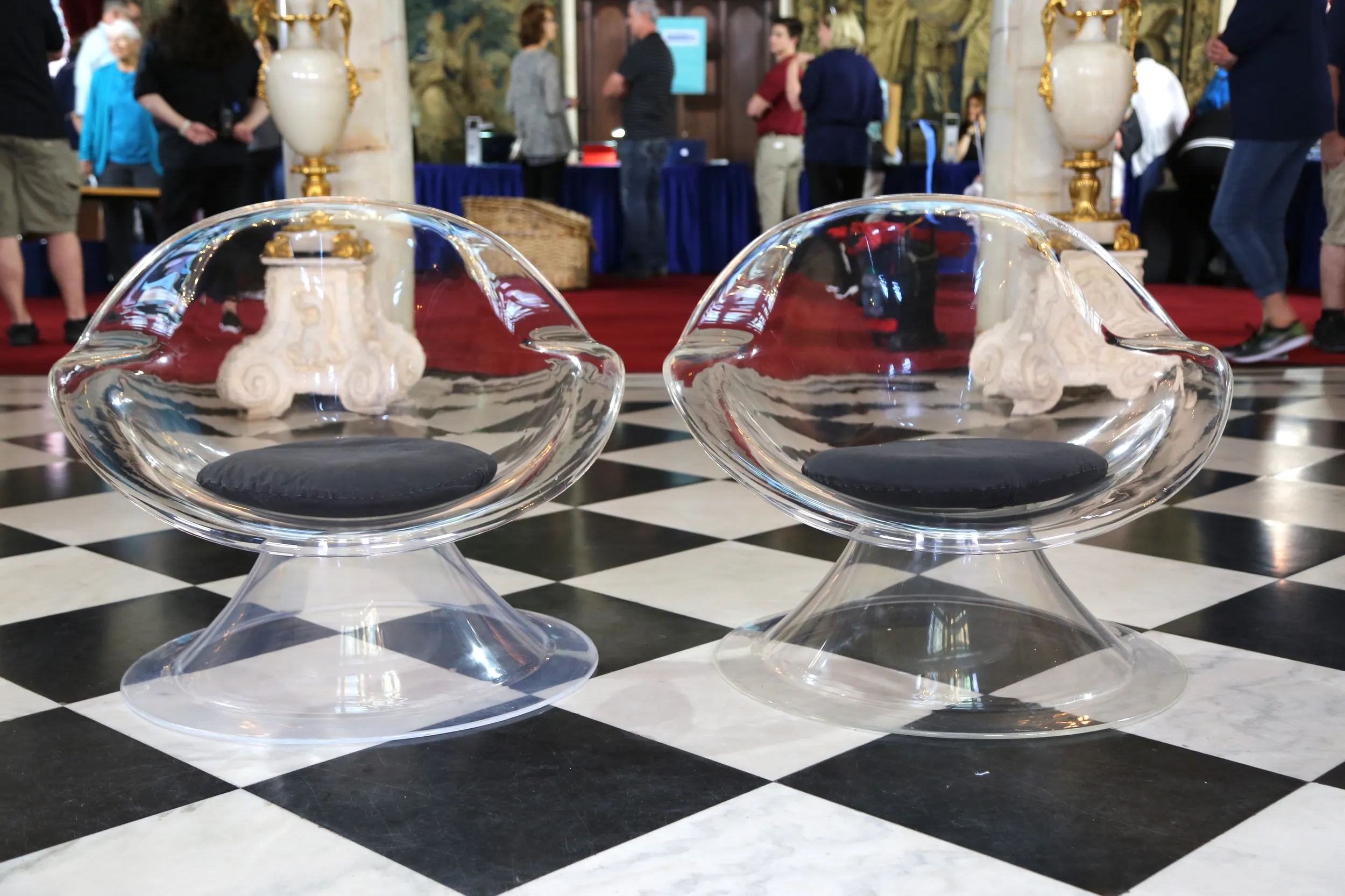
Erwine & Estelle Laverne Daffodil Chairs, ca. 1970

appraisal
Frank Rohloff Table, ca. 1968

appraisal
Understanding Our Appraisals
Executive producer Marsha Bemko shares her tips for getting the most out of ANTIQUES ROADSHOW.
Value can change: The value of an item is dependent upon many things, including the condition of the object itself, trends in the market for that kind of object, and the location where the item will be sold. These are just some of the reasons why the answer to the question "What's it worth?" is so often "It depends."
Note the date: Take note of the date the appraisal was recorded. This information appears in the upper left corner of the page, with the label "Appraised On." Values change over time according to market forces, so the current value of the item could be higher, lower, or the same as when our expert first appraised it.
Context is key: Listen carefully. Most of our experts will give appraisal values in context. For example, you'll often hear them say what an item is worth "at auction," or "retail," or "for insurance purposes" (replacement value). Retail prices are different from wholesale prices. Often an auctioneer will talk about what she knows best: the auction market. A shop owner will usually talk about what he knows best: the retail price he'd place on the object in his shop. And though there are no hard and fast rules, an object's auction price can often be half its retail value; yet for other objects, an auction price could be higher than retail. As a rule, however, retail and insurance/replacement values are about the same.
Verbal approximations: The values given by the experts on ANTIQUES ROADSHOW are considered "verbal approximations of value." Technically, an "appraisal" is a legal document, generally for insurance purposes, written by a qualified expert and paid for by the owner of the item. An appraisal usually involves an extensive amount of research to establish authenticity, provenance, composition, method of construction, and other important attributes of a particular object.
Opinion of value: As with all appraisals, the verbal approximations of value given at ROADSHOW events are our experts' opinions formed from their knowledge of antiques and collectibles, market trends, and other factors. Although our valuations are based on research and experience, opinions can, and sometimes do, vary among experts.
Appraiser affiliations: Finally, the affiliation of the appraiser may have changed since the appraisal was recorded. To see current contact information for an appraiser in the ROADSHOW Archive, click on the link below the appraiser's picture. Our Appraiser Index also contains a complete list of active ROADSHOW appraisers and their contact details and biographies.


