1989 Rosemary Karuga Magazine Collage
GUEST: I've got this collage painting, it's an estate sale find. It's the rare piece in my house where both my wife and I a-appreciate it. It's the thing in the house that everybody likes.
APPRAISER: When was this estate sale?
GUEST: Two, two-and-a-half years ago.
APPRAISER: How much did you pay for it at that estate sale?
GUEST: It was $390 at most.
APPRAISER: The artist is Rosemary Karuga-- she was a Kenyan artist. She was born in 1928.
GUEST: Mm-hmm.
APPRAISER: And she went to school in 1950. And between 1950 and 1952, was studying in Uganda. She studied as an artist, but she had to return to Kenya, and for the next 30 years, was teaching art in primary school, but also a housewife. Even though she was at the forefront of being one of the first female art students at a major art school in Africa.
GUEST: Gotcha.
APPRAISER: She picked up art again after she turned 60. What she started using was materials from newspapers and glossy foreign magazines. Artist materials are expensive and she wasn't from a very wealthy background. She built her composition up almost like a painter would build up, using layers. What she enjoyed depicting was life, rural Kenya. She was living outside of Nairobi. On the lower middle right, It is signed and dated. Uh, it's dated 1989 and signed, "Karuga." She started getting a lot of exhibitions. She flew for the first time on a plane after 60 years old.
GUEST: Mm-hmm.
APPRAISER: She went to, uh, Paris and the U.K., her works were even exhibited at The Studio Museum in Harlem in 1990. So she found fame later in life. So you're never too old to start, uh, to start again. She passed away in 2021, and her work has been selling pretty well. I would put a conservative auction estimate of $2,000 to $3,000 on it.
GUEST: Pr-pretty good at $390, so. I always tell people when I'm out at these estate sales that, like, one of the reasons I'm there is to find my ANTIQUES ROADSHOW piece. So I more than exceeded its value in that regard.

$2,000 - $3,000 Auction
Featured In

episode
Maryland Zoo, Hour 2
ROADSHOW finds rare treasures at Maryland Zoo including one worth $180,000!
20th Century
appraisal
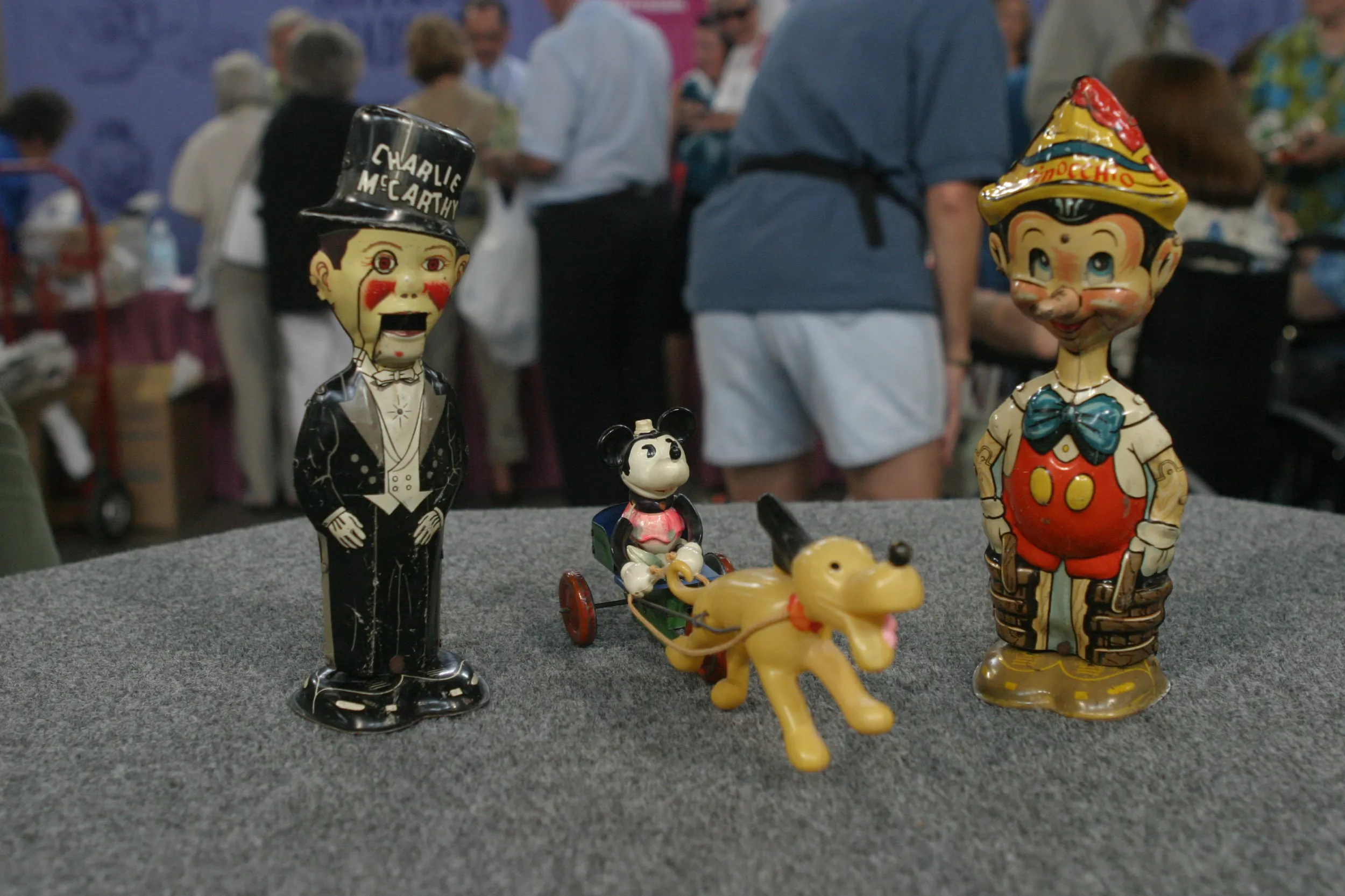
Comic Wind-up Toys, ca. 1930

appraisal
Barbie Accessories & Case, ca. 1960
appraisal
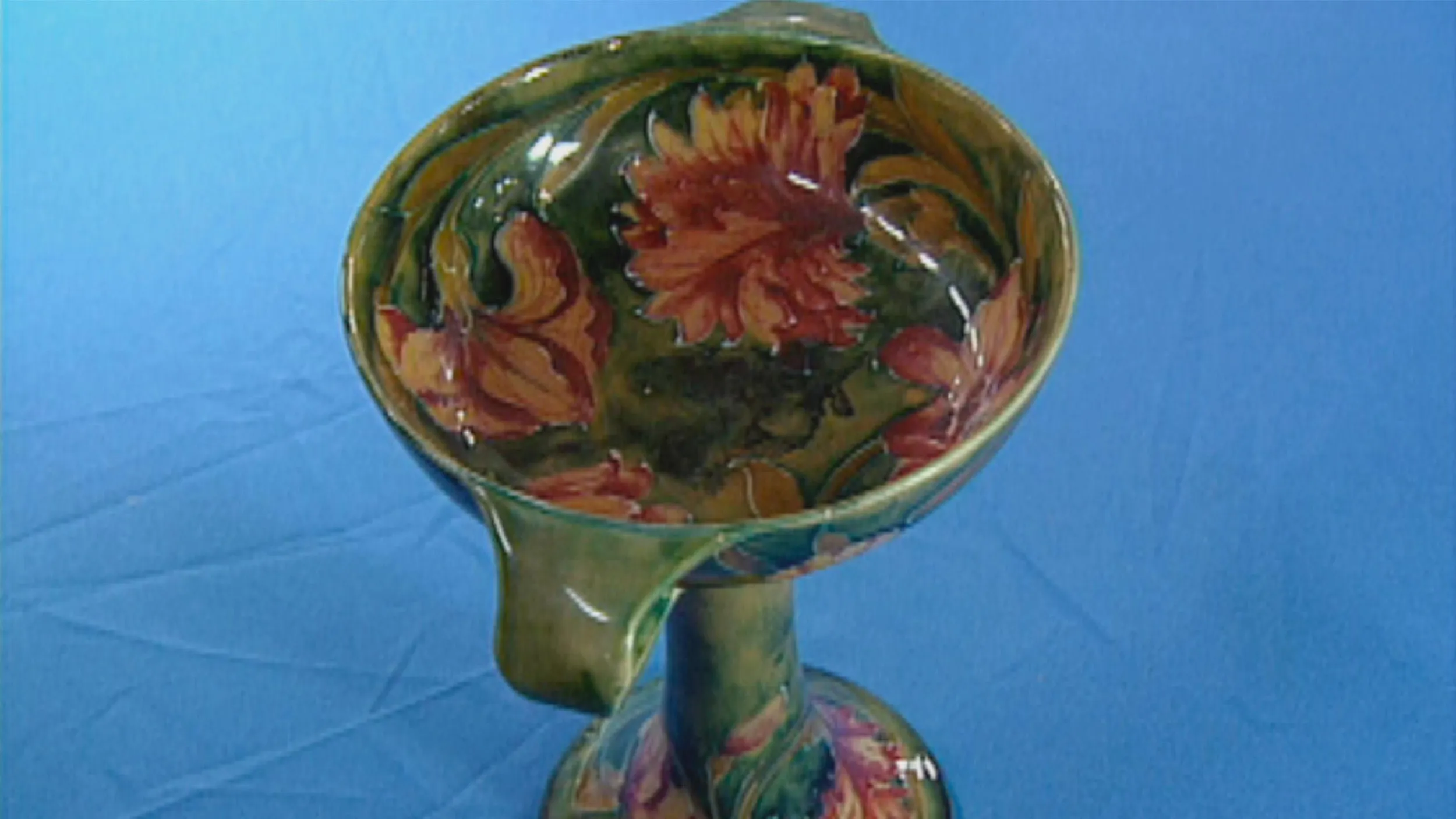
William Moorcroft Pottery, ca. 1910
appraisal
Understanding Our Appraisals
Executive producer Marsha Bemko shares her tips for getting the most out of ANTIQUES ROADSHOW.
Value can change: The value of an item is dependent upon many things, including the condition of the object itself, trends in the market for that kind of object, and the location where the item will be sold. These are just some of the reasons why the answer to the question "What's it worth?" is so often "It depends."
Note the date: Take note of the date the appraisal was recorded. This information appears in the upper left corner of the page, with the label "Appraised On." Values change over time according to market forces, so the current value of the item could be higher, lower, or the same as when our expert first appraised it.
Context is key: Listen carefully. Most of our experts will give appraisal values in context. For example, you'll often hear them say what an item is worth "at auction," or "retail," or "for insurance purposes" (replacement value). Retail prices are different from wholesale prices. Often an auctioneer will talk about what she knows best: the auction market. A shop owner will usually talk about what he knows best: the retail price he'd place on the object in his shop. And though there are no hard and fast rules, an object's auction price can often be half its retail value; yet for other objects, an auction price could be higher than retail. As a rule, however, retail and insurance/replacement values are about the same.
Verbal approximations: The values given by the experts on ANTIQUES ROADSHOW are considered "verbal approximations of value." Technically, an "appraisal" is a legal document, generally for insurance purposes, written by a qualified expert and paid for by the owner of the item. An appraisal usually involves an extensive amount of research to establish authenticity, provenance, composition, method of construction, and other important attributes of a particular object.
Opinion of value: As with all appraisals, the verbal approximations of value given at ROADSHOW events are our experts' opinions formed from their knowledge of antiques and collectibles, market trends, and other factors. Although our valuations are based on research and experience, opinions can, and sometimes do, vary among experts.
Appraiser affiliations: Finally, the affiliation of the appraiser may have changed since the appraisal was recorded. To see current contact information for an appraiser in the ROADSHOW Archive, click on the link below the appraiser's picture. Our Appraiser Index also contains a complete list of active ROADSHOW appraisers and their contact details and biographies.


