1975 & 1979 Elizabeth Catlett Prints
GUEST: My mom got these probably about 21, 22 years ago; she was a social worker. However, she really had a love of art, especially African American art.
APPRAISER: Mm-hmm.
GUEST: And, at the time, she was working in D.C., and she met a woman who, I believe, owned, um, a gallery or something along those lines, and she had some financial difficulties, and so, she needed to get rid of the paintings. So, my mom purchased them from her.
APPRAISER: Do we know what your mom may have paid then?
GUEST: It was either $2,500 for the total or $2,500 apiece.
APPRAISER: Okay. What do you know about the artist?
GUEST: I do know that she's African American.
APPRAISER: Mm.
GUEST: I believe she may have been born in North Carolina in, like, 1915. She was, um, an art professor, I believe, at Howard...
APPRAISER: Mm-hmm.
GUEST: ...and then, subsequently, she moved to Mexico.
APPRAISER: It's Elizabeth Catlett, and she did attend Howard University. She was really, not only a great printmaker, but also a great sculptor. Very talented and really progressive. Very ahead of her time. We see that she was very interested in depicting African American women, African American families, the plight of African Americans, and was an exceptional artist. She went to Howard University, but had actually been accepted to what is now Carnegie Mellon in Pittsburgh, but was not able to attend because of her race. She got really interested in printmaking. Then she went to Mexico, and she really, over the course of her life, was a dual citizen. She had very strong political views, really a social activist, and in fact, there was a time where she was not permitted to go back to America...
GUEST: Hmm.
APPRAISER: ...and she became a citizen of Mexico. These are both original prints. The one closest to me is entitled Two Generations. It's a lithograph from 1979, and we see that it's clearly signed "E. Catlett," dated 1979. Titled… and it's in a limited edition of 100. Can you see what the print next to you is titled?
GUEST: Harriet.
APPRAISER: Harriet, which was done in 1975. The print is a linocut, and of course, depicts Harriet Tubman, the great abolitionist, and what a powerful image. If there's a sort of quietness here, that has its own power, Harriet Tubman was about five-foot-two-inches, but here, we see her leading people out of slavery, and she is this larger-than-life commanding presence. Really a strong image. Both of them are in great condition. Conservatively, Two Generations, I think you'd be talking about, by itself, $4,000 to $6,000 at auction.
GUEST: Great.
APPRAISER: Harriet is a little bit more valuable at auction. I would expect to see that at closer to $5,000 to $8,000.
GUEST: Okay, great. Thank you. Wonderful. Great to hear.

$9,000 - $14,000 Auction
Featured In

episode
Maryland Zoo, Hour 3
ROADSHOW searches for hidden treasures in Maryland including one $150,000 - $200,000 find!
1970s

appraisal
Weltron 2001 Radio & 8-track Player, ca. 1970
appraisal
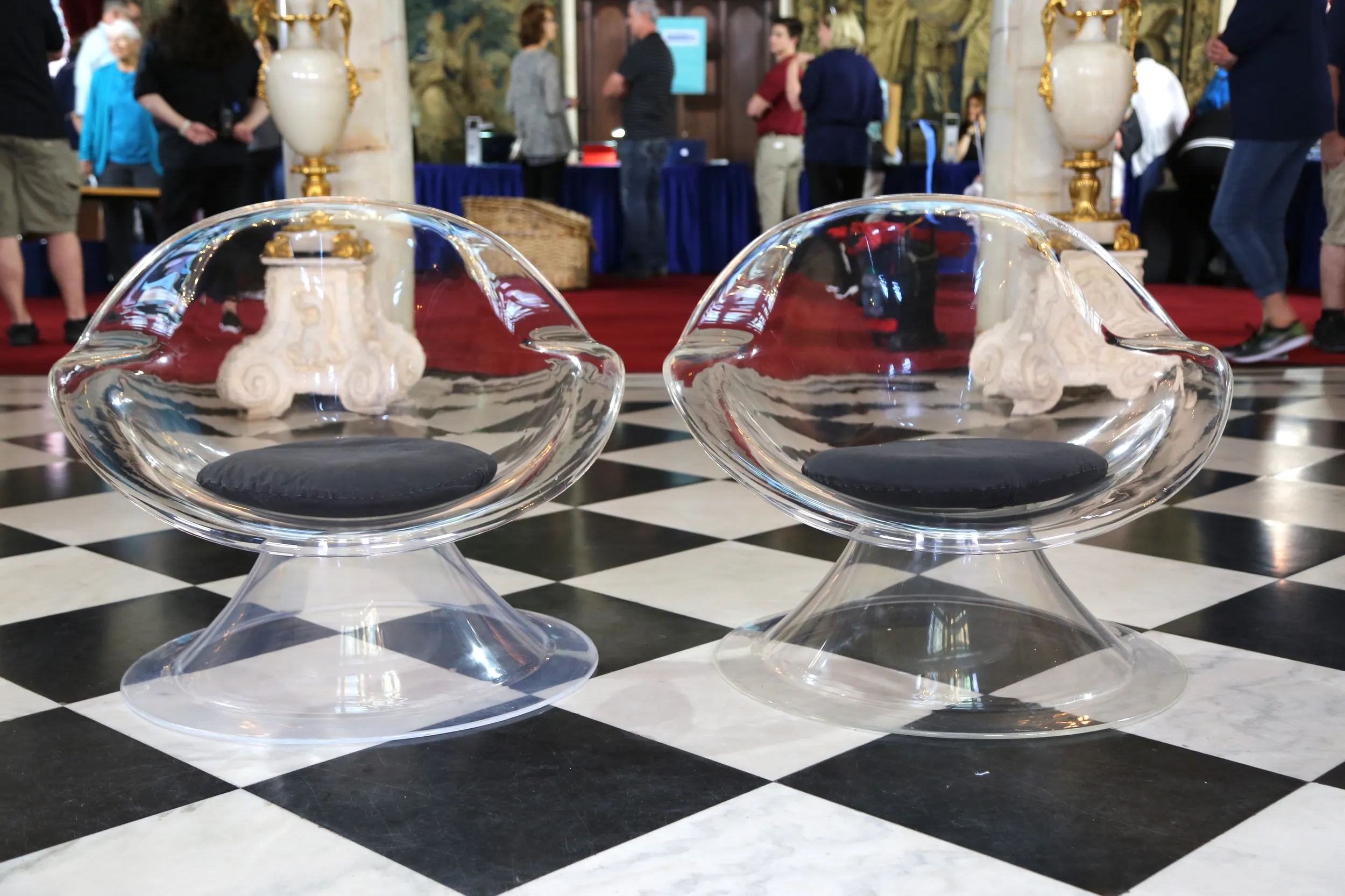
Erwine & Estelle Laverne Daffodil Chairs, ca. 1970

appraisal
1976 Andy Warhol Illustrated Title Page

appraisal
"The Godfather, Part II" Headboard
Understanding Our Appraisals
Executive producer Marsha Bemko shares her tips for getting the most out of ANTIQUES ROADSHOW.
Value can change: The value of an item is dependent upon many things, including the condition of the object itself, trends in the market for that kind of object, and the location where the item will be sold. These are just some of the reasons why the answer to the question "What's it worth?" is so often "It depends."
Note the date: Take note of the date the appraisal was recorded. This information appears in the upper left corner of the page, with the label "Appraised On." Values change over time according to market forces, so the current value of the item could be higher, lower, or the same as when our expert first appraised it.
Context is key: Listen carefully. Most of our experts will give appraisal values in context. For example, you'll often hear them say what an item is worth "at auction," or "retail," or "for insurance purposes" (replacement value). Retail prices are different from wholesale prices. Often an auctioneer will talk about what she knows best: the auction market. A shop owner will usually talk about what he knows best: the retail price he'd place on the object in his shop. And though there are no hard and fast rules, an object's auction price can often be half its retail value; yet for other objects, an auction price could be higher than retail. As a rule, however, retail and insurance/replacement values are about the same.
Verbal approximations: The values given by the experts on ANTIQUES ROADSHOW are considered "verbal approximations of value." Technically, an "appraisal" is a legal document, generally for insurance purposes, written by a qualified expert and paid for by the owner of the item. An appraisal usually involves an extensive amount of research to establish authenticity, provenance, composition, method of construction, and other important attributes of a particular object.
Opinion of value: As with all appraisals, the verbal approximations of value given at ROADSHOW events are our experts' opinions formed from their knowledge of antiques and collectibles, market trends, and other factors. Although our valuations are based on research and experience, opinions can, and sometimes do, vary among experts.
Appraiser affiliations: Finally, the affiliation of the appraiser may have changed since the appraisal was recorded. To see current contact information for an appraiser in the ROADSHOW Archive, click on the link below the appraiser's picture. Our Appraiser Index also contains a complete list of active ROADSHOW appraisers and their contact details and biographies.


