1974 George Nakashima "Kent Hall" Floor Lamp
GUEST: This lamp belonged with a coffee table, was purchased by my parents when we lived outside of Philadelphia. And they knew of George Nakashima's work, and we went and actually visited his studios in New Hope. And they actually helped to pick out what they were looking for, for both this lamp and a coffee table. They ordered from him. They helped to pick out the wood and everything else. And this is back in 1974, I believe. He then produced it for us.
APPRAISER: So this was over the course of several visits.
GUEST: This was over the course of a few visits, yes.
APPRAISER: And you brought with you not only the floor lamp, but you also brought a Nakashima catalog and original drawings in George's hand signed by George.
GUEST: Correct.
APPRAISER: There were people who copied his work, there were people who worked there who did work of their own on the side that approximated Nakashima's work. So particularly in the case of George Nakashima, it's really quite critical. And you have the original paperwork. You also have the original bill of sale. George Nakashima settled in New Hope. During World War II, he had been in an internment camp. The architect Antonin Raymond sponsored him to come to New Hope, where he made furniture in the... what we call the Modernist Organic style. He pioneered that. His style was defined by raw pieces of wood. He felt that this piece of wood could never be anything but what it is. This tree existed for this base to be the base of this lamp. And so he really sought to find the soul of the tree, the inner part of that wood, the spirit of it that became manifest in the furniture designs that he became rather famous for. And his daughter, Mira Nakashima, continues in that tradition still in New Hope through today. So a couple of unusual things about this lamp. This is called the Kent Hall lamp. What George Nakashima would do is he would name a design for a certain commission or client. So the Kornblut cabinet was named after Dr. Kornblut, and every Kornblut cabinet that was made after that would be known as the Kornblut cabinet, even if it was no longer for Dr. Kornblut. Originally, this design was made for Kent Hall at Columbia University in 1962. He did three commissions for Kent Hall. And this is one of the more famous forms that came out of it. It's the only... one of the only floor lamps— in fact there's two different versions shown in this catalog page. But quite rare, he did not do a tremendous amount of lighting. What is also unusual about this, and very important that you have this piece of information here, you don't normally see it with this wooden base.
GUEST: Originally, when they designed this and were building it, I think they felt that maybe it was a little too unstable because the bottom is small, and therefore he felt like he needed—this is what I've been told at least—that they needed to add the base for stability. So that if it was put on carpet or was put on uneven surfaces that the lamp would not tip over.
APPRAISER: And the invoice I saw said, "no charge."
GUEST: Correct.
APPRAISER: For the base edition. So this is the only one I've ever seen with this base edition. And it was important to establish that it happened by George's hand and not by someone else. So, also, different materials were used to make this lamp. The base is English walnut, which is the most typical wood that Nakashima used. And this wood, to your understanding?
GUEST: I believe it's cherry.
APPRAISER: It does look like that, but I'm not certain, and you felt this was ash.
GUEST: Ash or something like that.
APPRAISER: Ash or birch. But tell me about the paper that was used for the shade.
GUEST: And the paper we believe is rice paper. It's a very thick rice paper.
APPRAISER: I noticed when looking over the lamp there's a tear in the shade that seems to have been repaired.
GUEST: It occurred because this lamp is in normal use in the household with my parents.
APPRAISER: Grandchild or pet?
GUEST: Grandchild.
(laughing)
GUEST: So, you know, my mother then went back and tried to repair it on her own.
APPRAISER: The rip didn't tear out. It seems like a very even seam. So my recommendation in this case would be to leave it be. I think your mom did a fine job on it. Your family paid how much for this?
GUEST: I believe the original receipt says $530 or something like that.
APPRAISER: That was for the lamp and the table.
GUSEST: I believe that's correct.
APPRAISER: So this alone was about $250. So let's take a look at this turned on. Beautiful. Realistic value on this at auction is somewhere between $20,000 and $30,000.
GUEST: Wow, okay. Excellent, thank you.
$20,000 - $30,000 Auction
$20,000 - $30,000 Auction
Topics
topic
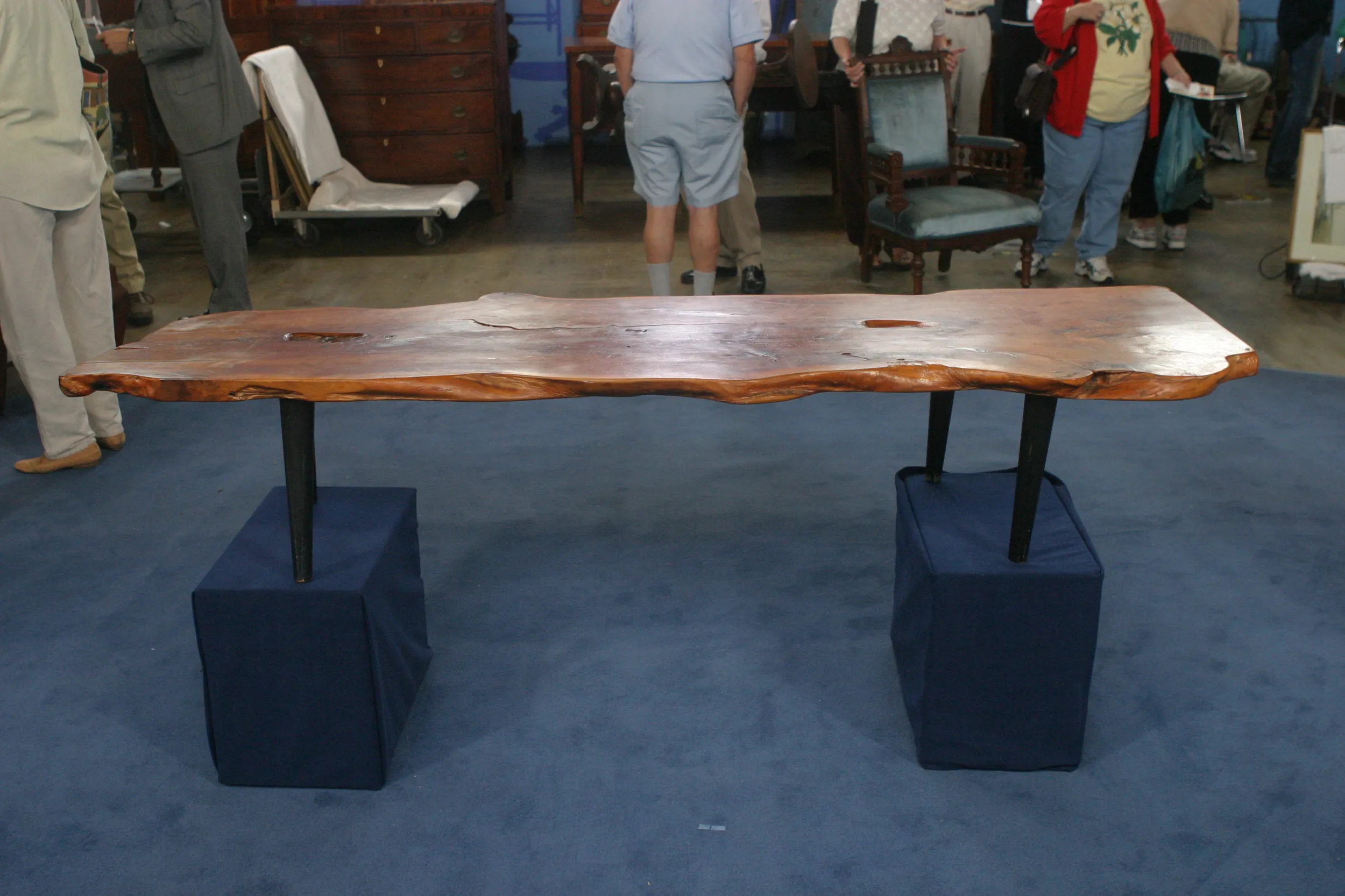
Nakashima
Our selection of Nakashima appraisals is ready to be explored for ANTIQUES ROADSHOW viewers drawn to George Nakashima's wood craftsmanship.
Floor Lamp
appraisal
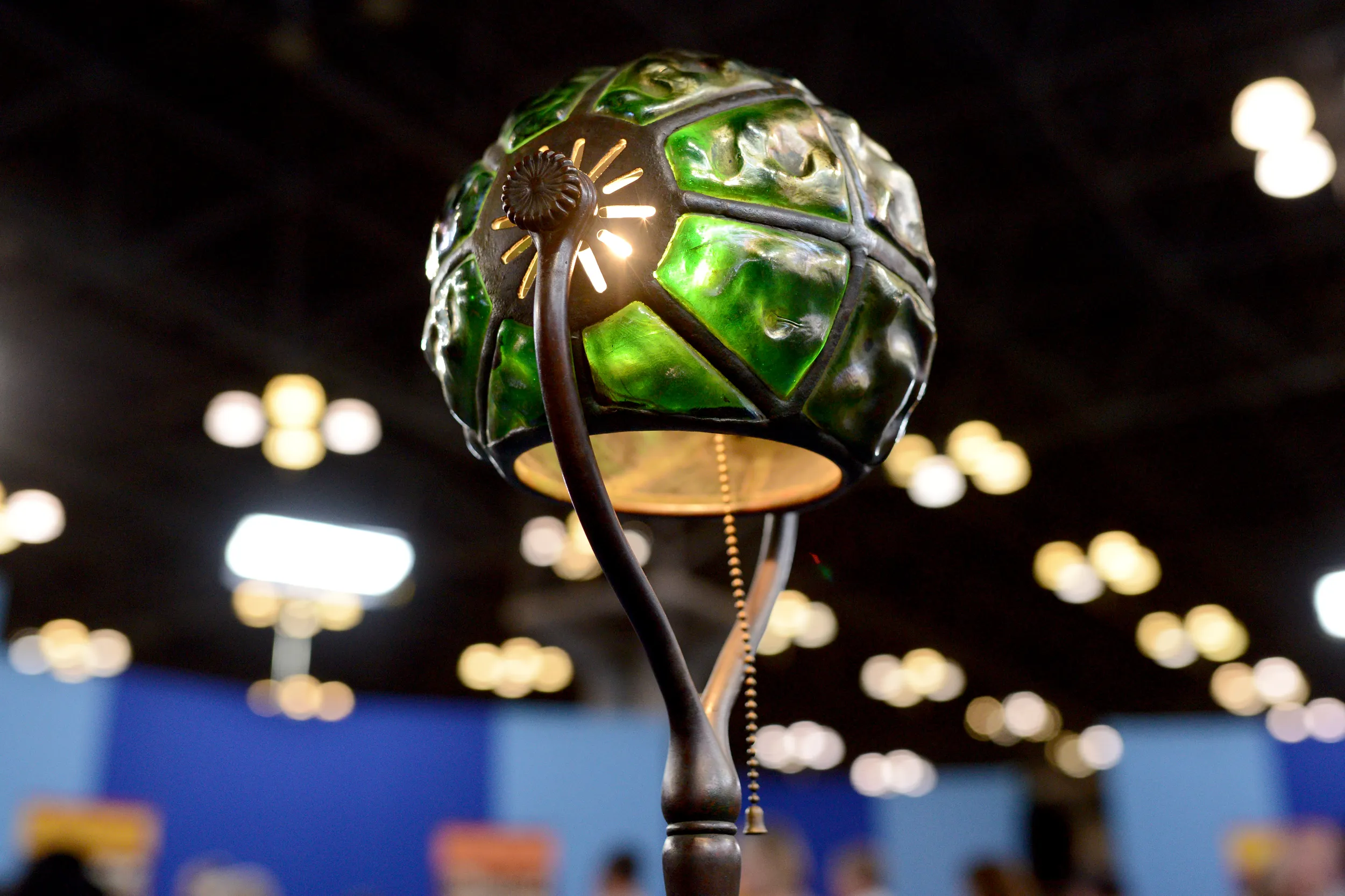
Tiffany Studios Floor Lamp, ca. 1910

appraisal
Duffner & Kimberly Floor Lamp, ca. 1905
appraisal
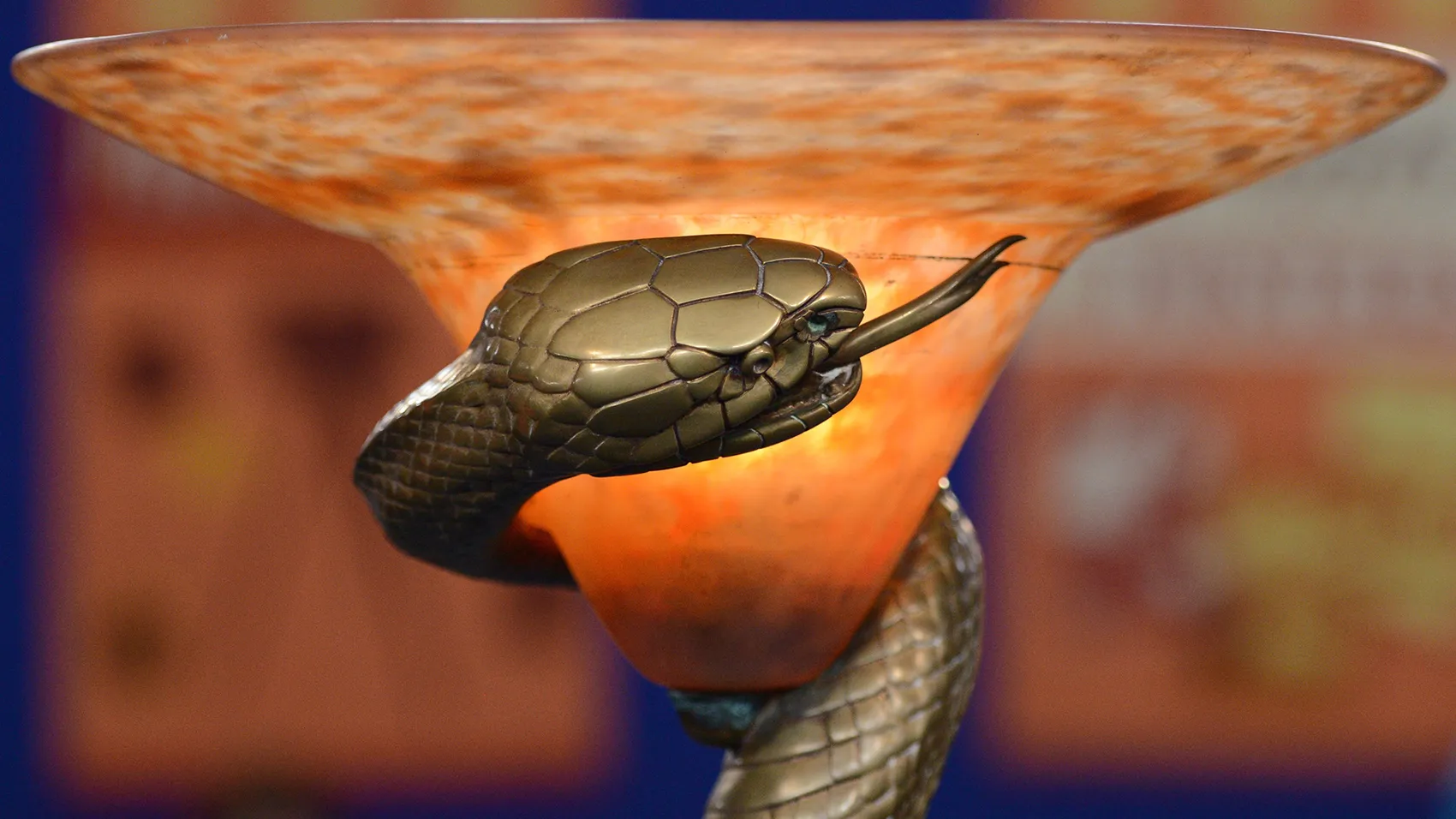
Edgar Brandt "La Tentation" Lamp, ca. 1925

appraisal
Tiffany Studios Lamp Base, ca. 1900
Understanding Our Appraisals
Executive producer Marsha Bemko shares her tips for getting the most out of ANTIQUES ROADSHOW.
Value can change: The value of an item is dependent upon many things, including the condition of the object itself, trends in the market for that kind of object, and the location where the item will be sold. These are just some of the reasons why the answer to the question "What's it worth?" is so often "It depends."
Note the date: Take note of the date the appraisal was recorded. This information appears in the upper left corner of the page, with the label "Appraised On." Values change over time according to market forces, so the current value of the item could be higher, lower, or the same as when our expert first appraised it.
Context is key: Listen carefully. Most of our experts will give appraisal values in context. For example, you'll often hear them say what an item is worth "at auction," or "retail," or "for insurance purposes" (replacement value). Retail prices are different from wholesale prices. Often an auctioneer will talk about what she knows best: the auction market. A shop owner will usually talk about what he knows best: the retail price he'd place on the object in his shop. And though there are no hard and fast rules, an object's auction price can often be half its retail value; yet for other objects, an auction price could be higher than retail. As a rule, however, retail and insurance/replacement values are about the same.
Verbal approximations: The values given by the experts on ANTIQUES ROADSHOW are considered "verbal approximations of value." Technically, an "appraisal" is a legal document, generally for insurance purposes, written by a qualified expert and paid for by the owner of the item. An appraisal usually involves an extensive amount of research to establish authenticity, provenance, composition, method of construction, and other important attributes of a particular object.
Opinion of value: As with all appraisals, the verbal approximations of value given at ROADSHOW events are our experts' opinions formed from their knowledge of antiques and collectibles, market trends, and other factors. Although our valuations are based on research and experience, opinions can, and sometimes do, vary among experts.
Appraiser affiliations: Finally, the affiliation of the appraiser may have changed since the appraisal was recorded. To see current contact information for an appraiser in the ROADSHOW Archive, click on the link below the appraiser's picture. Our Appraiser Index also contains a complete list of active ROADSHOW appraisers and their contact details and biographies.


