1968 Liu Kuo-sung Ink on Rice Paper
GUEST: In 1968, I was living in the Philippines, and I went to a gallery showing, and there was a young Chinese artist from Taipei there named Liu Guosong. I got talking to Liu, I liked his work, and it so happened I was going to be in Taipei in a matter of a month or two, so I dropped by his apartment studio. This was one he had just finished. And we got talking, and I worked out a deal to pay him over time. (laugh) Later on, I bought two more paintings from him, also.
APPRAISER: What were you doing in the Philippines?
GUEST: I was a foreign service officer then. I was with the State Department. The artist-- at that time, he was around 31, 32-- he was heading up a new group called the Fifth Moon Group, which was five young Chinese artists who were painting in a traditional medium, which is ink on rice paper. However, as you can see, they liked abstractions, abstract art. I just found that he was fascinating. I was learning a lot about Chinese culture. Of course, this was during the era of Mao Tse-tung and the Red Guards. Here was this very avant-garde, attractive, articulate young Chinese artist, and I just fell in love with his work. I really liked it. And I've had this now for 49 years.
APPRAISER: Liu was born in China, and he left China for Taiwan in 1949.
GUEST: Yes.
APPRAISER: And became quite a famous artist with the Fifth Moon Group afterwards. And when you met him, actually, he was about to go to the United States to have an exhibition, and this work is typical of what he was producing in 1968, because he was very interested in moonscapes because of the Apollo 8 mission.
GUEST: Oh, okay, yes.
APPRAISER: So you can see, in this period, in the late '60s, he produced a whole series of this. Here is his signature. This is his last name, "Liu Kuo-sung." And then you have "1968." This is ink, painted on rice paper. If you can see, there's a purple wash here, and then splashes of black ink. It's almost a collage. He was moving toward this cut-paper and ink technique that he was very famous for a bit later. What did you pay for it?
GUEST: I believe I paid about $500. Which was a lot of money for me then, and I did pay it to him, with a handshake, in installments over the course of the year.
APPRAISER: Well, you know, Liu Kuo-sung is now highly collected in China, and there are exhibitions and auctions devoted to him.
GUEST: Oh, okay.
APPRAISER: So currently, at auction, this painting would carry a pre-sale estimate of about $40,000 to $60,000.
GUEST: (laughing) You're kidding. That's way more than I thought.
APPRAISER: No, I'm not kidding.
GUEST: Way more.
APPRAISER: I'm not kidding-- he's incredibly popular. He's a phenomenon. He's still living. He was born in 1932, and he is still going strong and lecturing. He did a big exhibition in Beijing in 2007, and he's a big promoter of new artists in China and Taiwan, experimenting with new techniques.
GUEST: I have, as I mentioned, one smaller painting and one larger painting that were the same era, very similar. I can see I'm going to have to readjust my insurance. (laughs)

$60,000 - $80,000 Auction
$40,000 - $60,000 Auction
Featured In

episode
Portland, Hour 3
A Picasso pot, an Ottoman zarf, and a Tiffany Studios desk set. One is the big find!
20th Century
appraisal
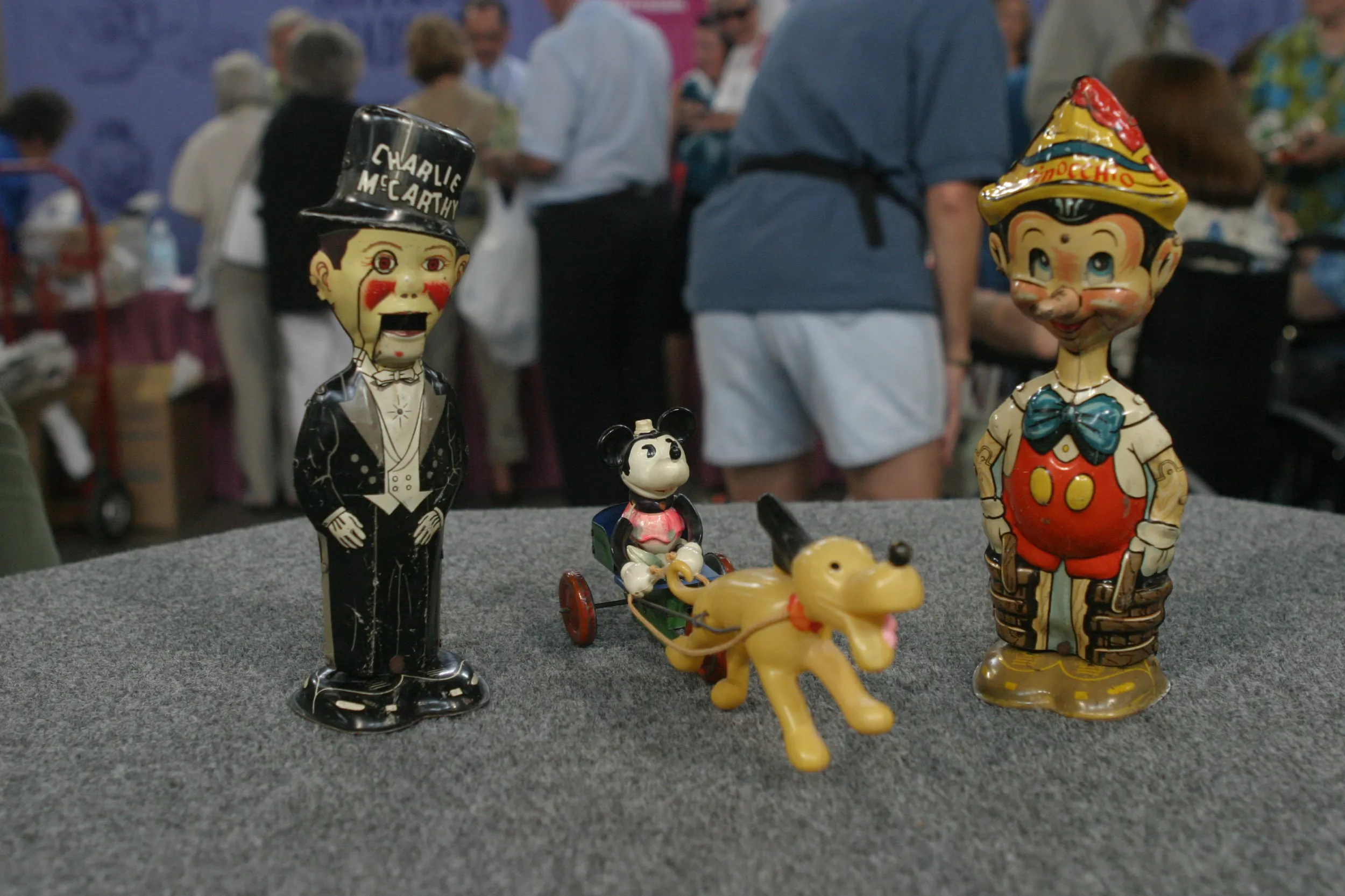
Comic Wind-up Toys, ca. 1930
appraisal
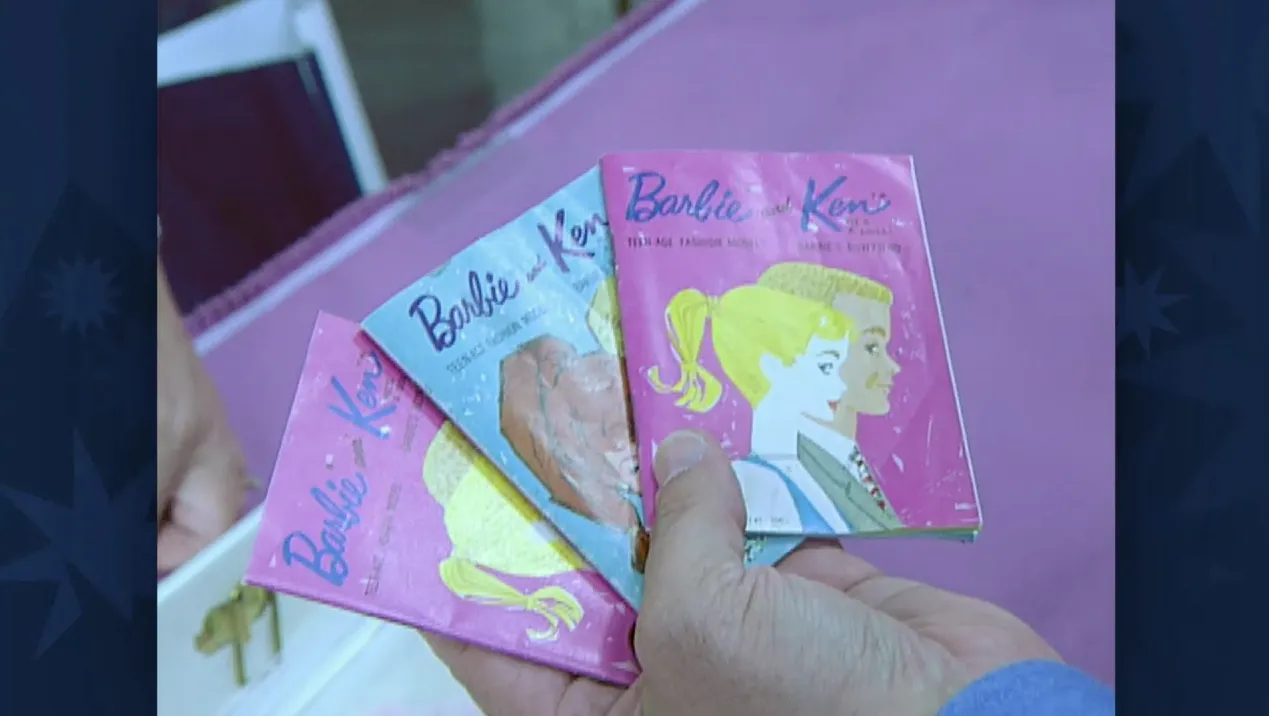
Barbie Accessories & Case, ca. 1960
appraisal
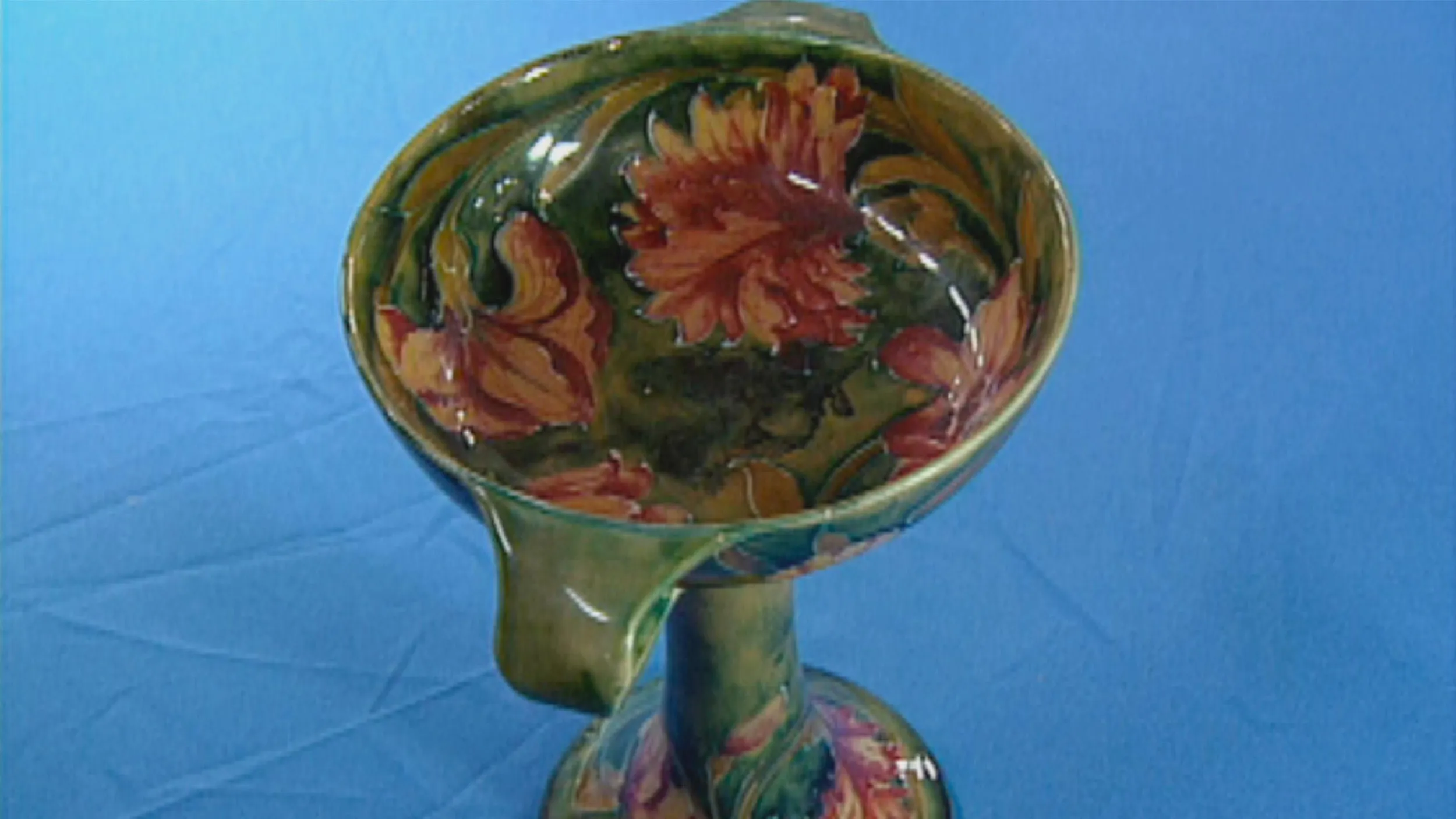
William Moorcroft Pottery, ca. 1910
appraisal
Understanding Our Appraisals
Executive producer Marsha Bemko shares her tips for getting the most out of ANTIQUES ROADSHOW.
Value can change: The value of an item is dependent upon many things, including the condition of the object itself, trends in the market for that kind of object, and the location where the item will be sold. These are just some of the reasons why the answer to the question "What's it worth?" is so often "It depends."
Note the date: Take note of the date the appraisal was recorded. This information appears in the upper left corner of the page, with the label "Appraised On." Values change over time according to market forces, so the current value of the item could be higher, lower, or the same as when our expert first appraised it.
Context is key: Listen carefully. Most of our experts will give appraisal values in context. For example, you'll often hear them say what an item is worth "at auction," or "retail," or "for insurance purposes" (replacement value). Retail prices are different from wholesale prices. Often an auctioneer will talk about what she knows best: the auction market. A shop owner will usually talk about what he knows best: the retail price he'd place on the object in his shop. And though there are no hard and fast rules, an object's auction price can often be half its retail value; yet for other objects, an auction price could be higher than retail. As a rule, however, retail and insurance/replacement values are about the same.
Verbal approximations: The values given by the experts on ANTIQUES ROADSHOW are considered "verbal approximations of value." Technically, an "appraisal" is a legal document, generally for insurance purposes, written by a qualified expert and paid for by the owner of the item. An appraisal usually involves an extensive amount of research to establish authenticity, provenance, composition, method of construction, and other important attributes of a particular object.
Opinion of value: As with all appraisals, the verbal approximations of value given at ROADSHOW events are our experts' opinions formed from their knowledge of antiques and collectibles, market trends, and other factors. Although our valuations are based on research and experience, opinions can, and sometimes do, vary among experts.
Appraiser affiliations: Finally, the affiliation of the appraiser may have changed since the appraisal was recorded. To see current contact information for an appraiser in the ROADSHOW Archive, click on the link below the appraiser's picture. Our Appraiser Index also contains a complete list of active ROADSHOW appraisers and their contact details and biographies.


