1966 Robert Indiana "LOVE" Poster
GUEST: My father was in Cornish, Maine, in a resale shop. I was just about to graduate from college about 20 years, 20-plus years ago. My father ended up paying about $60 for this piece and, uh, gave it to me for graduation.
APPRAISER: It's a poster for an exhibition that Robert Indiana had of his works at the Stable Gallery in New York in 1966. So this is, in fact, a poster from 1966, authentically from that era.
GUEST: Really? Wow. (chuckles)
APPRAISER: It was his third exhibition at the Stable Gallery. Historically, that's been referred to as "the LOVE Exhibition," and it was referred to as "the LOVE Exhibition" because it was the first time that he publicly displayed his “LOVE” paintings.
GUEST: Wow.
APPRAISER: And these “LOVE" paintings have really become such an iconic part of the American cultural landscape. They've been on postage stamps, they're statues, they exist in paintings, all different sizes and colors. The artist first came up with the idea in 1964, and he sent a holiday card to his friends with the "LOVE" logo on it. The next year, in 1965, he designed a Christmas card for the Museum of Modern Art in New York...
GUEST: Mm-hmm.
APPRAISER: ...which they still claim to this day was their best-selling Christmas card ever.
GUEST: Wow.
APPRAISER: And then the following year, when he had his third exhibition at the Stable Gallery, he designed this poster. So, I'm a poster geek, and I say that very proudly.
GUEST: (chuckles)
APPRAISER: And for me, this is the first poster representation of this iconic American artistic form-- the first time that "LOVE," the Robert Indiana "LOVE," appeared in a poster. The colors are still really bright. And the predominant colors, which fit in so beautifully here...
GUEST: (chuckling): Yes.
APPRAISER: Right? Are the green, the blue, and the red. And a lot of people posit that these colors represented for the artist Phillips 66, the petroleum company-- his father worked for the company.
GUEST: Oh.
APPRAISER: And their neon sign above Indianapolis, where he lived, had these colors. So they say that that was perhaps what influenced him in this first series to use the red, green, and blue as the predominant colors.
GUEST: That's amazing.
APPRAISER: A lot of Robert Indiana's posters were mass-produced.
GUEST: Mm-hmm.
APPRAISER: They were done for exhibitions at larger museums. So they have lesser value because there's more of them. In this case, the supply is not that big. The Stable Gallery was not a particularly big gallery. We don't actually know how many were printed.
GUEST: Mm-hmm.
APPRAISER: But we know that not that many have survived.
GUEST: Wow.
APPRAISER: It's done, uh, via a process of screen printing, which is also a, a process by which not that many could ultimately be made-- there were probably a few hundred or maybe even a thousand, that would be my, my guesstimate. When these come up for auction nowadays, you can expect them to sell for between $2,500 and $3,500.
GUEST: Fabulous.
APPRAISER: Every once in a while, you see one of these posters that's also hand-signed by him. And in that case, the price would be almost doubled.

$2,500 - $3,500 Auction
Featured In

episode
Maryland Zoo, Hour 1
Watch astonishing treasures from ROADSHOW’s Baltimore stop! One is $350,000 - $570,000!
20th Century
appraisal
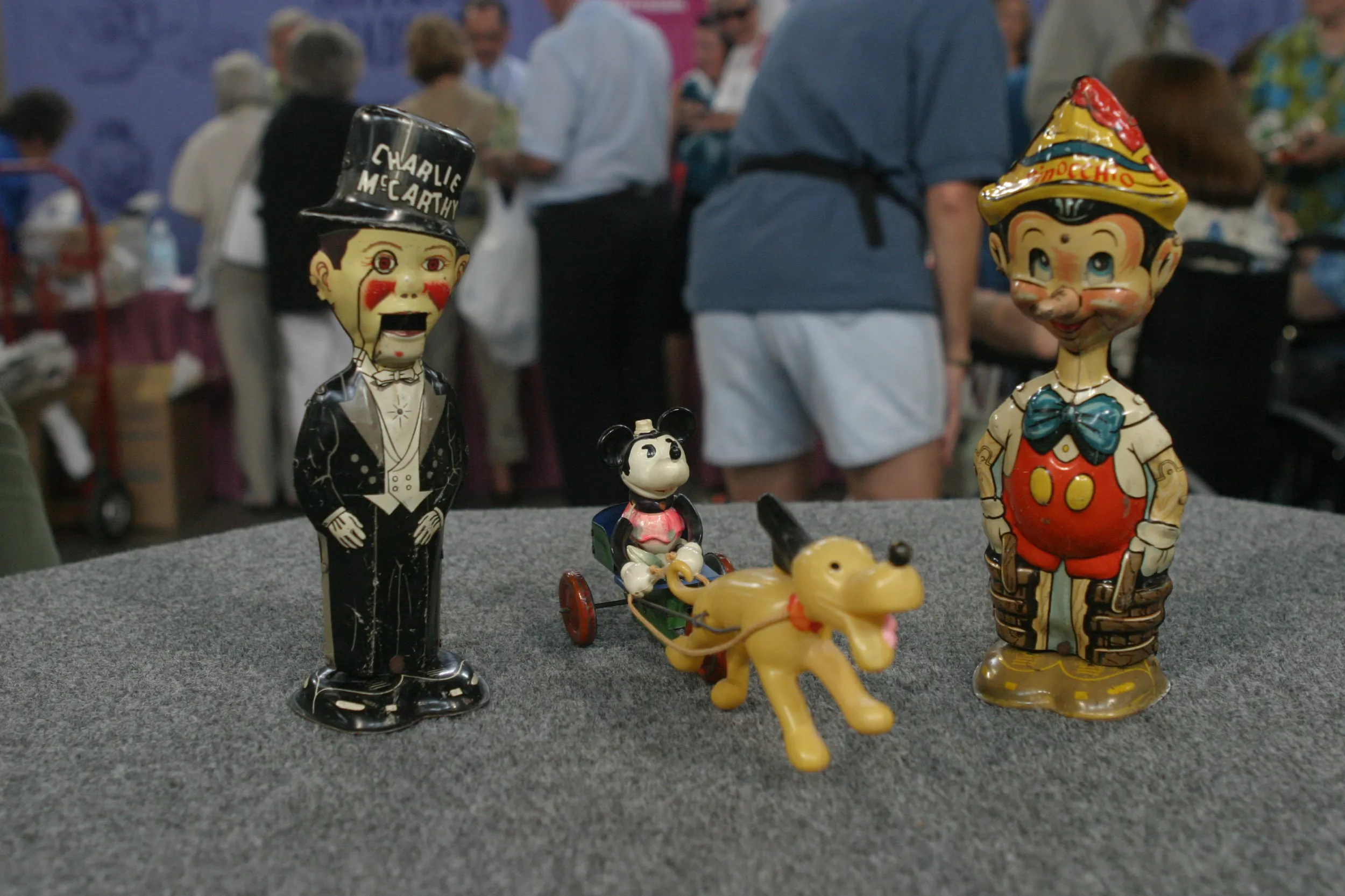
Comic Wind-up Toys, ca. 1930

appraisal
Barbie Accessories & Case, ca. 1960
appraisal
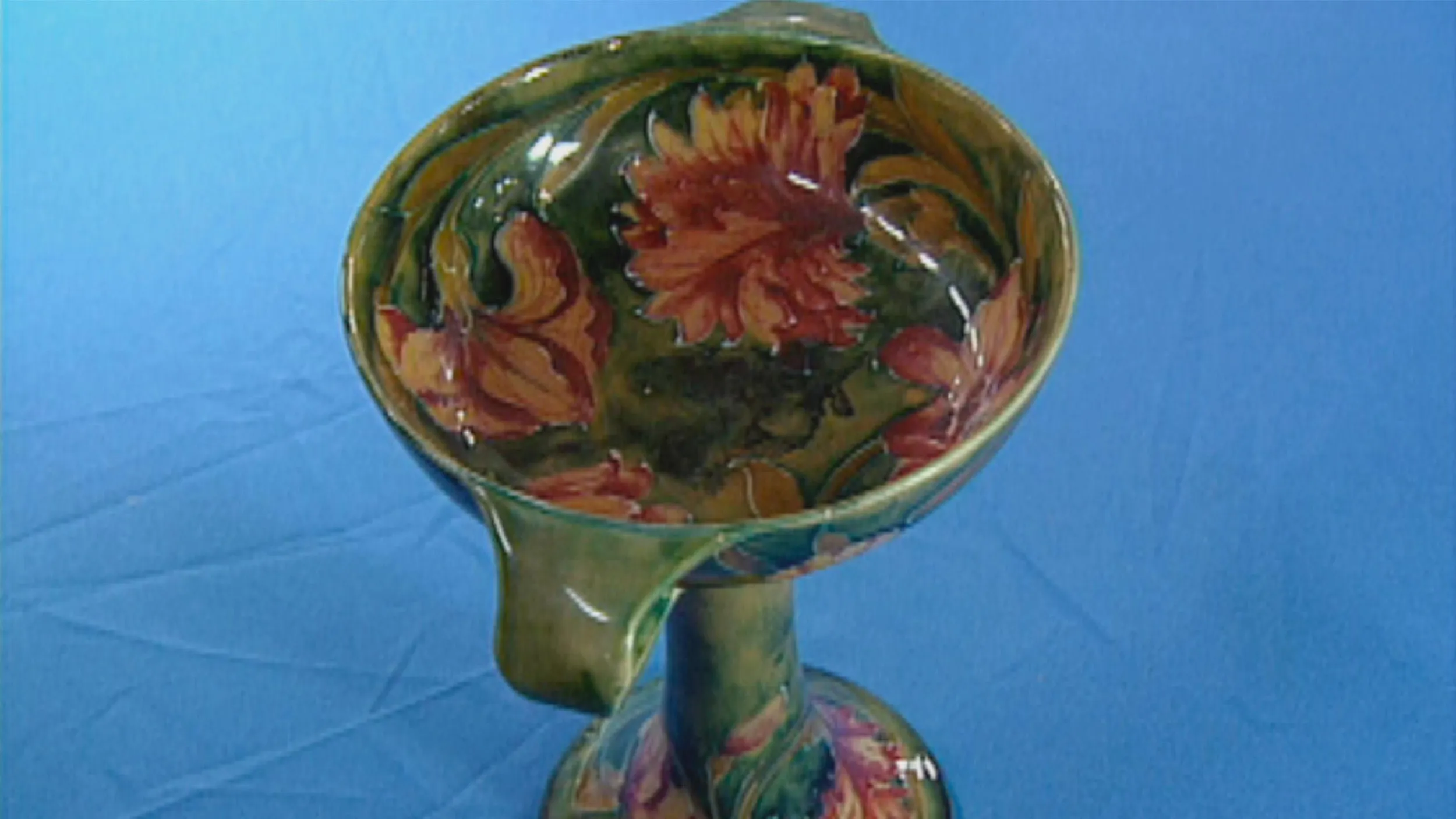
William Moorcroft Pottery, ca. 1910
appraisal
Understanding Our Appraisals
Executive producer Marsha Bemko shares her tips for getting the most out of ANTIQUES ROADSHOW.
Value can change: The value of an item is dependent upon many things, including the condition of the object itself, trends in the market for that kind of object, and the location where the item will be sold. These are just some of the reasons why the answer to the question "What's it worth?" is so often "It depends."
Note the date: Take note of the date the appraisal was recorded. This information appears in the upper left corner of the page, with the label "Appraised On." Values change over time according to market forces, so the current value of the item could be higher, lower, or the same as when our expert first appraised it.
Context is key: Listen carefully. Most of our experts will give appraisal values in context. For example, you'll often hear them say what an item is worth "at auction," or "retail," or "for insurance purposes" (replacement value). Retail prices are different from wholesale prices. Often an auctioneer will talk about what she knows best: the auction market. A shop owner will usually talk about what he knows best: the retail price he'd place on the object in his shop. And though there are no hard and fast rules, an object's auction price can often be half its retail value; yet for other objects, an auction price could be higher than retail. As a rule, however, retail and insurance/replacement values are about the same.
Verbal approximations: The values given by the experts on ANTIQUES ROADSHOW are considered "verbal approximations of value." Technically, an "appraisal" is a legal document, generally for insurance purposes, written by a qualified expert and paid for by the owner of the item. An appraisal usually involves an extensive amount of research to establish authenticity, provenance, composition, method of construction, and other important attributes of a particular object.
Opinion of value: As with all appraisals, the verbal approximations of value given at ROADSHOW events are our experts' opinions formed from their knowledge of antiques and collectibles, market trends, and other factors. Although our valuations are based on research and experience, opinions can, and sometimes do, vary among experts.
Appraiser affiliations: Finally, the affiliation of the appraiser may have changed since the appraisal was recorded. To see current contact information for an appraiser in the ROADSHOW Archive, click on the link below the appraiser's picture. Our Appraiser Index also contains a complete list of active ROADSHOW appraisers and their contact details and biographies.


