1959 Jerome Kirk Mobile
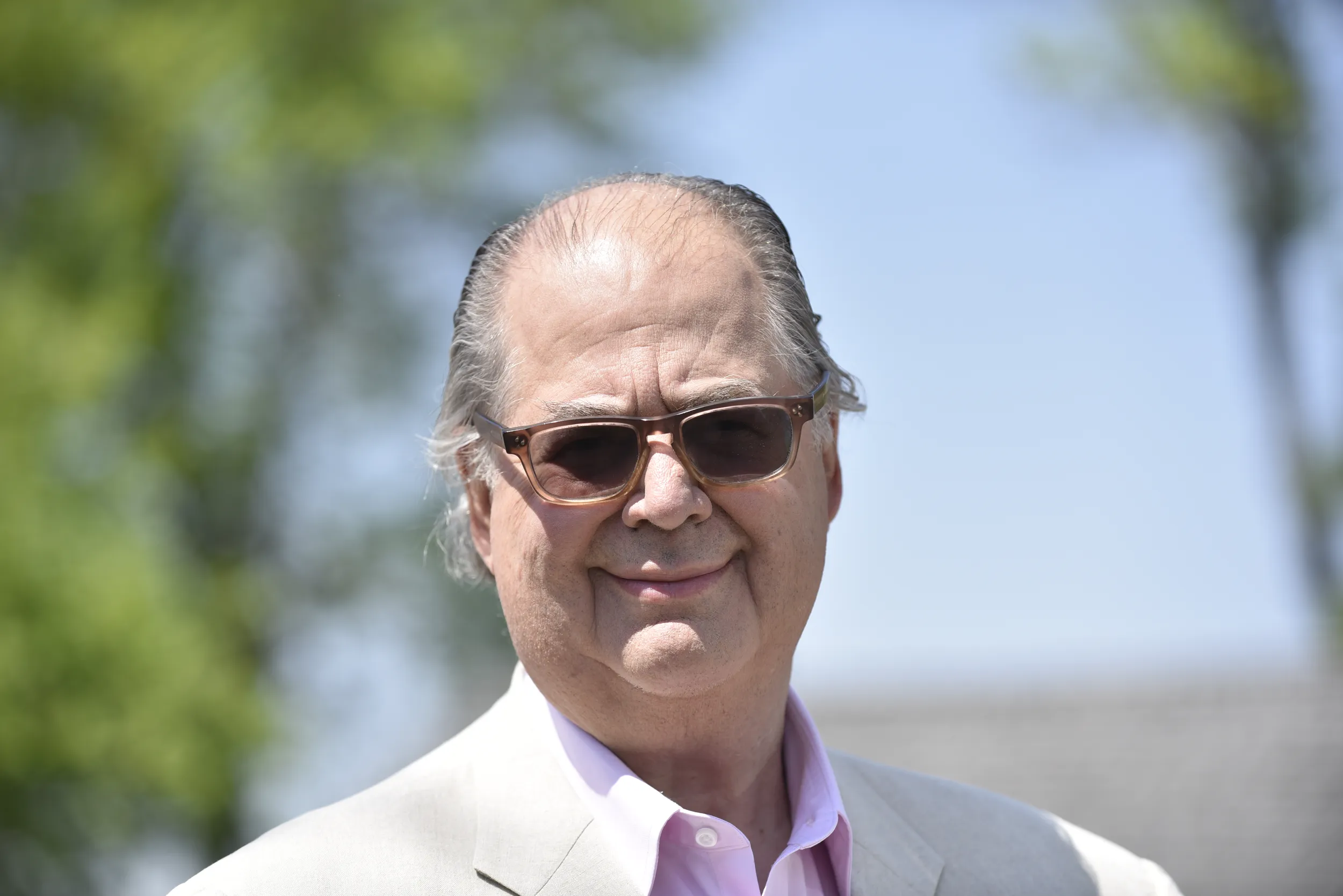
GUEST: I inherited it from my father when he passed a couple years ago. He got it directly from Jerome Kirk, uh, in 1960. Jerome, in 1960, had applied to get a fellowship with Alexander Calder, and he and his wife came to the East Coast, and his wife and my mother were friends. And so, they stayed at our house while they were, while he was applying, talking to Calder, and-and applying for a fellowship. After the interview with Calder, Kirk gave this mobile to my father...
APPRAISER: Mm-hmm.
GUEST: ...as thank you gift for letting him stay at our house. According to the story my mother told me, after Calder saw these pieces, he sent him a note telling him that he was not accepting him for a fellowship because he was, "obviously, there's nothing I can teach you..." Is what, is what he told him.
APPRAISER: Right. And this is the piece he actually brought to show to Calder to apply for this fellowship?
GUEST: Yes. And, uh, his wife, Honor, they had just had a child who was the same age as I am, and at the time, they had to leave their son in California, and, uh, she was nursing him. And so, when they came to Connecticut, she was worried about drying up her milk, and so, my mother lent me to her to, uh, to, to keep her milk flowing. And so, that's-- that was my part in the story. (soft chuckle)
APPRAISER: I've been doing the ROADSHOW for 29 seasons, and this is the most unusual acquisition story I've heard. Well, it's by Jerome Kirk. He was born in 1923, and he died in 2019. He was born in Detroit and moved to California. He's largely self-taught. He went to the Massachusetts Institute of Technology and studied mechanical engineering, and you can see how that comes into play with Kirk's work. He started out doing these things that look very much like a, a, um, a Calder. He was certainly influenced by Calder, as well as other artists of the period, especially Harry Bertoia who did things that move. We call them kinetic sculptures, and this is a prime example of, of a kinetic sculpture. But you can see how incredibly these are made. Very intricately balanced, and they look really, really wonderful, and they move so well. And it's very clearly signed here "Kirk. 1959."
GUEST: You know, I've-- I've had it in my family since 1960, and I've never noticed the signature.
APPRAISER: This is early in his work. He went on to do more tabletop things and outdoor monuments that moved also, but they really were not based on this sort of mobile format. His work is, is very highly collected, and they're very desirable. This would have a retail value in the $20,000 range.
GUEST: (stammering): That's, that's really good.
APPRAISER: Uh-huh.
GUEST: I have no plans on getting rid of it, though.
APPRAISER: Right.
GUEST: Been in my family, so...
APPRAISER: If it was a Calder, it'd probably be $2 or $3 million.
GUEST: (laughs): Yeah, yup, well, that's the difference.
$20,000 Retail
Production staff carry out careful fact-checking on all appraisals to be released by ANTIQUES ROADSHOW. In this segment, the guest told appraiser Eric Silver about a fellowship that Jerome Kirk — a personal friend of his father's — apparently was attempting to secure with artist Alexander Calder in 1960. Although ROADSHOW was unable to corroborate the existence of such a fellowship with Calder, we still decided to include the story as recollected by the current owner of this mobile.
When ROADSHOW is unable to independently confirm certain facts, it is usually for one of two reasons: either this is the first time that that information will have been documented, or the information is not true.
In this case, while the owner's parents are deceased and he is now unable to ask them for more details about his father's relationship with Kirk, we judged this his first-person story to be worth sharing.
Featured In

episode
Maryland Zoo, Hour 3
ROADSHOW searches for hidden treasures in Maryland including one $150,000 - $200,000 find!
1950s
appraisal
1952 Picasso Madoura Ceramic Jug

appraisal
José de Rivera Silver Pin, ca. 1944

appraisal
1952 Fender Esquire Guitar

appraisal
1957 Buddy Holly Contract
Understanding Our Appraisals
Executive producer Marsha Bemko shares her tips for getting the most out of ANTIQUES ROADSHOW.
Value can change: The value of an item is dependent upon many things, including the condition of the object itself, trends in the market for that kind of object, and the location where the item will be sold. These are just some of the reasons why the answer to the question "What's it worth?" is so often "It depends."
Note the date: Take note of the date the appraisal was recorded. This information appears in the upper left corner of the page, with the label "Appraised On." Values change over time according to market forces, so the current value of the item could be higher, lower, or the same as when our expert first appraised it.
Context is key: Listen carefully. Most of our experts will give appraisal values in context. For example, you'll often hear them say what an item is worth "at auction," or "retail," or "for insurance purposes" (replacement value). Retail prices are different from wholesale prices. Often an auctioneer will talk about what she knows best: the auction market. A shop owner will usually talk about what he knows best: the retail price he'd place on the object in his shop. And though there are no hard and fast rules, an object's auction price can often be half its retail value; yet for other objects, an auction price could be higher than retail. As a rule, however, retail and insurance/replacement values are about the same.
Verbal approximations: The values given by the experts on ANTIQUES ROADSHOW are considered "verbal approximations of value." Technically, an "appraisal" is a legal document, generally for insurance purposes, written by a qualified expert and paid for by the owner of the item. An appraisal usually involves an extensive amount of research to establish authenticity, provenance, composition, method of construction, and other important attributes of a particular object.
Opinion of value: As with all appraisals, the verbal approximations of value given at ROADSHOW events are our experts' opinions formed from their knowledge of antiques and collectibles, market trends, and other factors. Although our valuations are based on research and experience, opinions can, and sometimes do, vary among experts.
Appraiser affiliations: Finally, the affiliation of the appraiser may have changed since the appraisal was recorded. To see current contact information for an appraiser in the ROADSHOW Archive, click on the link below the appraiser's picture. Our Appraiser Index also contains a complete list of active ROADSHOW appraisers and their contact details and biographies.


