1949 Charles Loloma Pot
GUEST: I went to one of my favorite shops in Frederick, Maryland, and the intent was to find some natural elements to decorate a house that we are going to be building soon, and I saw this on the shelf. I saw the beautiful little deer on it. So, I picked it up and-- to see how much it was. It was only $25.
APPRAISER: When did that happen?
GUEST: Had to have been in February, I believe, of this year.
APPRAISER: Remarkable find.
GUEST: Oh, thank you.
APPRAISER: It is a creation by a gentleman by the name of Charles Loloma; he's a Hopi artist. He's a 20th century contemporary artist who's a great innovator.
GUEST: Mm.
APPRAISER: In the time he was creating this, he had just come out of the service. He got a G.I. grant to study pottery and also some additional grants to do a perspective of traditional pottery, which is hand-formed, hand-coiled. He used a wheel. He used elements in his creation of these pots to give them more texture and more character. The inclusion of the deer and the dirt devils and the sun face... and the rain, they are symbols, they are all part of the Hopi tradition. The color he chose is very Hopi, which is the blue interior. It's just a magnificent piece.
GUEST: Oh.
22:38 APPRAISER: It's absolutely magnificent. Oh. You can see his incised name and the date of '49. When he resettled in his Native land, he went back to the Second Mesa and did the studies with his wife. They moved down into Scottsdale and were part of a shop that opened there. So, they had their pottery line there for about a year, year-and-a-half...
GUEST: Mm.
APPRAISER: ...but then he became enamored with silverwork, and he drift-- they drifted away from pottery. So, to find these is like finding, you know, hen's teeth. He was a creative master, and this is one of the best pots I have ever seen.
GUEST: (soft chuckle) Wow.
APPRAISER: If you were to offer it at auction, I would expect you to see between $7,500 and $9,000 for it.
GUEST: Oh, my gosh. (laughs) (voice breaking): That's... (soft chuckle) that's amazing.
APPRAISER: It is amazing.
GUEST: It is amazing.
APPRAISER: It is amazing, and--
GUEST: I wasn't expecting that.
APPRAISER: And congratulations on your good eye.
GUEST: Thank you, wow. (laughs) Who knew?
APPRAISER: Who knew? Well, thankfully, we knew.

$7,500 - $9,000 Auction
Featured In

episode
Maryland Zoo, Hour 3
ROADSHOW searches for hidden treasures in Maryland including one $150,000 - $200,000 find!
Pot

appraisal
appraisal
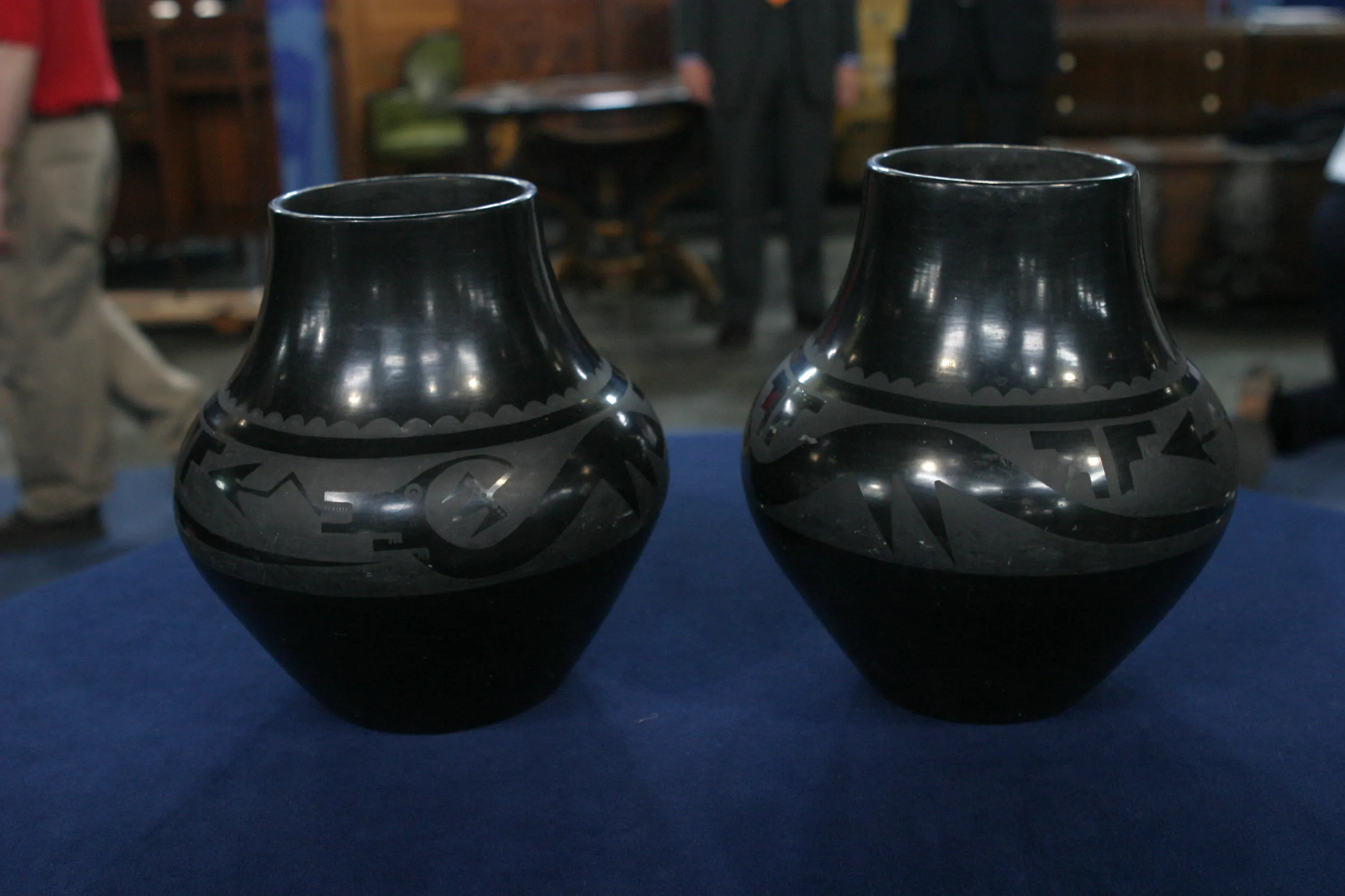
Maria Martinez Pots, ca. 1930

appraisal
Chinese Export Bough Pot, ca. 1850

appraisal
Understanding Our Appraisals
Executive producer Marsha Bemko shares her tips for getting the most out of ANTIQUES ROADSHOW.
Value can change: The value of an item is dependent upon many things, including the condition of the object itself, trends in the market for that kind of object, and the location where the item will be sold. These are just some of the reasons why the answer to the question "What's it worth?" is so often "It depends."
Note the date: Take note of the date the appraisal was recorded. This information appears in the upper left corner of the page, with the label "Appraised On." Values change over time according to market forces, so the current value of the item could be higher, lower, or the same as when our expert first appraised it.
Context is key: Listen carefully. Most of our experts will give appraisal values in context. For example, you'll often hear them say what an item is worth "at auction," or "retail," or "for insurance purposes" (replacement value). Retail prices are different from wholesale prices. Often an auctioneer will talk about what she knows best: the auction market. A shop owner will usually talk about what he knows best: the retail price he'd place on the object in his shop. And though there are no hard and fast rules, an object's auction price can often be half its retail value; yet for other objects, an auction price could be higher than retail. As a rule, however, retail and insurance/replacement values are about the same.
Verbal approximations: The values given by the experts on ANTIQUES ROADSHOW are considered "verbal approximations of value." Technically, an "appraisal" is a legal document, generally for insurance purposes, written by a qualified expert and paid for by the owner of the item. An appraisal usually involves an extensive amount of research to establish authenticity, provenance, composition, method of construction, and other important attributes of a particular object.
Opinion of value: As with all appraisals, the verbal approximations of value given at ROADSHOW events are our experts' opinions formed from their knowledge of antiques and collectibles, market trends, and other factors. Although our valuations are based on research and experience, opinions can, and sometimes do, vary among experts.
Appraiser affiliations: Finally, the affiliation of the appraiser may have changed since the appraisal was recorded. To see current contact information for an appraiser in the ROADSHOW Archive, click on the link below the appraiser's picture. Our Appraiser Index also contains a complete list of active ROADSHOW appraisers and their contact details and biographies.


