1948 Gilbert Adrian Silk Taffeta Gown
GUEST: So, this dress belonged to my mother. She lived in Philadelphia and somewhere, I think, around when she was 18, 19, 20, she would be a runway model for the Nan Duskin department store. And I know the dress came from Nan Duskin, but I don't know how my mom acquired it. I believe she wore it once. And I know that I wore it once, (chuckling): if you can believe it. Um... but I always thought it was extraordinary, and just... wild. And who makes a dress like this?
APPRAISER: So, what you have here is a black silk taffeta evening gown...
GUEST: Mm-hmm.
APPRAISER: ...made by Gilbert Adrian, and it's for his 1948 collection. He was born in Naugatuck, Connecticut, in 1903.
GUEST: Okay.
APPRAISER: A very, very, uh, artistic and precocious drawer and creative young man.
GUEST: Mm-hmm.
APPRAISER: He went to Parsons in New York, and they quickly said, "We have no more to teach you, go to our Parsons school in France."
GUEST: Wow.
APPRAISER: So he started in Paris in 1920.
GUEST: Cool.
APPRAISER: And he then meets up with Irving Berlin, he is invited at the age of 19 to go back to America...
GUEST: Mm-hmm.
APPRAISER: ...and he designed costumes on stage for Irving Berlin and Broadway.
GUEST: Wow.
APPRAISER: He then goes to Hollywood, and in 1928, he starts to work for MGM.
GUEST: MGM, okay.
APPRAISER: So he becomes the MGM head costume designer from 1928 to 1941.
GUEST: Wow.
APPRAISER: One of the things that Adrian is most well-known for...
GUEST: Mm-hmm.
APPRAISER: ...is he designed all the costumes for "Wizard of Oz."
GUEST: I just heard that recently.(chuckles) Yeah, I didn't-- I had no idea. Yeah. So, so cool.
APPRAISER: In 1941, he says he's leaving MGM and he's gonna start his own label. 1942, he has his very first collection. He had two different labels under his name.
GUEST: Mm-hmm.
APPRAISER: One was called Adrian Originals...
GUEST: Mm-hmm.
APPRAISER: ...which is what this is.
GUEST: Okay.
APPRAISER: And there's a label in the back.
GUEST: Yeah.
APPRAISER: Along with the Nan Duskin label...
GUEST: Yeah. Yeah. Yeah, yeah.
APPRAISER: ...which was the retailer in Philadelphia.
GUEST: Mm-hmm.
APPRAISER: The top of the top in, in Philly. He also had Adrian Customs, and those were the couture.
GUEST: Okay.
APPRAISER: So if you can believe, this was a ready-to-wear. His ready-to-wear went from the very low sort of bread and butter...
GUEST: Uh-huh.
APPRAISER: ...$69 suits up to $395 gowns.
GUEST: Gotcha.
APPRAISER: Which is the height of, again, that lower end.
GUEST: Yeah, right, right. And in today's money, it's about $5,000 for, for this.
APPRAISER: Had you thought about... the value at all?
GUEST: I was sort of in the $1,000 to $3,000, hoping for $3,000...ish, plus. Just because it seems so extraordinary.
APPRAISER: I would put an auction estimate of $1,500 to $2,000 on this.
GUEST: Okay, okay.
APPRAISER: For insurance purposes...
GUEST: Yes.
APPRAISER: ...I would have an insurance value of $8,000.
GUEST: Oh, my gosh, wow. Okay. Very, very cool. Um, I'm so happy to know more about it. Thank you. Thank you so much.
APPRAISER: Well, absolutely, my pleasure.
GUEST: Yeah.

$1,500 Auction
$8,000 Insurance
Featured In

episode
Coastal Maine Botanical Gardens, Hour 3
ANTIQUES ROADSHOW wraps up our visit to Boothbay! — Mon, March 23, 2026
1940s

appraisal
appraisal
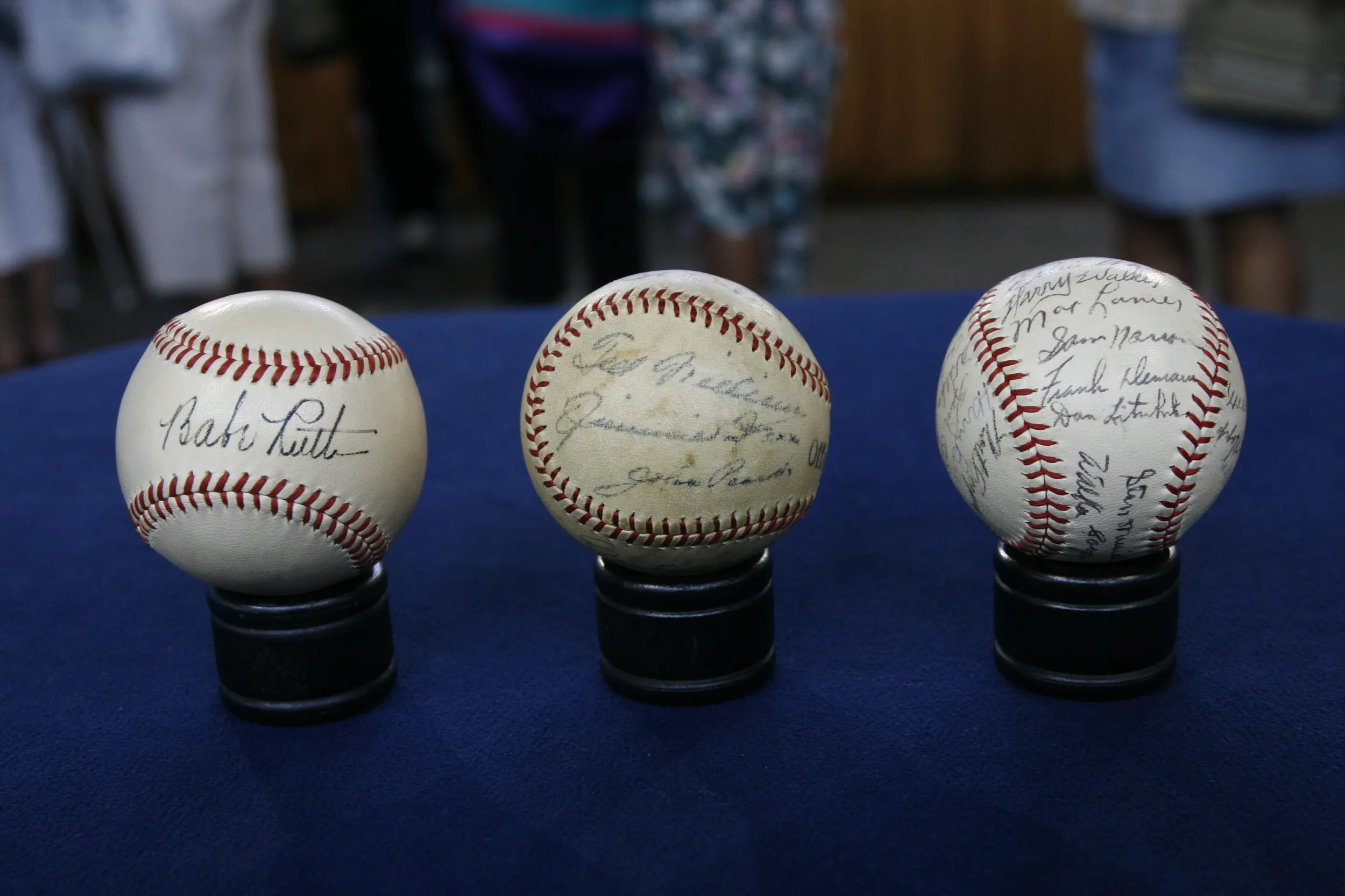
Three 1940s Signed Baseballs
appraisal
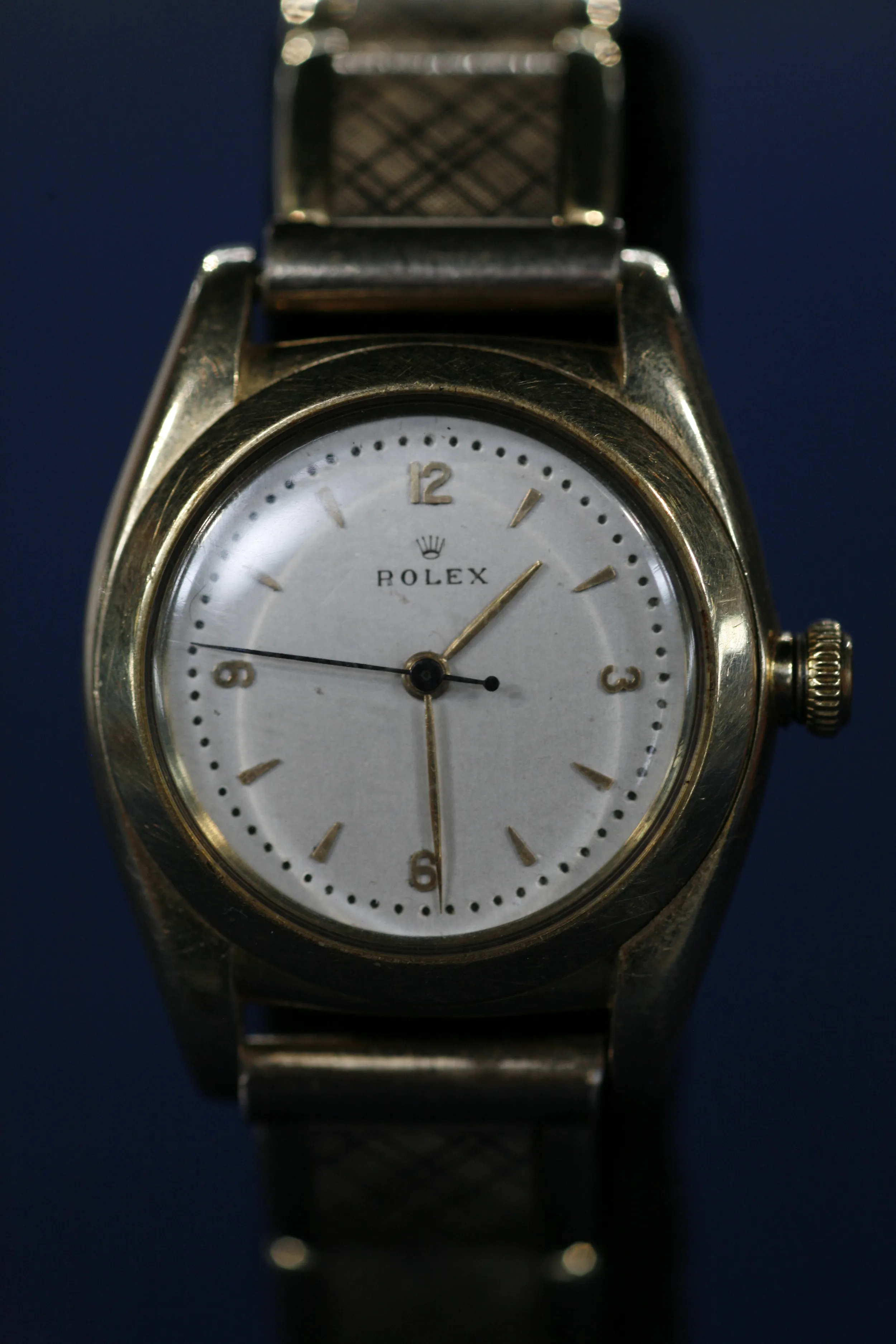
Rolex "Bubbleback" Watch, ca. 1940

appraisal
Audemars Piguet Watch, ca. 1940
Understanding Our Appraisals
Executive producer Marsha Bemko shares her tips for getting the most out of ANTIQUES ROADSHOW.
Value can change: The value of an item is dependent upon many things, including the condition of the object itself, trends in the market for that kind of object, and the location where the item will be sold. These are just some of the reasons why the answer to the question "What's it worth?" is so often "It depends."
Note the date: Take note of the date the appraisal was recorded. This information appears in the upper left corner of the page, with the label "Appraised On." Values change over time according to market forces, so the current value of the item could be higher, lower, or the same as when our expert first appraised it.
Context is key: Listen carefully. Most of our experts will give appraisal values in context. For example, you'll often hear them say what an item is worth "at auction," or "retail," or "for insurance purposes" (replacement value). Retail prices are different from wholesale prices. Often an auctioneer will talk about what she knows best: the auction market. A shop owner will usually talk about what he knows best: the retail price he'd place on the object in his shop. And though there are no hard and fast rules, an object's auction price can often be half its retail value; yet for other objects, an auction price could be higher than retail. As a rule, however, retail and insurance/replacement values are about the same.
Verbal approximations: The values given by the experts on ANTIQUES ROADSHOW are considered "verbal approximations of value." Technically, an "appraisal" is a legal document, generally for insurance purposes, written by a qualified expert and paid for by the owner of the item. An appraisal usually involves an extensive amount of research to establish authenticity, provenance, composition, method of construction, and other important attributes of a particular object.
Opinion of value: As with all appraisals, the verbal approximations of value given at ROADSHOW events are our experts' opinions formed from their knowledge of antiques and collectibles, market trends, and other factors. Although our valuations are based on research and experience, opinions can, and sometimes do, vary among experts.
Appraiser affiliations: Finally, the affiliation of the appraiser may have changed since the appraisal was recorded. To see current contact information for an appraiser in the ROADSHOW Archive, click on the link below the appraiser's picture. Our Appraiser Index also contains a complete list of active ROADSHOW appraisers and their contact details and biographies.


