1947 Max Ernst 'Dangerous Liaisons' Etching
GUEST: I have had this hanging in the closet for a couple of years. I recognized the name when I picked it up in the flea market. It said Max Ernst-- that's somebody, I know that's somebody.
APPRAISER: You bought it in a flea market?
GUEST: I did, yes.
APPRAISER: For how much?
GUEST: Actually, a thrift store. Uh, ten dollars for this, and one other etching that accompanied it. After I got it, I did a little bit of research on him. Apparently, he was one of the founders of the surrealism movement? Is that correct?
APPRAISER: Yes. Max Ernst is probably one of the best known surrealists, and this print really epitomizes his approach to surrealism in printmaking. But he was also a painter, a sculptor, made collages. This is a really great example of surrealism and etching. It's a print made as part of a portfolio. The title of this portfolio was Brunidor No. 1. And it was printed and published in 1947. In New York, there was a press called Atelier 17, and it was famous for printing surrealist artworks. And it was run by an English printmaker...
GUEST: Yes.
APPRAISER: ...called Stanley William Hayter. So Stanley William Hayter printed this for this portfolio. In one portfolio, you had seven of the leading surrealists. Max Ernst was the leading light of surrealism. And this is a scarce print, it's an edition of 70, but very few impressions have been recorded in collections. But it is in some very famous collections. This print is in the collection of the Museum of Modern Art and the Tate Modern in London.
GUEST: Mm-hmm. I believe it's titled Dangerous Liaisons.
APPRAISER: That's right.
GUEST: And after looking at it a while, I could kind of see that in it.
APPRAISER: Yes, so it's an abstracted couple. You can see it's, it's sort of two lovers kind of in this throes of an embrace, and it's dangerous. There's almost like a devil-like creature...
GUEST: Yes.
APPRAISER:...lurking in the background on the left. And it's very typical of Max Ernst. He did these etchings and engravings with these silhouetted figures. They're open to interpretation. Do you have any idea of the value?
GUEST: I thought maybe $2,000, $2,500, somewhere in there.
APPRAISER: I have some good news-- I would say at auction, in this condition, I would estimate it at $6,000 to $9,000.
GUEST: Very nice.

$6,000 - $9,000 Auction
Featured In

episode
Crystal Bridges Museum of American Art, Hour 1
Season 29 Premiere! Kick off an all-new ROADSHOW season at Crystal Bridges Museum of American Art!
3D Art
appraisal
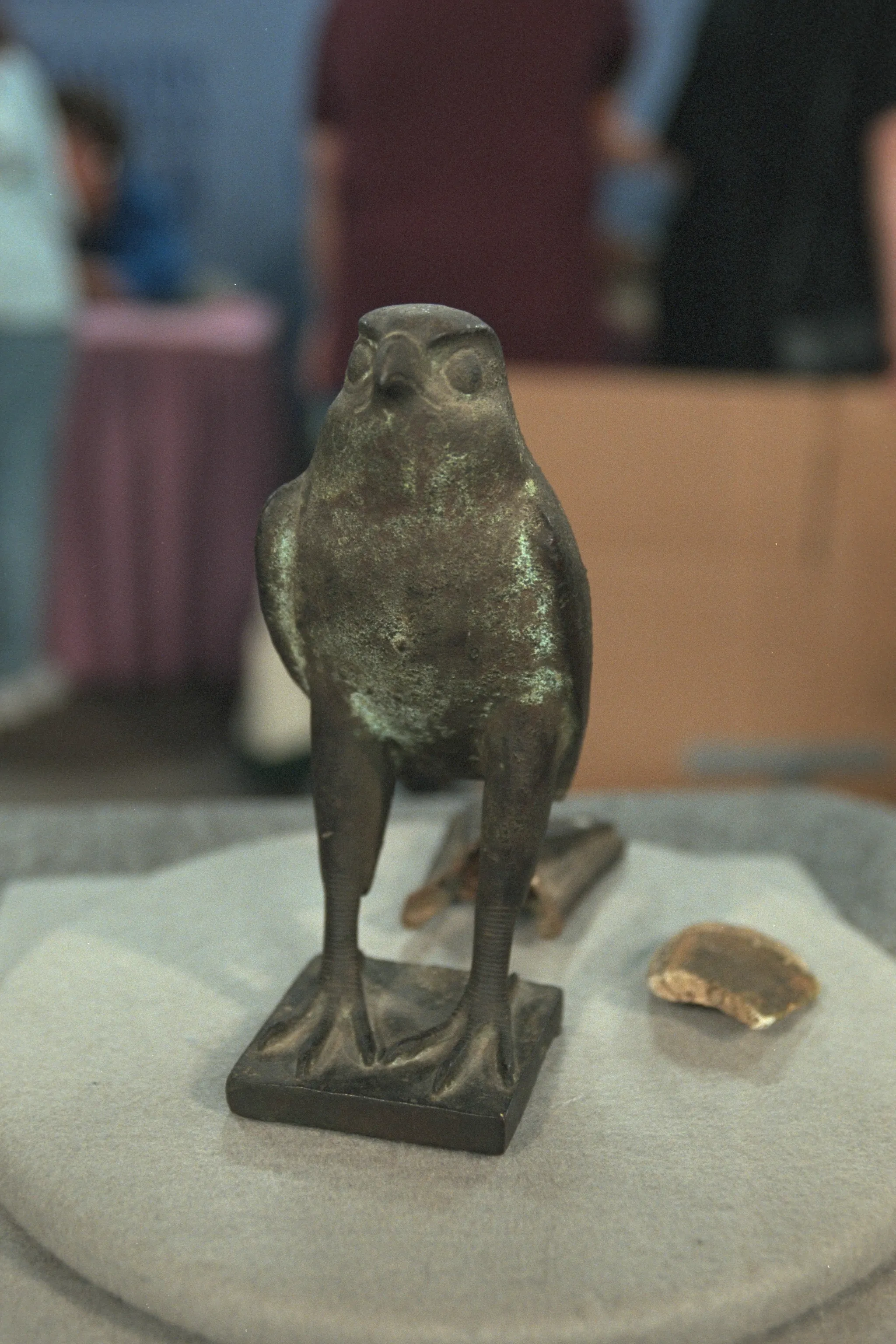
Late Period Egyptian Bronze Falcon
appraisal
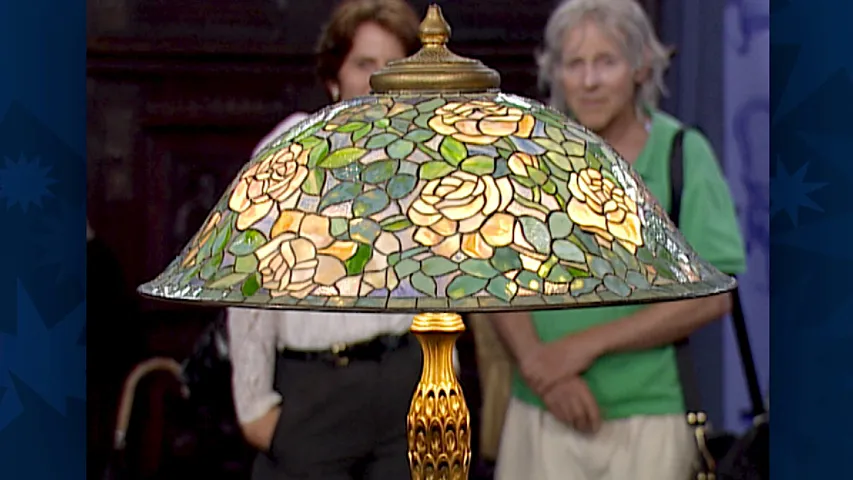
Tiffany Studios Rose Helmet Lamp, ca. 1905

appraisal
Dr. Seuss “Kangaroo Bird," ca. 1938

appraisal
Maiolica Parrot Sculpture, ca. 1920
Understanding Our Appraisals
Executive producer Marsha Bemko shares her tips for getting the most out of ANTIQUES ROADSHOW.
Value can change: The value of an item is dependent upon many things, including the condition of the object itself, trends in the market for that kind of object, and the location where the item will be sold. These are just some of the reasons why the answer to the question "What's it worth?" is so often "It depends."
Note the date: Take note of the date the appraisal was recorded. This information appears in the upper left corner of the page, with the label "Appraised On." Values change over time according to market forces, so the current value of the item could be higher, lower, or the same as when our expert first appraised it.
Context is key: Listen carefully. Most of our experts will give appraisal values in context. For example, you'll often hear them say what an item is worth "at auction," or "retail," or "for insurance purposes" (replacement value). Retail prices are different from wholesale prices. Often an auctioneer will talk about what she knows best: the auction market. A shop owner will usually talk about what he knows best: the retail price he'd place on the object in his shop. And though there are no hard and fast rules, an object's auction price can often be half its retail value; yet for other objects, an auction price could be higher than retail. As a rule, however, retail and insurance/replacement values are about the same.
Verbal approximations: The values given by the experts on ANTIQUES ROADSHOW are considered "verbal approximations of value." Technically, an "appraisal" is a legal document, generally for insurance purposes, written by a qualified expert and paid for by the owner of the item. An appraisal usually involves an extensive amount of research to establish authenticity, provenance, composition, method of construction, and other important attributes of a particular object.
Opinion of value: As with all appraisals, the verbal approximations of value given at ROADSHOW events are our experts' opinions formed from their knowledge of antiques and collectibles, market trends, and other factors. Although our valuations are based on research and experience, opinions can, and sometimes do, vary among experts.
Appraiser affiliations: Finally, the affiliation of the appraiser may have changed since the appraisal was recorded. To see current contact information for an appraiser in the ROADSHOW Archive, click on the link below the appraiser's picture. Our Appraiser Index also contains a complete list of active ROADSHOW appraisers and their contact details and biographies.


