1944 Joseph Erlanger's Nobel Prize & Diploma
GUEST: This is my grandfather's Nobel Prize medal. Which he won in 1944 in physiology, and this is the Nobel Institute diploma that is presented along with it.
APPRAISER: And do you remember seeing this growing up or your family talking about it?
GUEST: I knew my grandpa won a Nobel Prize.
APPRAISER: Mm-hmm.
GUEST: And I saw the medal once or twice, but he was a very humble person.
APPRAISER: Yeah?
GUEST: He didn't go out and show this off, and nor did any of the rest of us. When I was a really little kid, uh, my family would talk about the Nobel Prize, and I thought it was a "no bell" prize. (both laughing) Until somebody set me straight.
APPRAISER: (laughs) Yeah.
GUEST: I knew him growing up because when he-- I was 14 when he passed away, and we would see him every week for dinners and so on, and he was a, a son of immigrants. He was the first person in his family to go to college.
APPRAISER: Mm-hmm.
GUEST: He was in the third graduating class of Johns Hopkins Medical School, which is right here, and he was a full professor within about three years...
APPRAISER: Mm-hmm.
GUEST: ...because his, his brilliance was already recognized.
APPRAISER: Can you tell us what your grandfather, Joseph Erlanger, won the Nobel Prize for?
GUEST: He did what is fundamental work underlying neurophysiology today.
APPRAISER: Mm-hmm.
GUEST: Which is the electrical conduction of nerve fibers and differentiation of different nerve fibers. And it was very quickly recognized as breakthrough. He needed to have a cathode-ray tube, and the company that made cathode-ray tubes refused to sell him one because they were afraid, afraid of industrial espionage. So, he built one.
APPRAISER: Yeah.
GUEST: This contraption that he had in his basement lab.
APPRAISER: Mm-hmm.
GUEST: And if he got one or good two tracings...
APPRAISER: Mm-hmm. Mm-hmm.
GUEST: ...'cause they were doing nerve tracings-- per day, they felt it was a good thing.
APPRAISER: Really groundbreaking stuff. This is his Nobel Prize.
GUEST: Correct.
APPRAISER: It's the most prestigious award in every field. You've got physics, physiology and medicine. Chemistry, literature, peace, and recently, economic science.
GUEST: Oh.
APPRAISER: And they're given out almost every year since 1901. How you get awarded a Nobel Prize is, for the case of medicine, a committee from the Karolinska Institute would get together, and they would choose and nominate who would get the award. You've got to impress every professor at one of the most prestigious institutes in the world and show them that your contribution is important to mankind.
GUEST: Right.
APPRAISER: And not only do you get the lovely calligraphy, you get the medal, you also get a cash prize, too.
GUEST: Yes. And, of course, it was split…
APPRAISER: Mmm-hmm.
GUEST: …because this was a joint prize.
APPRAISER: Right.
GUEST: University professors don't earn a lot of money...
APPRAISER: Mm-hmm.
GUEST: ...but they're very frugal, so they kept it invested, and it came down through to us.
APPRAISER: Mm-hmm.
GUEST: And, actually, for me, my grandfather's Nobel Prize money paid my way through the University of Chicago.
APPRAISER: That's awesome.
GUEST: (chuckling): Yeah.
APPRAISER: That's fantastic. This certificate, it is beautiful calligraphy signed by all the nominating members, showing the joint award to Herbert Gasser and your grandfather, Joseph Erlanger, for their hard work.
GUEST: Right.
APPRAISER: And then, we look at the medal itself. These are pretty special.
GUEST: (laughing): Yeah.
APPRAISER: It is solid gold. And there are other medals given out; there are bronze medals, there are ones that are gilt that have just a thin layer of gold on top. And to the awardees, they get their name engraved on the back and the date. And at the very bottom of it here, it says "gold" in Swedish, "1944."
GUEST: Ah.
APPRAISER: Everything about this is exactly what the collector of these items want to see. Even though Erlanger and Gasser are not household names like Einstein, it's still an important name in the field of neuroscience. I would give an auction estimate for the entire package of $150,000 to $200,000.
GUEST: (exhales, laughs): Wow. I know you're not supposed to say that, but wow, that's just amazing. We are very proud and honored as a family to have this and to have this legacy.

$150,000 - $200,000 Auction
Featured In

episode
Maryland Zoo, Hour 3
ROADSHOW searches for hidden treasures in Maryland including one $150,000 - $200,000 find!
1940s

appraisal
appraisal
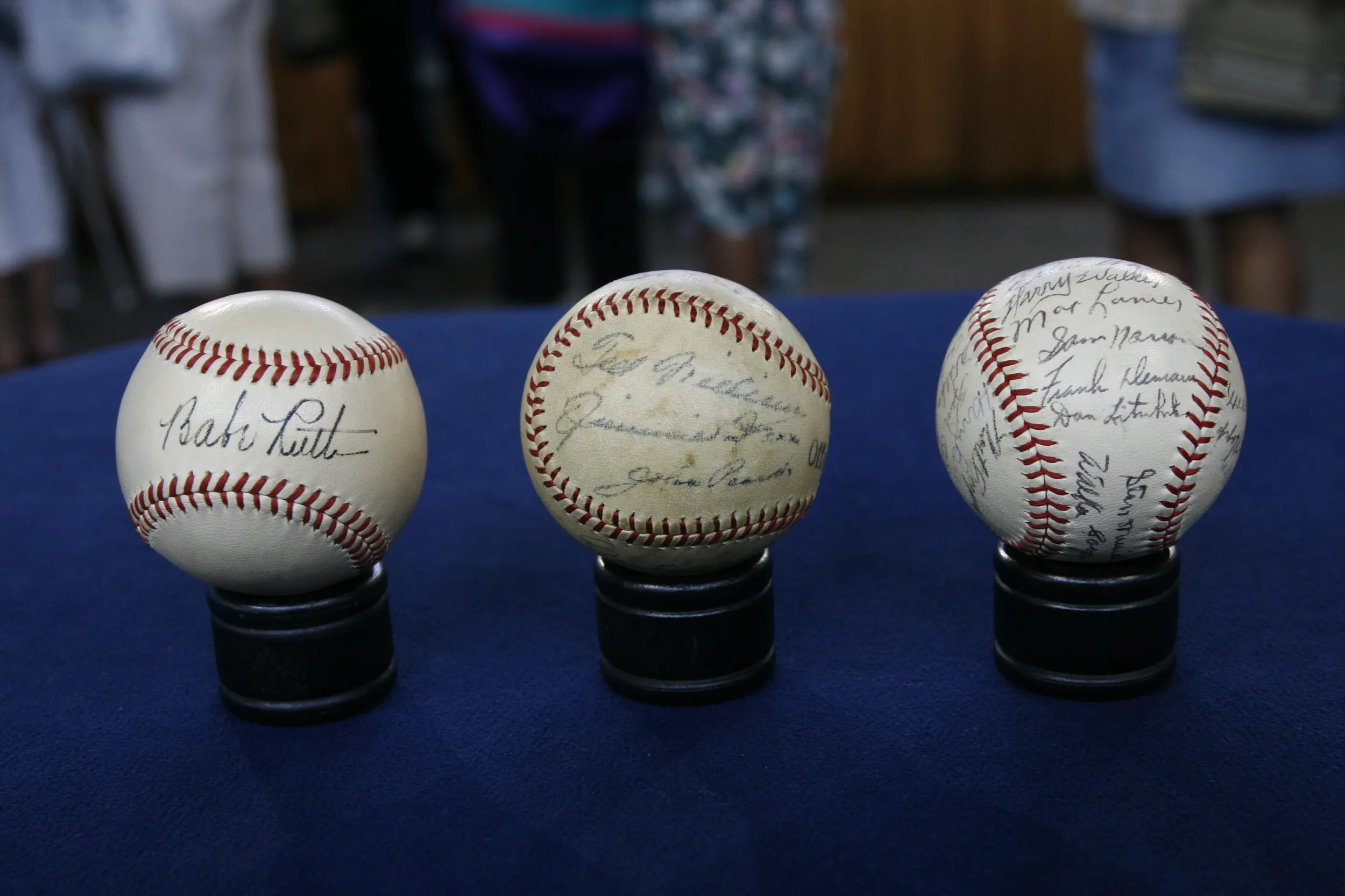
Three 1940s Signed Baseballs
appraisal
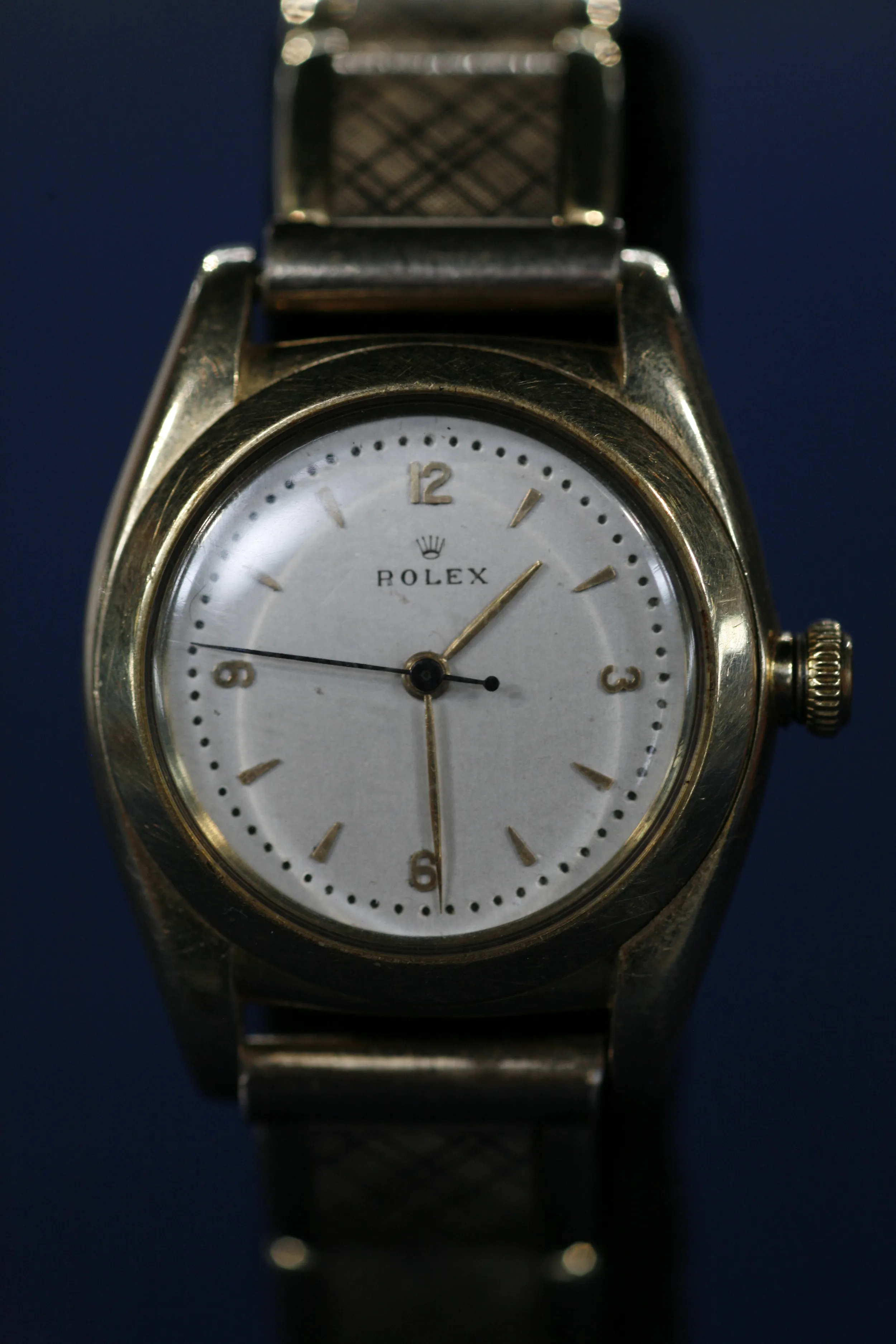
Rolex "Bubbleback" Watch, ca. 1940

appraisal
Audemars Piguet Watch, ca. 1940
Understanding Our Appraisals
Executive producer Marsha Bemko shares her tips for getting the most out of ANTIQUES ROADSHOW.
Value can change: The value of an item is dependent upon many things, including the condition of the object itself, trends in the market for that kind of object, and the location where the item will be sold. These are just some of the reasons why the answer to the question "What's it worth?" is so often "It depends."
Note the date: Take note of the date the appraisal was recorded. This information appears in the upper left corner of the page, with the label "Appraised On." Values change over time according to market forces, so the current value of the item could be higher, lower, or the same as when our expert first appraised it.
Context is key: Listen carefully. Most of our experts will give appraisal values in context. For example, you'll often hear them say what an item is worth "at auction," or "retail," or "for insurance purposes" (replacement value). Retail prices are different from wholesale prices. Often an auctioneer will talk about what she knows best: the auction market. A shop owner will usually talk about what he knows best: the retail price he'd place on the object in his shop. And though there are no hard and fast rules, an object's auction price can often be half its retail value; yet for other objects, an auction price could be higher than retail. As a rule, however, retail and insurance/replacement values are about the same.
Verbal approximations: The values given by the experts on ANTIQUES ROADSHOW are considered "verbal approximations of value." Technically, an "appraisal" is a legal document, generally for insurance purposes, written by a qualified expert and paid for by the owner of the item. An appraisal usually involves an extensive amount of research to establish authenticity, provenance, composition, method of construction, and other important attributes of a particular object.
Opinion of value: As with all appraisals, the verbal approximations of value given at ROADSHOW events are our experts' opinions formed from their knowledge of antiques and collectibles, market trends, and other factors. Although our valuations are based on research and experience, opinions can, and sometimes do, vary among experts.
Appraiser affiliations: Finally, the affiliation of the appraiser may have changed since the appraisal was recorded. To see current contact information for an appraiser in the ROADSHOW Archive, click on the link below the appraiser's picture. Our Appraiser Index also contains a complete list of active ROADSHOW appraisers and their contact details and biographies.


